GHK-Cu Peptide for Skin & Hair Rejuvenation in Rockville, MD: Benefits, Therapy Options, and Results
GHK-Cu (glycyl-L-histidyl-L-lysine copper complex) is a small copper peptide that binds copper ions and functions as a signaling molecule to support tissue repair, extracellular matrix remodeling, and antioxidant activity. Recent research shows GHK-Cu modulates gene expression in skin and follicular cells to promote collagen and elastin production while reducing inflammatory cytokines, delivering measurable improvements in tone, texture, and hair health. For residents of Rockville, MD, Shore MedSpa & Bio Aesthetics — led by board-certified dermatologist Dr. Ronald Shore — offers access to peptide-based approaches as part of personalized rejuvenation plans. This article explains the key skin benefits, how GHK-Cu aids hair growth, practical delivery options available locally, and realistic safety and timeline expectations. Read on for science-backed mechanisms, clear comparisons of topical versus injected and microneedling-enhanced delivery, and concise guidance on what results to expect and when.
What are the key benefits of GHK-Cu peptide for skin rejuvenation?
GHK-Cu peptide for skin rejuvenation acts as a collagen synthesis booster and elastin production promoter, improving firmness and reducing fine lines by upregulating extracellular matrix components. It also provides antioxidant skin treatment effects and modulates inflammation to speed wound healing and reduce redness. Current research indicates benefits for skin remodeling peptide applications, scar improvement, and enhanced barrier recovery, making it relevant for anti-aging and post-procedure repair. The next paragraphs outline the cellular mechanisms that drive collagen and elastin formation and describe the peptide’s anti-inflammatory and antioxidant actions before mapping these effects to clinical outcomes.
GHK-Cu stimulates fibroblast activity and increases transcription of collagen (COL1A1) and elastin-related genes, which drives extracellular matrix repair and skin remodeling. This mechanism translates into thicker dermal collagen layers and improved skin elasticity over months. Understanding cellular activation clarifies why GHK-Cu is considered a collagen synthesis booster and supports targeted use for volumetric improvement. The following section examines quantified mechanistic effects in a compact comparison.
GHK-Cu’s anti-inflammatory and antioxidant properties lower pro-inflammatory cytokines and scavenge reactive oxygen species, protecting dermal cells from oxidative damage and promoting healthier tone and texture. By reducing local inflammation, the peptide shortens repair time after injury and decreases persistent erythema associated with chronic irritation. Clinically, this can mean fewer visible signs of environmental aging and faster recovery after resurfacing procedures. The next section summarizes mechanistic effects in an easy-to-scan table for practical reference.
Different mechanistic effects of GHK-Cu relate to distinct skin outcomes and measurable changes.
| Mechanism | Target | Representative Effect |
|---|---|---|
| Collagen upregulation | Fibroblasts / ECM | Increased collagen synthesis vs baseline (studies report measurable gains in vitro and ex vivo) |
| Elastin support | Elastic fibers | Improved elastin gene expression and fiber organization |
| Anti-inflammatory modulation | Cytokine profile | Reduced IL-6 and TNFα markers in treated tissues |
| Antioxidant action | ROS scavenging | Lower oxidative stress and faster wound resolution |
This table highlights how GHK-Cu concurrently targets structural proteins and inflammatory pathways to produce clinically relevant skin remodeling.
- Primary benefits include improved firmness, reduced fine lines, and enhanced texture through increased collagen and elastin production.
- Anti-inflammatory and antioxidant actions reduce redness and accelerate healing after injury or procedures.
- Wound healing acceleration and scar appearance improvement support use in post-procedure recovery and targeted resurfacing strategies.
These benefits together explain why GHK-Cu is increasingly used as a skin-repair and anti-aging peptide in regenerative dermatology.
How does GHK-Cu stimulate collagen and elastin production?
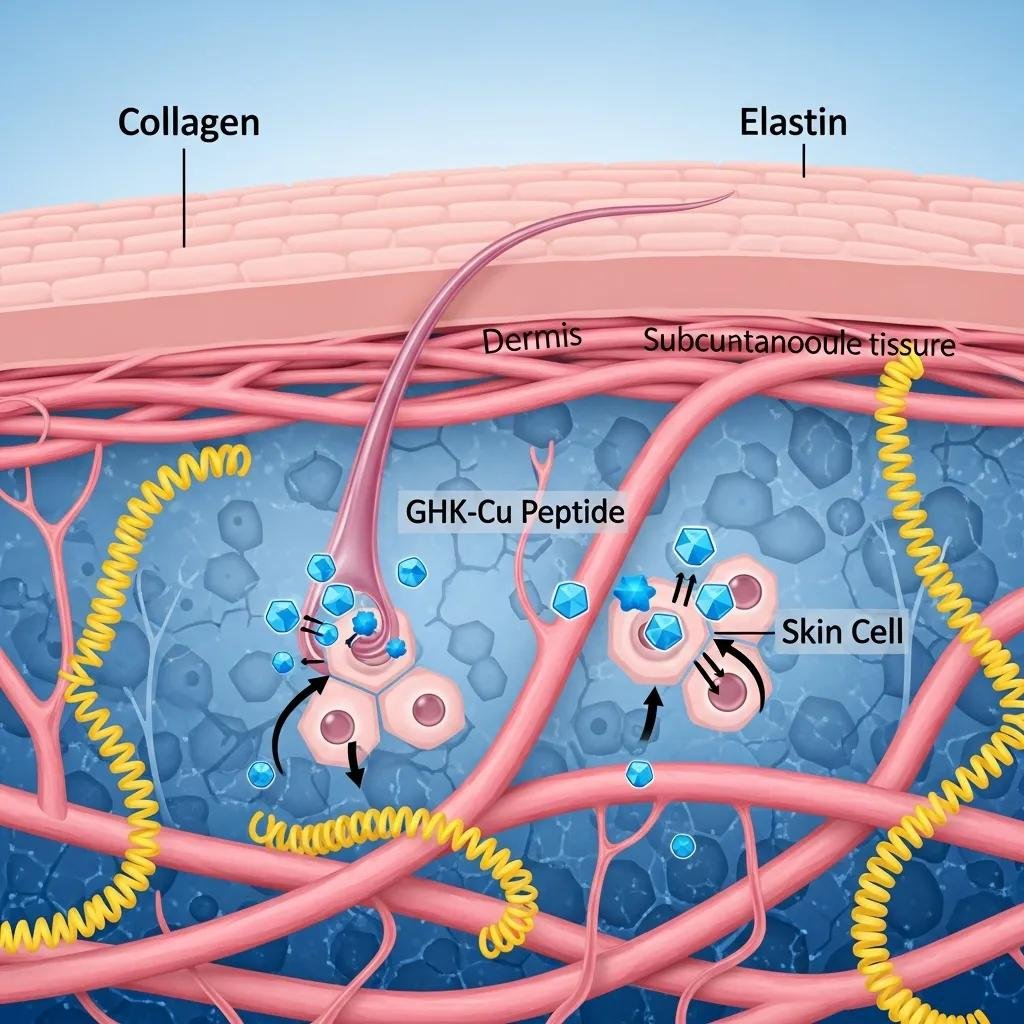
GHK-Cu stimulates collagen and elastin production by activating dermal fibroblasts and modulating gene expression tied to extracellular matrix synthesis. It acts as a signaling peptide that enhances transcription of collagen-related genes while promoting matrix organization, which results in firmer skin structure and reduced wrinkle depth over time. Laboratory and translational studies from recent years (current research shows consistent upregulation patterns) provide quantitative support for increased collagen markers following topical or delivered peptide exposure. Clinically, these molecular changes translate into improved skin thickness and elasticity that become more evident with cumulative treatments.
What anti-inflammatory and antioxidant properties improve skin health?
GHK-Cu reduces expression of pro-inflammatory mediators and increases antioxidants within the dermis, which lowers chronic inflammation and protects cells from oxidative damage. This modulation of the inflammatory milieu supports quicker re-epithelialization and limits prolonged redness after procedures or injury. Reduced oxidative stress preserves collagen integrity and slows degradation, supporting longer-term improvements in tone and texture. Recognizing these anti-inflammatory and antioxidant properties clarifies why GHK-Cu can both prevent and repair environmental and procedural skin damage.
How does GHK-Cu peptide promote hair growth and scalp health?
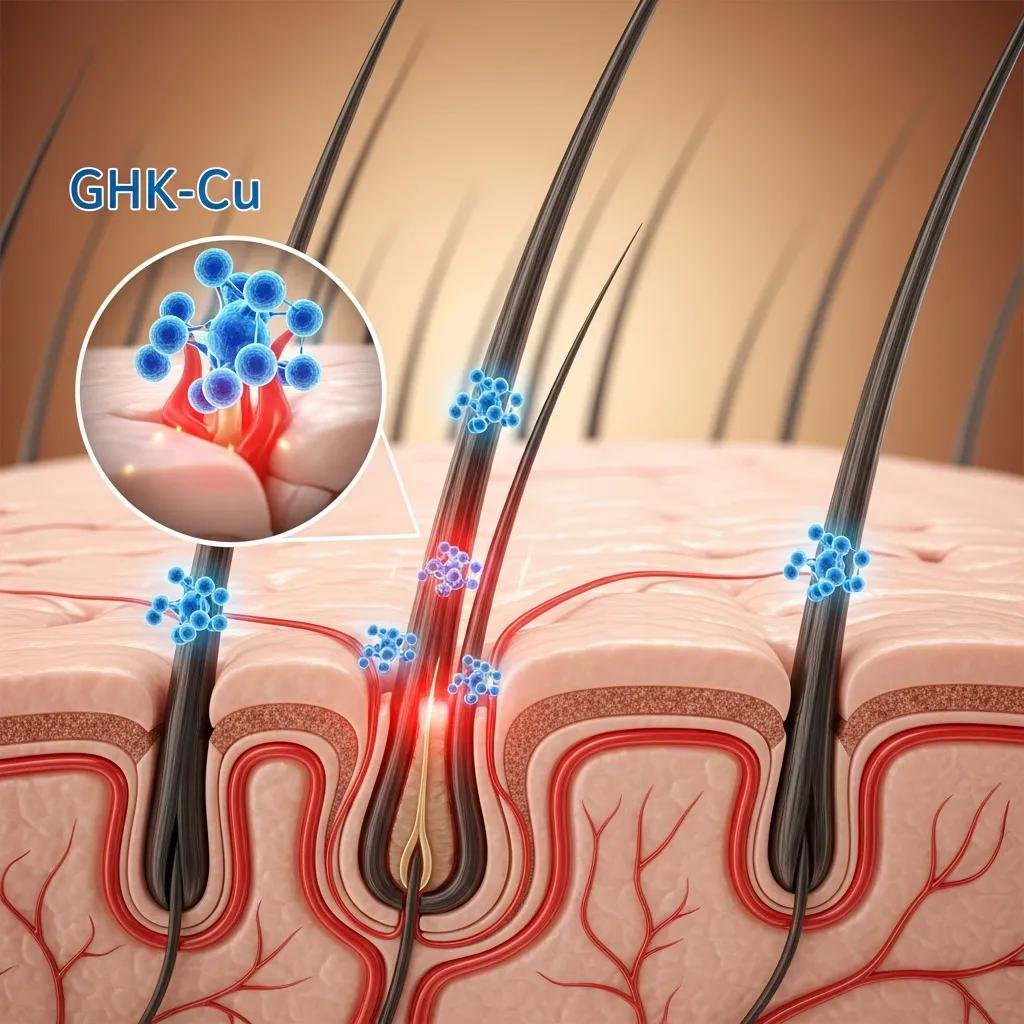
GHK-Cu peptide promotes hair growth by stimulating dermal papilla cells and improving the follicular microenvironment, which supports the anagen (growth) phase and encourages thicker hair shafts. The peptide’s regulatory effects on extracellular matrix and local cytokines reduce follicular inflammation and support regenerative signaling in hair follicles. Improved scalp circulation and reduced oxidative stress further enhance nutrient delivery to follicles, making GHK-Cu a promising hair growth peptide in combination regimens. The following subsections detail follicle-level actions and circulation-related mechanisms that underpin these benefits.
GHK-Cu directly influences dermal papilla cells by enhancing cell viability and regenerative signaling that favors hair follicle cycling and renewal. By promoting growth-phase signaling, the peptide helps shift follicles toward prolonged anagen duration, which can increase hair count and density over months. These cellular effects suggest combination strategies—pairing GHK-Cu with other follicle-targeted therapies—may amplify results when managed by advanced practitioners. The next subsection explains circulation and anti-shedding effects.
GHK-Cu improves scalp microcirculation and reduces inflammatory stress around hair bulbs, enhancing nutrient and oxygen delivery to follicles while decreasing telogen effluvium. Improved perfusion supports follicle metabolism and can result in less shedding and incremental increases in hair thickness. Clinically, measurable gains in hair diameter and reduced shedding often appear after several months of treatment. Understanding circulation effects helps set realistic expectations for pace of improvement.
- GHK-Cu supports dermal papilla stimulation for follicle regeneration and longer anagen phases.
- It reduces follicular inflammation, leading to lower shedding and better hair retention.
- Enhanced scalp circulation supplies follicles with nutrients and oxygen necessary for thicker hair growth.
What is the role of GHK-Cu in hair follicle stimulation?
GHK-Cu plays a role in hair follicle stimulation by activating dermal papilla cells and enhancing extracellular matrix components that support follicle structure. This activation promotes signals associated with the growth phase and increases follicular resilience to miniaturization. Evidence from cell-based and translational studies indicates improvements in markers linked to hair growth cycles, although clinical outcomes depend on delivery method and baseline hair health. Combining GHK-Cu with supportive scalp protocols can maximize follicular response under professional supervision.
How does GHK-Cu improve scalp circulation and reduce hair loss?
GHK-Cu enhances microvascular function near hair follicles and reduces pro-inflammatory conditions of the scalp, which together improve nutrient flow and follicle survival. Vasodilatory and anti-inflammatory effects reduce the frequency of telogen transition and support sustained anagen activity, helping reduce diffuse shedding. These vascular and anti-inflammatory benefits make GHK-Cu a useful adjunct for those addressing thinning due to inflammation or poor scalp health. Practical application often involves repeated, monitored treatments to sustain circulation improvements.
What are the available GHK-Cu peptide therapy options at Shore MedSpa Rockville?
GHK-Cu delivery options generally include topical serums, direct injections, and microneedling-enhanced application, each selected for specific indications and desired depth of effect. At Shore MedSpa & Bio Aesthetics in Rockville, MD, Dr. Ronald Shore integrates these delivery methods into personalized plans that align peptide dosing and adjunctive procedures to patient goals. Choosing the right approach balances penetration, downtime, and target tissue—topicals for surface remodeling, injections for focal deep delivery, and microneedling for combined uptake and collagen stimulation. The next section compares topical versus injection approaches in concise terms.
| Delivery Method | Typical Use / Benefit | Notes |
|---|---|---|
| Topical serum | Surface rejuvenation and ongoing maintenance | Convenient, limited deep penetration |
| Injection (local) | Targeted deeper remodeling and scar/fine-line correction | More direct tissue delivery, precise dosing |
| Microneedling + peptide | Enhanced absorption and collagen induction | Synergistic remodeling with brief downtime |
- Topical application: convenient, good for maintenance and broad surface improvements.
- Injections: deeper, targeted correction for localized volume or scars.
- Microneedling-assisted delivery: best for combining structural collagen stimulation with peptide uptake.
These options allow tailoring therapies to individual skin or scalp needs while keeping peptide therapy evidence-focused and practical.
How do topical applications compare to injections for GHK-Cu delivery?
Topical GHK-Cu serums are noninvasive and suitable for daily maintenance, but they face penetration limits across the stratum corneum that can reduce deep dermal impact. Injections deliver peptide directly into the dermis or subdermal tissues, producing faster, more focal remodeling with controlled dosing and quicker visible changes. Safety profiles differ mainly in invasiveness and downtime; topicals have minimal risk while injections require sterile technique and professional oversight. Selecting between them depends on treatment goals, and many providers use a staged approach combining both for optimal results.
How does microneedling enhance GHK-Cu peptide absorption?
Microneedling creates controlled microchannels that transiently bypass the skin barrier, increasing GHK-Cu uptake into the dermis and amplifying collagen-induction signals simultaneously. This paired approach leverages mechanical remodeling plus biochemical signaling for compounded improvements in texture and firmness. Typical protocols space sessions to allow healing and collagen remodeling, with mild transient redness and short downtime. When performed under clinical supervision, microneedling with peptide application optimizes both delivery and regenerative response.
What results and safety considerations should patients expect from GHK-Cu therapy?
Is GHK-Cu safe? Yes—when used under professional supervision, GHK-Cu has a favorable safety profile with mostly mild, transient local reactions; serious adverse events are rare in controlled clinical use. Expected outcomes differ: skin texture and tone improvements often begin within weeks, while structural collagen-driven changes and hair density gains accumulate over months. Personalized monitoring, allergy screening, and integration with other modalities ensure safety and maximize results. The next subsections map realistic timelines and summarize common side effects with practical follow-up advice.
| Outcome | Timeframe | Expected Change |
|---|---|---|
| Skin texture & redness | 4–8 weeks | Smoother tone, reduced erythema |
| Fine lines / firmness | 8–12+ weeks | Noticeable increase in firmness, reduced wrinkle depth |
| Hair density/thickness | 12+ weeks | Gradual increase in shaft diameter and reduced shedding |
- Common effects: temporary redness, mild irritation at application or injection sites.
- Rare risks: allergic reactions are uncommon but possible; professional assessment is important.
- Follow-up: scheduled monitoring and adjustments help optimize efficacy and safety.
These safety considerations emphasize the value of professional consultations and personalized plans offered by licensed providers.
What is the typical timeline for visible skin and hair improvements?
Initial skin improvements—reduced redness and slight texture smoothing—can appear within 4–8 weeks as peptide signaling and antioxidant effects manifest. Collagen- and elastin-driven firmness and wrinkle improvements typically require 8–12 weeks and multiple applications for cumulative remodeling. Hair improvements, including reduced shedding and gradual increases in thickness, often present after 12 weeks or longer, depending on baseline follicle health and treatment frequency. Patient factors and delivery modality influence pace, so consistent follow-up optimizes long-term outcomes.
What are the common side effects and safety profile of GHK-Cu treatments?
Common side effects include temporary redness, mild irritation, or localized tenderness after topical application, microneedling, or injection; these generally resolve within days. Allergic reactions are rare but warrant pre-treatment screening and immediate attention if signs develop. Professional administration by a board-certified dermatologist—such as those at Shore MedSpa & Bio Aesthetics in Rockville, MD—helps ensure proper technique, dosing, and monitoring to minimize risks. If unexpected or prolonged symptoms occur, patients should seek prompt evaluation to rule out infection or adverse reactions.