
Vitamin E Benefits: Antioxidant Power for Skin Protection Explained
Vitamin E is a family of fat-soluble antioxidants that protect skin by neutralizing free radicals and preserving lipid membranes. Current research shows alpha-tocopherol and related tocopherols/tocotrienols donate electrons to interrupt oxidative chain reactions, which reduces inflammation, supports barrier function, and helps prevent photoaging. Readers will learn what forms of Vitamin E matter for skin, how the molecule works at a cellular level, practical topical and dietary strategies, and how antioxidant planning complements in-clinic procedures. Many people seek to strengthen their skin barrier and minimize sun-related damage; Vitamin E offers evidence-based, accessible steps to support these goals when used correctly and in combination with sunscreen and clinical care. This article explains mechanisms, lists key antioxidant benefits, provides actionable application guidance, and outlines how Vitamin E can be integrated safely into personalized skincare and post-procedure plans.
What Is Vitamin E and How Does It Protect Your Skin?
Vitamin E describes a group of fat-soluble compounds that act as chain-breaking antioxidants in lipid environments, including the stratum corneum and cell membranes. By donating an electron to lipid radicals, Vitamin E halts lipid peroxidation and preserves membrane integrity, which in turn reduces inflammation and moisture loss. Understanding these forms clarifies why formulation choice matters for topical delivery and stability, and why Vitamin E pairs with water-soluble antioxidants for regeneration.
The following table summarizes the major topical forms, their mechanistic role, and skin relevance to help you choose effective products.
The table below compares common Vitamin E forms and why they matter for skin.
| Form | Mechanism | Skin Relevance |
|---|---|---|
| Alpha-tocopherol | Electron donor, lipid peroxidation inhibitor | Widely studied; effective in topical serums for barrier protection |
| Tocotrienols | Potent antioxidant in lipid membranes | Emerging interest for anti-inflammatory and photoprotective effects |
| Tocopherol derivatives (esters) | Stabilized forms that convert to active tocopherol | Better shelf stability in formulations; useful in creams and emulsions |
This comparison clarifies that alpha-tocopherol remains the benchmark while tocotrienols and stabilized derivatives provide formulation options for stability and potency. Recognizing form and vehicle helps decide whether a serum, oil, or cream will best support your skin goals.
What Are the Key Forms of Vitamin E Relevant to Skin Health?
Alpha-tocopherol is the most researched form of Vitamin E for topical skincare and is often the active benchmark in studies due to its robust chain-breaking activity. Tocotrienols represent a subgroup with slightly different saturation and ring structure that can offer complementary antioxidant potency and anti-inflammatory effects in lipid layers. Formulation vehicles—oils, creams, and serums—act as delivery systems that determine penetration and retention in the skin, so vehicle selection affects efficacy. Choosing products with stabilized derivatives or antioxidant pairings improves shelf life and clinical outcomes.
How Does Vitamin E Neutralize Free Radicals to Prevent Skin Damage?
Vitamin E interrupts free-radical chain reactions by donating an electron to lipid radicals, converting them to less reactive species and stopping propagation of lipid peroxidation. This chain-breaking action protects cell membranes and the stratum corneum, preserving barrier function and hydration while reducing pro-inflammatory signaling. Vitamin E also interacts with related entities like Vitamin C, where aqueous antioxidants can regenerate oxidized tocopherol back to its active state. Together, these antioxidant relationships reduce oxidative stress and lower the cumulative damage that drives photoaging and pigmentation.
What Are the Main Antioxidant Benefits of Vitamin E for Skin?
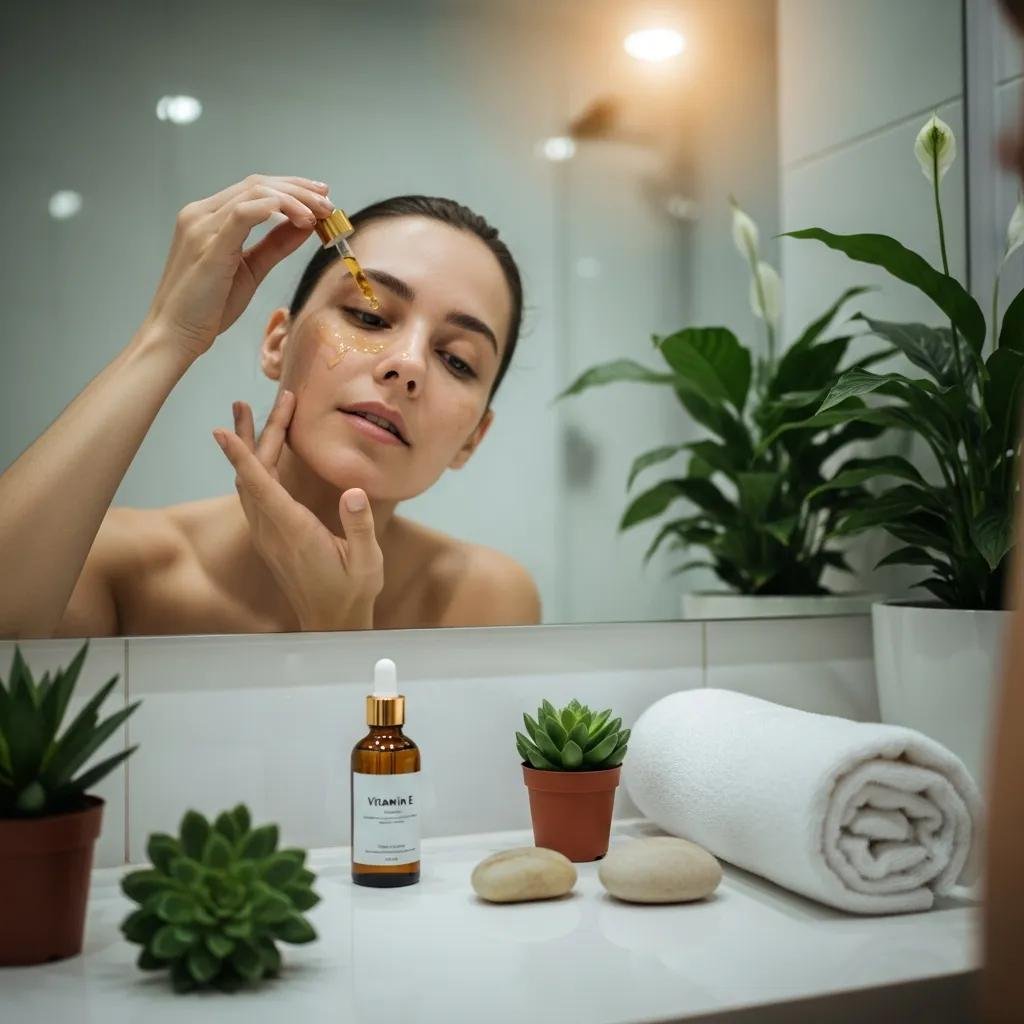
Vitamin E delivers multiple antioxidant benefits that translate into measurable outcomes for skin health and appearance. It reduces UV-induced oxidative damage as an adjunct to sunscreen, supports barrier repair to improve hydration and tactile firmness, moderates inflammation during healing, and can assist in reducing visible signs of photoaging like fine lines and uneven tone. These benefits align with clinical goals—photoaging reduction, improved barrier function, and faster recovery—which are often targeted in cosmetic dermatology and medspa treatment planning.
The table below offers a concise evidence-oriented comparison of these outcome areas to clarify expected topical effects.
| Benefit Area | Attribute | Typical Topical Outcome |
|---|---|---|
| UV/Environmental Protection | Neutralizes UV-generated radicals | Reduced oxidative markers and complement to sunscreen |
| Barrier Support | Preserves lipids and reduces TEWL | Improved hydration and skin smoothness |
| Anti-inflammatory | Lowers cytokine signaling | Calmer, less reactive skin during recovery |
| Wound Healing Support | Supports re-epithelialization indirectly | Faster visual recovery and reduced irritation |
This comparison highlights that Vitamin E’s core contributions are protective and supportive rather than standalone replacements for sunscreen or procedural aftercare. Clinicians often incorporate antioxidants to enhance clinical outcomes without replacing standard interventions.
Vitamin E’s antioxidant profile supports medspa objectives like minimizing photoaging and strengthening barrier repair after procedures, making it a sensible complement to advanced cosmetic dermatology strategies that prioritize natural-appearing rejuvenation.
How Does Vitamin E Shield Skin from UV Radiation and Environmental Stress?
Vitamin E neutralizes the reactive oxygen species generated by UV exposure, thereby lowering oxidative damage to lipids, proteins, and DNA in the epidermis. As an adjunct to sunscreen, topical Vitamin E reduces markers of photooxidative stress and helps control downstream inflammatory responses that contribute to erythema and long-term photodamage. Practical application frames Vitamin E as complementary—apply sunscreen as primary protection and use Vitamin E formulations to bolster antioxidant defense. Pairing Vitamin E with water-soluble antioxidants like Vitamin C forms a synergistic relationship: Vitamin C regenerates oxidized Vitamin E, which preserves membrane integrity.
In What Ways Does Vitamin E Support Anti-Aging and Reduce Wrinkles?
Oxidative stress accelerates collagen breakdown and crosslinking that lead to loss of elasticity and wrinkle formation, and Vitamin E’s antioxidant action helps mitigate these processes by protecting dermal proteins and lipids. Topical Vitamin E can improve skin hydration through barrier preservation, which reduces the appearance of fine lines and creates a firmer, more resilient skin surface. Evidence trends indicate realistic, modest improvements in texture and tone when Vitamin E is used consistently alongside other anti-aging actives. For visible wrinkle reduction, Vitamin E is most effective as part of a regimen that includes retinoids, sunscreens, and professional resurfacing when appropriate.
How Can You Use Vitamin E for Effective Skin Protection?
Practical use of Vitamin E requires attention to form, vehicle, timing, and synergy with other actives; topical delivery targets the epidermis directly while oral intake supports systemic antioxidant status. For topical application, look for stabilized alpha-tocopherol or tocotrienol-enriched formulations in serums or creams and layer them thoughtfully with sunscreen and other antioxidants. Dietary sources such as nuts, seeds, and vegetable oils provide systemic support but do not substitute for topical protection of the skin surface. Below is a focused comparison of topical versus oral approaches to clarify pros and cons for skin outcomes.
The following table compares topical and oral Vitamin E approaches for skin health.
| Approach | Delivery | Typical Use | Pros / Cons |
|---|---|---|---|
| Topical Vitamin E | Direct epidermal delivery | Barrier repair, antioxidant serums | Pros: targeted effect; Cons: formulation sensitivity |
| Oral Vitamin E | Systemic circulation | Nutritional antioxidant support | Pros: systemic antioxidant pool; Cons: limited direct skin targeting |
| Combined Strategy | Both topical and oral | Holistic support for skin health | Pros: complementary; Cons: requires product quality attention |
What Are the Best Practices for Topical Vitamin E Application?
Begin with patch testing for new Vitamin E products to check sensitization risk, especially with raw oils; this mitigates potential irritation before full-face use. Use stabilized derivatives or well-formulated serums to avoid rapid oxidation, and apply Vitamin E after cleansing and before heavier occlusives to maximize epidermal delivery. For daytime routines, pair Vitamin E with broad-spectrum sunscreen because Vitamin E complements but does not replace UV filters. Layering Vitamin C with Vitamin E creates a regeneration loop that maintains antioxidant capacity and enhances photoprotection.
How Do Dietary Sources and Supplements Contribute to Skin Health?
Dietary Vitamin E from nuts, seeds, and vegetable oils supports systemic antioxidant defenses and contributes to skin health indirectly through improved overall nutritional status. Supplements can address dietary gaps or deficiency under medical guidance, but oral dosing offers limited direct delivery to the stratum corneum compared with topical application. Safety considerations include avoiding excessive supplemental dosages without clinician input, as topical and oral strategies serve different roles. For targeted skin outcomes, combine a nutritious diet with appropriate topical antioxidants for best results.
How Does Vitamin E Complement Shore MedSpa’s Skin Treatments?
Vitamin E’s antioxidant and barrier-supporting properties align with Shore MedSpa & Bio Aesthetics’ clinical focus on advanced cosmetic dermatology and cutting-edge skin treatments. In procedural planning—chemical peels, microneedling, and laser resurfacing—antioxidant strategies can be included in pre- and post-treatment regimens to reduce oxidative stress and support calmer recovery. Shore MedSpa & Bio Aesthetics, a Rockville, MD cosmetic dermatology practice led by a board-certified dermatologist, emphasizes personalized plans and natural-appearing rejuvenation, and antioxidants like Vitamin E are often integrated into those individualized protocols. Discussing antioxidant timing and formulation with the treating clinician helps ensure Vitamin E supports, rather than interferes with, professional wound care.
How Does Vitamin E Enhance Healing After Laser and Chemical Peels?
Vitamin E may reduce inflammation and support re-epithelialization through its antioxidant action, potentially easing visual recovery after resurfacing when used at clinician-recommended times. Immediate post-procedure wound care tends to prioritize cleansing, barrier protection, and avoidance of irritants; therefore, timing Vitamin E application according to provider instructions is essential to avoid sensitization or occlusive issues. When introduced appropriately, Vitamin E can complement protocols that aim to minimize downtime and support scar modulation, while careful monitoring by the treating clinician ensures safety. Patients should follow personalized post-procedure plans provided by their practitioner.
What Personalized Skincare Plans Incorporate Vitamin E for Optimal Results?

A medspa provider personalizes Vitamin E inclusion by assessing skin type, procedure history, and concurrent actives—drier skin may benefit from occlusive Vitamin E oils, while sensitive or acne-prone skin might use stabilized serums. Integration with retinoids or chemical exfoliants requires sequencing and potential tapering to prevent irritation, and clinical plans often phase antioxidants in during recovery and maintenance stages. Examples include daytime antioxidant protection with Vitamin E and C, and evening barrier repair focused on stabilized Vitamin E derivatives. Consulting with an experienced provider at Shore MedSpa & Bio Aesthetics helps tailor safe, evidence-based plans that support both home care and in-office treatments.
- Key takeaway: Use stabilized topical Vitamin E for barrier protection alongside sunscreen.
- Clinical note: Coordinate antioxidant use with your provider before and after procedures.
- Holistic approach: Combine dietary sources, targeted topicals, and clinician guidance for best outcomes.
Vitamin E functions as a practical, research-aligned antioxidant that complements sunscreen and clinical treatments when used thoughtfully and under professional direction at a medspa that prioritizes personalized, natural results.