Your Guide to the Best Chemical Peels for Every Skin Type
Chemical peels are controlled topical treatments that remove damaged outer skin layers to improve texture, tone, and clarity. This guide explains how peels work, compares main peel categories, and helps you match superficial, medium, or deep peels to common skin types and concerns. Choosing the right peel matters because depth, active ingredient, and skin phototype determine safety, downtime, and results. You will learn the mechanisms behind AHAs, BHAs, TCA, and phenol peels, practical indications for acne, hyperpigmentation, and scars, plus realistic timelines for improvement. Along the way, the article maps specific recommendations for oily, sensitive, mature, and darker skin tones and includes quick-reference tables for fast decisions. For local readers, Shore MedSpa & Bio Aesthetics in Rockville, MD — led by Board-Certified Dermatologist Dr. Ronald Shore — offers professional peel options such as VI Peel and AHA-based protocols under dermatologic oversight to ensure safe, personalized selection.
What Are Chemical Peels and How Do They Improve Your Skin?
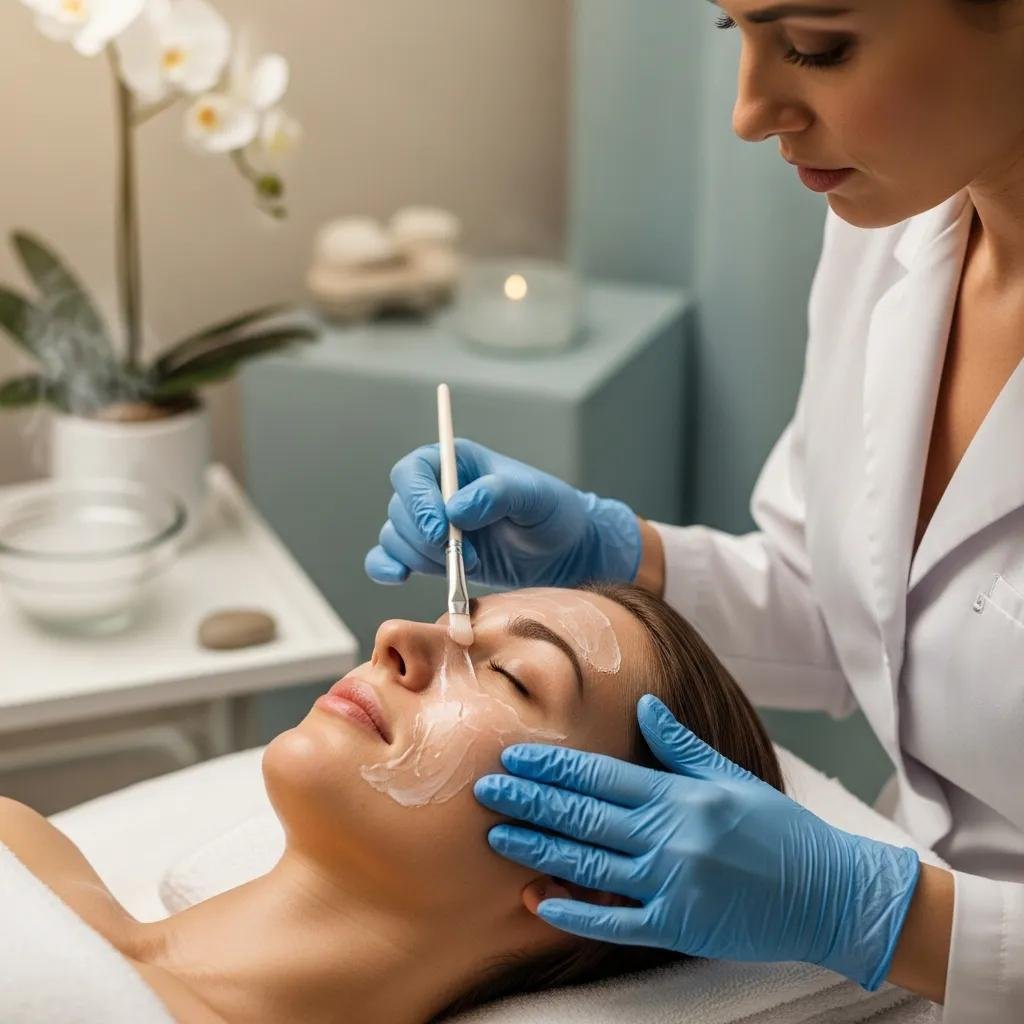
A chemical peel is a topical agent applied to exfoliate the epidermis and, at deeper levels, stimulate dermal remodeling. Exfoliation removes damaged keratinocytes while increased cell turnover and controlled injury signal collagen synthesis and tissue reorganization. The combined effect improves texture, reduces fine lines, lightens pigment, and clears acne-prone skin by normalizing follicular desquamation. Understanding these mechanisms helps set expectations for downtime and the number of sessions required to reach cosmetic goals.
How Do Chemical Peels Work to Renew Skin?
Chemical peels accelerate epidermal desquamation and trigger regenerative processes in the skin. Acidic agents loosen corneocyte adhesion, promoting shedding of pigmented or roughened layers and encouraging replacement with fresher epidermis. Deeper peels create controlled dermal injury that stimulates fibroblasts to deposit new collagen, improving rimpling and deeper lines over weeks to months. These mechanistic steps explain why repeated superficial peels refine tone quickly while medium-depth peels provide more noticeable remodeling and longer-lasting correction.
What Skin Concerns Can Chemical Peels Address?
Chemical peels target a range of concerns from surface texture to deeper photodamage and scarring. Superficial AHAs and BHAs reduce fine lines, uneven tone, and acne by increasing turnover and unclogging pores. Medium-depth agents like TCA address sun damage, persistent hyperpigmentation, and moderate wrinkles through epidermal and partial dermal resurfacing. Deep phenol-based peels can correct severe photodamage and deeper rhytids but require extended recovery and specialist oversight due to systemic and pigmentary risks.
What Are the Main Types of Chemical Peels?
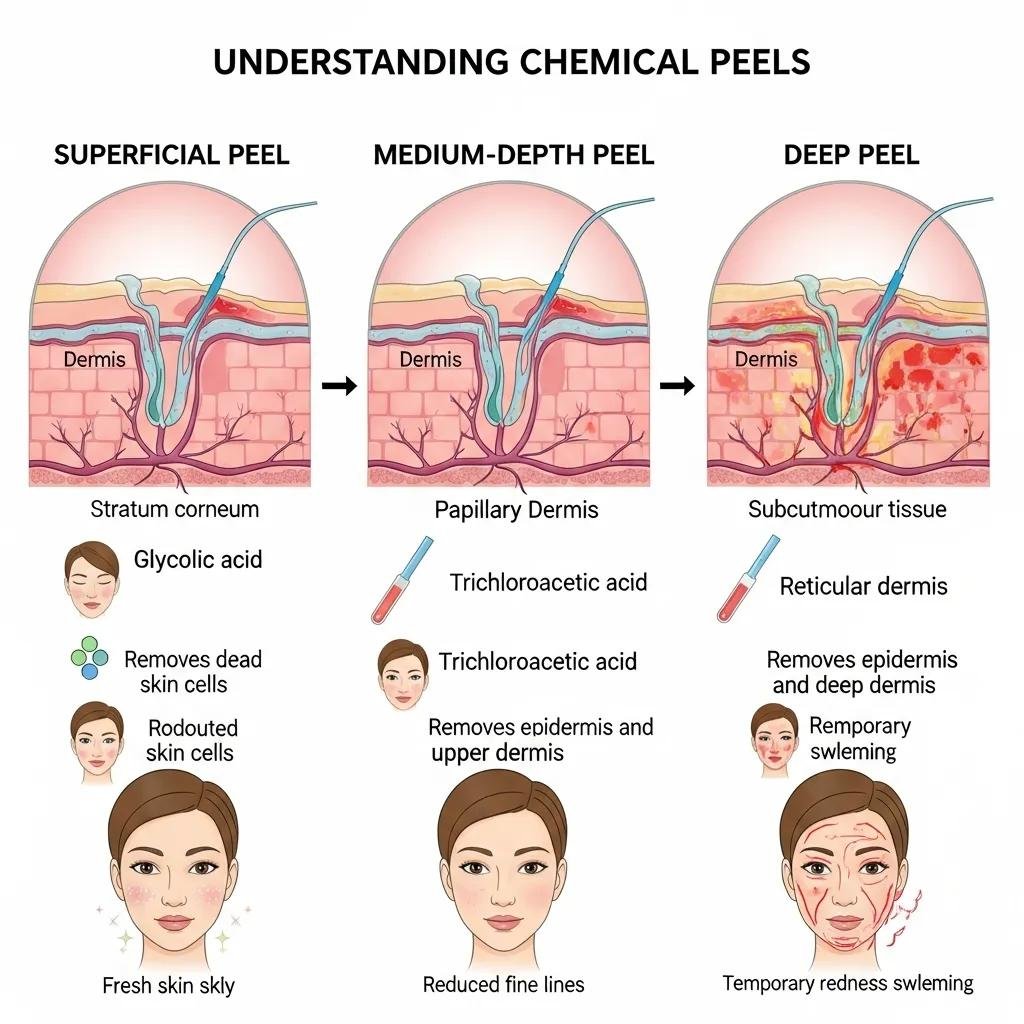
Chemical peels are categorized by active ingredient and depth: superficial, medium-depth, and deep. Superficial peels (AHAs/BHAs) act mainly in the epidermis for texture and pigment control. Medium-depth peels (TCA, Jessner-modified TCA) penetrate into the papillary dermis for more pronounced sun damage and lines. Deep peels (phenol) reach the reticular dermis and are reserved for significant photoaging and severe textural change. Below is a concise comparison table to help you scan options quickly.
Different peel types vary in concentration, primary indications, and expected downtime.
| Peel Type | Typical Concentration / Depth | Primary Indications & Typical Downtime |
|---|---|---|
| Glycolic / Lactic (AHA) | Low-moderate; superficial | Fine lines, uneven tone; minimal downtime (1–3 days) |
| Salicylic (BHA) | Low-moderate; superficial | Acne, oily skin; minimal peeling and rapid recovery |
| TCA (Trichloroacetic Acid) | Variable; superficial to medium-depth | Sun damage, wrinkles, superficial scars; 3–7 days peeling |
| Phenol / Deep peels | High; deep dermal | Severe photodamage, deep rhytids; prolonged recovery and specialist care |
What Is the Difference Between Superficial, Medium, and Deep Peels?
Superficial peels remove only the stratum corneum and upper epidermis, producing modest improvement with rapid recovery. Medium-depth peels reach the papillary dermis and deliver stronger change to pigmentation and moderate wrinkles, with predictable peeling and a week or so of visible recovery. Deep peels penetrate to the reticular dermis and can dramatically improve deep lines and severe sun damage but require extended healing and expert supervision. Risk of post-inflammatory hyperpigmentation increases with depth, especially in darker phototypes, so conservative selection and preconditioning are essential.
How Do TCA Peels Compare to AHA Peels?
TCA provides controlled medium-depth resurfacing that remodels collagen and treats sun damage more effectively than superficial AHAs. AHAs like glycolic and lactic are smaller molecules that increase epidermal turnover and smooth texture with minimal downtime and lower PIH risk when used correctly. TCA offers greater efficacy for wrinkles and moderate scars but carries higher downtime and pigment risk, requiring careful titration and professional application. For many patients, a layered approach — starting with AHAs and progressing to TCA under supervision — balances safety and results.
Which Chemical Peel Is Best for Your Specific Skin Type?
Matching skin type and concern to peel chemistry reduces complications while maximizing outcomes. Oily, acne-prone skin benefits from BHAs and certain medium TCA protocols to address both active lesions and textural scarring. Sensitive or dry skin responds better to gentler AHAs like lactic or mandelic acid at lower concentrations with conservative intervals. Mature, sun-damaged skin may need glycolic series or medium-depth TCA for collagen remodeling. Shore MedSpa & Bio Aesthetics offers a range of professional options including VI Peel and AHA-based peels as examples of protocols available under board-certified dermatologic oversight; a consultation ensures the chosen peel aligns with your skin goals and phototype.
Recommended mappings for common skin types:
- Oily / Acne-prone → Salicylic acid; medium TCA for scars
- Sensitive / Dry → Lactic acid; mandelic at lower strength
- Mature / Sun-damaged → Glycolic series; medium-depth TCA
- Darker phototypes → Conservative superficial peels; professional patch testing
This mapping provides starting points, but individual factors and prior therapy must guide final selection.
What Chemical Peels Are Recommended for Acne-Prone Skin?
For active acne, salicylic acid (a BHA) is strongly favored because it penetrates sebum-filled follicles and is comedolytic. Regular superficial BHA peels reduce lesion count and improve texture with minimal downtime and low irritation when dosed properly. For residual atrophic scarring, controlled medium-depth TCA protocols or focal TCA techniques can stimulate remodeling under professional care. Adjunctive measures such as topical retinoids and rigorous sun protection support peel outcomes and reduce recurrence.
Which Peels Are Suitable for Sensitive or Dry Skin?
Sensitive and dry skin tolerate gentler AHAs like lactic acid and mandelic acid best due to their hydrative and less-irritating profiles. Lower concentrations and longer intervals between sessions reduce barrier disruption and help preserve lipid recovery. Pre- and post-procedure barrier support—emollient cleansers, ceramide-rich moisturizers, and sunscreen—is essential to minimize irritation and maximize outcomes. Patch testing and gradual escalation under a clinician avoid pigmentary or inflammatory responses.
How Can Chemical Peels Treat Hyperpigmentation and Acne Scars?
Chemical peels treat pigment and scars by accelerating epidermal turnover, dispersing melanin, and initiating dermal remodeling. Superficial AHAs shift epidermal pigment and improve sun spots over multiple sessions, while TCA and VI Peel-style combination peels offer deeper pigment reduction and collagen stimulation for recalcitrant areas. For acne scarring, focal TCA techniques and medium-depth peels promote collagen induction and surface leveling, often used in combination with microneedling or laser therapies. Professional assessment is recommended for persistent hyperpigmentation or deep acne scars; Shore MedSpa & Bio Aesthetics provides clinical consultations with a board-certified dermatologist to determine an appropriate combination strategy.
Below is a comparison of conditions and effective peel options with expected timelines.
| Condition | Effective Peel Options | Mechanism + Expected Improvement Timeline |
|---|---|---|
| Post-inflammatory hyperpigmentation | Glycolic AHA, Mandelic, VI Peel | Epidermal turnover and pigment shedding; gradual improvement over 4–12 weeks |
| Melasma / stubborn pigment | Medium-depth TCA (careful) | Deeper epidermal and papillary dermal effects; risk of recurrence and PIH, monitored over months |
| Atrophic acne scars | TCA CROSS, medium TCA | Focal collagen induction and remodeling; visible improvement after multiple sessions (3–6 months) |
What Are the Benefits of Glycolic Acid Peels for Hyperpigmentation?
Glycolic acid accelerates desquamation and promotes even dispersion of melanin by promoting epidermal renewal. Its small molecular size allows good penetration, making it effective for superficial sun spots and mild post-inflammatory hyperpigmentation when used in a series. Improvements typically appear over several weeks to months and depend on consistent photoprotection and maintenance regimens. Combining glycolic peels with topical pigment agents under clinician guidance enhances durability of results.
Which Peels Effectively Reduce Acne Scars?
TCA techniques — including focal CROSS application for icepick scars and medium-depth TCA for broader rolling scars — stimulate collagen formation and surface recontouring. Repeated medium peels or combination therapy with resurfacing lasers or microneedling commonly yields the best remodeling for mixed scar types. Professional selection of depth and concentration is critical to balance efficacy with pigmentary risk, particularly in darker skin. Expect progressive improvement across multiple sessions with appropriate post-procedure care and sun avoidance.