Psoriasis Safe Aesthetic Treatments: Expert Care and Management at Shore MedSpa
Psoriasis creates patches of inflamed, scaly skin that often reacts differently to cosmetic procedures, so balancing aesthetic goals with medical safety is essential. This article explains safe aesthetic options for psoriasis patients, how treatments are adapted for sensitive psoriatic skin, the role of laser therapies, and complementary lifestyle measures that support outcomes. Under dermatologist-guided care — including oversight by board-certified practitioners such as Dr. Ronald Shore at Shore MedSpa & Bio Aesthetics in Rockville, MD — patients can pursue many cosmetic procedures with tailored precautions to reduce risks like Koebnerization and post-inflammatory pigment changes. Readers will learn which procedures are typically safe, which require modification, and which are generally avoided during active disease, plus practical pre- and post-care steps. The following sections cover safe procedure categories with a comparison table, clinic customization and safety protocols, laser therapy roles and device notes, and holistic lifestyle tactics to improve long-term skin health and aesthetic results. Throughout, emphasis is placed on dermatologist-guided psoriasis aesthetic care and safe cosmetic procedures for psoriasis.
What Are Safe Aesthetic Treatment Options for Psoriasis Patients?
Safe aesthetic care for psoriasis patients means choosing procedures that minimize skin trauma, respect disease stability, and reduce inflammatory triggers. Procedures that avoid deep epidermal injury or that can be performed on small, well-healed areas generally offer the best balance of benefit and safety. Selecting candidates when plaques are quiescent and coordinating timing with topical or systemic therapies reduces complication risk and improves outcomes. The key benefit is aesthetic improvement with controlled risk, achieved by adapting technique, energy settings, and area selection.
The following table compares common medspa procedures by overall safety profile, typical benefits, and primary precautions to consider before treatment.
| Procedure | Safety Level for Psoriasis | Typical Benefits | Main Precautions |
|---|---|---|---|
| Botox (on non-plaque skin) | Conditional — generally safe | Reduces dynamic lines, minimal downtime | Avoid injections into active plaques; consider disease stability |
| Dermal fillers | Conditional — site-specific | Restores volume and contours | Sterile technique; avoid injecting into inflamed skin |
| Gentle chemical peels (low concentration) | Conditional — superficial peels preferred | Improves texture, hydration | Use low-strength agents; test patch on unaffected skin |
| Microneedling | Generally avoid during active flares | Collagen stimulation for texture | Risk of Koebner phenomenon; test patch and small areas only |
| Laser resurfacing (ablative) | Generally avoid during active disease | Texture and scar improvement | High trauma risk; defer until stable disease |
This comparison clarifies that many procedures are usable with precautions, while aggressive resurfacing or treatments that intentionally injure the epidermis should be deferred during active psoriasis. Understanding these categories leads to practical selection rules for sensitive psoriatic skin.
Which MedSpa Procedures Are Suitable for Sensitive Psoriatic Skin?
Procedures suitable for sensitive psoriatic skin prioritize minimal epidermal disruption and robust pre- and post-treatment care. Hydrating, medical-grade facials and superficial chemical peels using low-concentration keratolytics can improve scaling and texture when plaques are stable and isolated. Injectables like Botox and dermal fillers are possible when injected into clinically normal skin away from plaques, with strict sterile technique and careful patient counseling about potential risks. Non-ablative lasers and targeted phototherapy tools may be considered for localized, well-controlled plaques, but require test patches and conservative settings. Collaborating with the patient’s dermatologist and timing procedures relative to systemic or topical therapies reduces flare risk and improves healing expectations.
How Does Shore MedSpa Customize Psoriasis Care for Sensitive Skin?
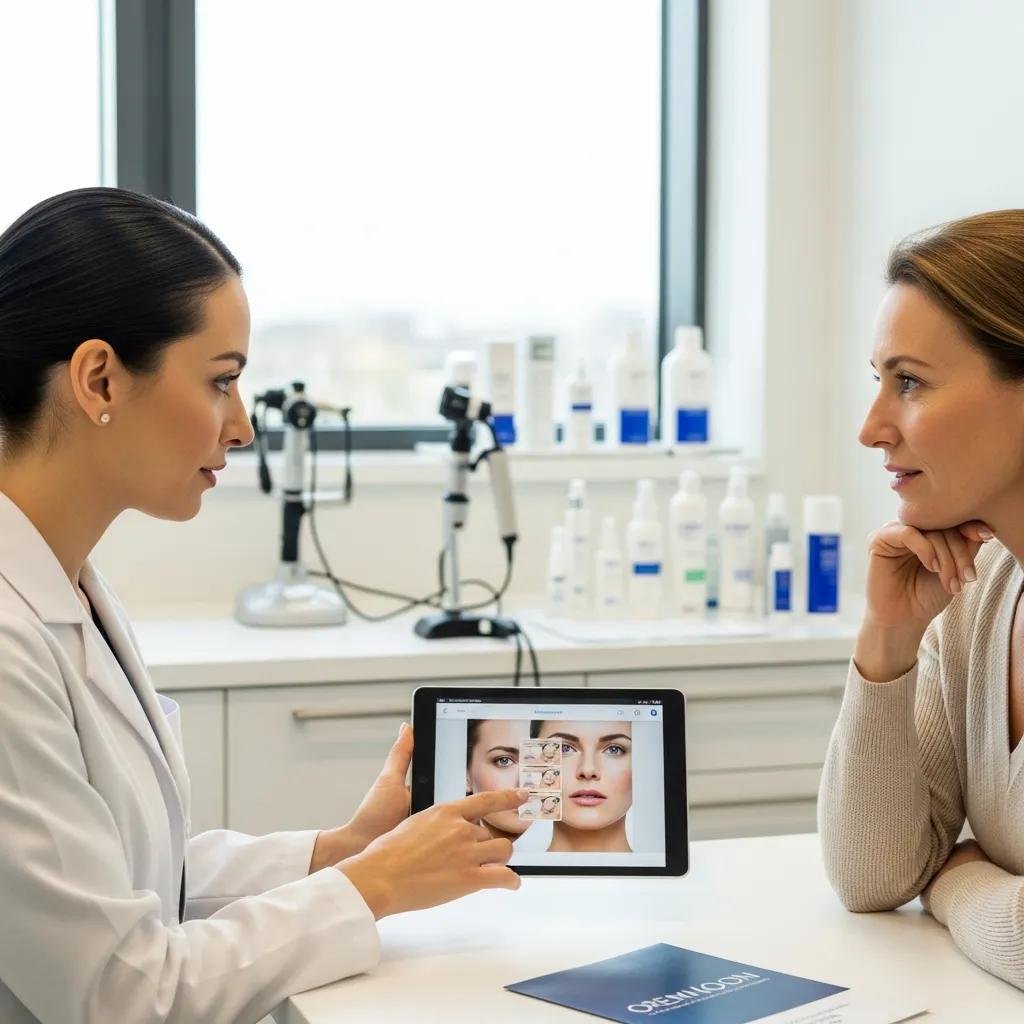
Customization begins with a focused dermatologic assessment that documents disease severity, recent flares, and current medications or biologic therapies. At Shore MedSpa & Bio Aesthetics, individualized plans emphasize coordination with the patient’s medical psoriasis regimen, explicit informed consent regarding Koebner risk, and test-patch protocols before larger treatments. Device parameters are adjusted to lower energy, smaller treatment areas are chosen initially, and pre-treatment skin preparation focuses on reducing inflammation and improving barrier function. This approach yields the dual benefits of achieving cosmetic goals while minimizing adverse outcomes through careful timing and technique.
Below is a concise checklist-style table showing typical customization elements and their patient impact.
| Personalization Element | How It Is Adjusted | Patient Impact |
|---|---|---|
| Dermatologic evaluation | Full skin exam + medication review | Identifies safe treatment windows |
| Test patch | Small-area trial of device/peel | Reveals Koebner or pigment response |
| Device parameter adjustment | Lower energy, fewer passes | Reduces trauma and healing time |
| Treatment timing | Coordinate with topical/systemic therapy | Minimizes flare risk and optimizes healing |
These steps form a practical safety framework that supports predictable outcomes and guides whether to proceed, defer, or modify a planned aesthetic procedure. The next section outlines intra-procedure and aftercare safeguards that further enhance safety.
What Safety Measures Ensure Effective Psoriasis Cosmetic Treatments?
Effective safety measures span pre-procedure screening, intra-procedure technique, and vigilant post-procedure monitoring to detect early plaque changes. Pre-treatment screening confirms disease stability, recent changes in systemic therapy, and presence of infection; obtaining a test patch helps predict individual skin response. During procedures, practitioners minimize trauma by reducing device energy, limiting treated area size, and using meticulous sterile technique to avoid secondary infection. Post-treatment care emphasizes barrier repair with emollients, sun protection, and clear instructions on when to contact the clinic for worsening plaques or unusual redness. These layered precautions help prevent Koebnerization and post-inflammatory hyperpigmentation while supporting predictable healing and aesthetic benefit.
What Role Do Laser Therapies Play in Managing Psoriasis Symptoms?
Laser and light therapies play a dual role: targeted phototherapy approaches can reduce local plaque inflammation, while certain aesthetic lasers can improve texture and scarring when disease is stable. Mechanistically, targeted UV-based therapies modulate local immune responses in plaques, while non-ablative lasers stimulate dermal remodeling with less epidermal injury. The primary clinical benefit is plaque reduction and skin-surface improvement, but safety hinges on device selection, patient candidacy, and timing relative to active disease. Candidate selection should favor localized, stable plaques and avoid widespread or actively inflamed areas to lower risks of exacerbation.
The table below summarizes laser technologies, their typical clinical use for psoriatic plaques, and safety considerations.
| Laser Type / Device | Typical Indication | Safety Notes / Indications |
|---|---|---|
| Excimer / targeted phototherapy | Localized plaque reduction | Lower collateral trauma; good for resistant patches |
| Non-ablative fractional lasers | Texture improvement when stable | Conditional use; test patch recommended |
| Ablative resurfacing (e.g., deep CO2) | Significant texture/scar remodeling | Higher Koebner risk; generally deferred during active disease |
Practical safety guidance for laser use includes candidate selection, test patches to assess pigment response, conservative energy settings, and spacing sessions to monitor for delayed plaque reactions.
Which Laser Technologies Are Safe and Effective for Psoriasis?
Excimer and other targeted phototherapy devices are commonly used for localized plaque treatment because they deliver concentrated UV energy with minimal surrounding skin exposure, reducing collateral trauma. Non-ablative fractional lasers may be considered for improving texture and superficial scarring once psoriasis is quiescent, using low-density settings and staged treatments. Ablative lasers that remove full-thickness epidermis carry higher risk of triggering Koebnerization and are usually avoided until long-term disease stability is documented. Selecting the right device requires weighing mechanism, plaque characteristics, and pigmentary risk, and should always follow a successful test patch and dermatologist input.
How Can Holistic Approaches Complement Psoriasis Aesthetic Care?

Holistic interventions support skin barrier function, reduce systemic inflammation, and improve resilience to procedural stress, thereby complementing aesthetic care for psoriasis patients. Lifestyle measures such as diet, stress management, and weight control can modulate disease activity and enhance healing after procedures. Hydrating, barrier-repair skincare routines and supervised gentle spa-style treatments can maintain skin health without provoking flares. Integrating these approaches with medical and aesthetic plans improves the durability of cosmetic results and overall patient satisfaction by addressing underlying contributors to psoriasis severity.
Below are practical lifestyle interventions that support skin health and recovery from aesthetic procedures.
- Mediterranean-style, anti-inflammatory diet: prioritize whole foods, fatty fish, and antioxidant-rich produce to reduce systemic inflammation.
- Stress reduction practices: regular mindfulness, cognitive-behavioral strategies, or guided relaxation lower flare frequency linked to stress.
- Weight management with medical oversight: achieving healthy weight can improve disease control and treatment responses.
- Smoking cessation and moderate exercise: both reduce systemic inflammation and support skin repair.
Implementing these measures alongside medical psoriasis management often leads to fewer flares and better outcomes after cosmetic procedures. The combined strategy of medical oversight, tailored aesthetic technique, and lifestyle optimization provides the most reliable path to safe cosmetic improvement for people living with psoriasis.
What Lifestyle Changes Support Skin Health in Psoriasis Patients?
Targeted lifestyle changes help reduce disease activity and improve recovery from aesthetic treatments by lowering systemic inflammation and enhancing skin repair. Dietary shifts toward anti-inflammatory patterns, such as a Mediterranean-style diet rich in omega-3 fatty acids and antioxidants, are associated with reduced psoriasis severity in recent studies and can support healing after procedures. Stress management techniques—including structured relaxation, sleep hygiene, and cognitive tools—decrease flare triggers linked to neuroimmune pathways. Finally, maintaining a healthy weight and avoiding tobacco improve response to both systemic therapies and cosmetic interventions, making procedural outcomes more predictable and durable.
- Anti-inflammatory diet: Emphasizes whole foods and omega-3s to reduce systemic inflammation.
- Stress management: Regular relaxation and sleep hygiene lower flare frequency.
- Healthy weight & smoking cessation: Improve therapy response and skin healing.
These actionable steps complement dermatologist-guided aesthetic care and help patients achieve safer, longer-lasting results.