

Post-Holiday Skin Detox: Effective Skin Rejuvenation Treatments for a Radiant Complexion
The term “post-holiday skin detox” describes a focused period of recovery and renewal for skin that has been affected by seasonal lifestyle shifts, such as richer foods, alcohol, disrupted sleep, and travel-related stress. This article explains why holiday habits lead to dehydration, dullness, inflammation, and breakouts, and it offers step-by-step at-home strategies plus evidence-based professional options to restore radiance. You will learn practical hydration and exfoliation techniques, which nutrients and habits speed repair, and which in-office procedures best target specific concerns like texture, pigmentation, and barrier disruption. Shore MedSpa & Bio Aesthetics, led by Dr. Ronald Shore, is noted here as a clinical resource for physician-led evaluation and treatment planning when self-care needs escalation. Read on for clear how-to lists, quick comparison tables of at-home versus professional options, and a concise pathway to a personalized post-holiday skin detox plan.
What Are Common Post-Holiday Skin Concerns and Their Causes?
Post-holiday skin concerns are predictable clusters of symptoms that follow short-term changes in diet, sleep, and environment. These tend to include surface dullness, increased fine lines from dehydration, episodic breakouts, redness or inflammation, and new or worsened pigmentation. The underlying mechanisms are disruption of the skin barrier, increased transepidermal water loss, inflammatory signaling, and accumulation of dead cells that scatter light. Recognizing these links lets you choose targeted recovery steps that restore barrier function and skin luminosity.
Common causes include:
- Alcohol and high-sugar meals increase inflammation and dehydration.
- Sleep disruption reduces nightly repair and collagen synthesis.
- Travel and cold air raise transepidermal water loss and irritation.
- Increased sun exposure or irregular sunscreen use accelerates pigmentation.
These proximate causes explain why a combined repair approach — restoring hydration, using gentle exfoliation, and reducing inflammation — is the fastest route to visible improvement. Understanding these drivers leads directly into practical at-home detox methods that support barrier recovery and reduce downstream issues.
How Do Dehydration and Dullness Affect Your Skin After the Holidays?
Dehydration reduces skin turgor and accentuates fine lines by lowering water content in the epidermis and dermis. When the barrier is compromised, transepidermal water loss (TEWL) increases and skin appears matte and flattened rather than luminous. Dullness also results from retained corneocytes and decreased light reflection from the surface; gentle exfoliation restores reflectance by removing those cells. Expect measurable improvement within days for hydration and within one to two weeks for brightness when consistent topical humectants and barrier-supporting moisturizers are used.
Restoring hydration and surface turnover supports subsequent treatments that stimulate collagen and pigment correction. That progression prepares skin for professional interventions when deeper texture or pigment issues persist.
What Role Do Diet, Sleep, and Environmental Factors Play in Post-Holiday Skin Health?
Dietary excesses rich in sugar and saturated fats increase systemic oxidative stress and can trigger inflammatory acneiform breakouts. Alcohol acts as a diuretic and reduces skin hydration while impairing sleep quality, which in turn limits nocturnal repair processes like collagen synthesis and epidermal turnover. Environmental stressors—cold indoor heating, dry air, and intermittent sun exposure—exacerbate TEWL and can accelerate post-inflammatory hyperpigmentation. Small, actionable swaps such as reducing night-time alcohol, adding omega-3 rich foods, and prioritizing consistent sleep cycles significantly accelerate recovery.
Addressing these lifestyle drivers complements topical care and reduces the intensity or frequency of clinician-level interventions. These lifestyle changes form the foundation of any personalized detox plan.
Which At-Home Detox Methods Help Restore Your Skin's Glow?

A targeted at-home protocol combines internal hydration, gentle resurfacing, antioxidant protection, and barrier restoration. Start with increased water intake and daily application of humectants like hyaluronic acid layered under a moisturizer that contains occlusive elements to lock moisture in. Introduce low-concentration chemical exfoliants (lactic acid or PHA) 1–2 times weekly for sensitive skin, and salicylic acid for oily or breakout-prone areas. Add a vitamin C antioxidant in the morning to support brightening and free-radical defense while maintaining sunscreen use daily.
How-to hydration and exfoliation steps:
- Hydrate internally and externally: Drink water consistently and apply a hyaluronic acid serum morning and evening.
- Cleanse gently: Use a pH-balanced cleanser to avoid stripping oils; avoid harsh scrubs.
- Exfoliate conservatively: Start with once-weekly lactic acid or PHA and increase to twice weekly only if tolerated.
- Protect and brighten: Use topical vitamin C in the AM and broad-spectrum sunscreen every morning.
These steps provide predictable short-term improvements and reduce the need for aggressive in-office treatments. If at-home measures deliver incomplete results after 4–6 weeks, professional options can accelerate recovery and address residual texture or pigment concerns.
Introductory reference table for at-home methods:
Different at-home steps act through specific mechanisms and suit different skin goals.
| At-home Method | Mechanism | Frequency / Suitability |
|---|---|---|
| Hyaluronic acid serum | Increases epidermal water retention | Daily; suits all skin types |
| Lactic acid (AHA) | Gentle exfoliation and hydration | 1–2× weekly; for dry/dull skin |
| Salicylic acid (BHA) | Oil-soluble exfoliant; reduces comedones | 1–3× weekly; oily, acne-prone skin |
| Vitamin C topical | Antioxidant and brightening agent | Daily AM; supports pigment control |
These at-home selections create a consistent baseline of improved texture, luminosity, and barrier repair before considering advanced in-office procedures.
How Can Professional MedSpa Treatments Rejuvenate Your Complexion After the Holidays?
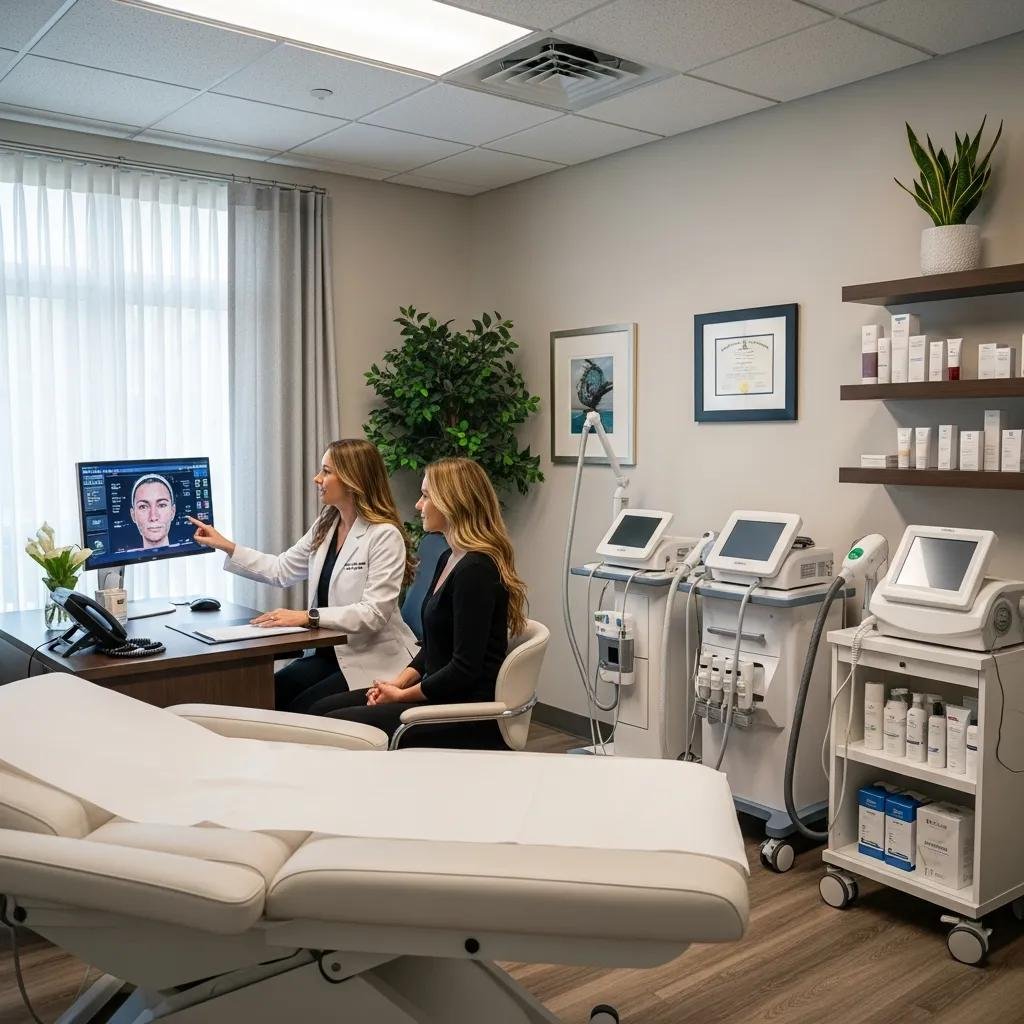
Professional treatments amplify and accelerate recovery for concerns that persist despite diligent at-home care. In-office procedures like chemical peels, RF microneedling, Er:YAG laser resurfacing, and LED skin therapy each use distinct mechanisms—controlled exfoliation, radiofrequency-driven collagen remodeling, ablative resurfacing of damaged layers, and photobiomodulation for inflammation control. Selecting a procedure depends on the primary complaint: superficial dullness and pigment respond well to peels, while texture and laxity often require RF microneedling or laser resurfacing. LED therapy serves as a low-downtime adjunct to calm inflammation and speed healing after most interventions.
Below is a concise comparison to help match concerns to treatments.
| Treatment | Primary Mechanism | Who it’s for / Expected outcome / Downtime |
|---|---|---|
| Chemical peels (AHA/VI Peel) | Controlled chemical exfoliation | Brightens dull skin; minimal–moderate downtime depending on depth |
| RF Microneedling (Lutronic Genius RF) | Microneedling + radiofrequency collagen stimulation | Improves texture and fine lines over sessions; mild downtime |
| Er:YAG Laser Resurfacing | Ablative laser removes damaged layers | Smoothes texture and reduces deeper wrinkles; moderate downtime |
| LED Skin Therapy | Red/near-infrared photobiomodulation | Reduces inflammation and supports repair; no downtime |
This comparison clarifies which modality best addresses particular post-holiday issues and helps plan sequencing—start with barrier repair, then pursue resurfacing or collagen-stimulating options if needed. Shore MedSpa & Bio Aesthetics offers physician-led evaluation and these advanced technologies as examples of clinician-directed treatment pathways for patients in Montgomery County seeking medically supervised rejuvenation.
What Are the Benefits of Chemical Peels and RF Microneedling for Skin Detox?
Chemical peels accelerate surface cell turnover, remove accumulated corneocytes, and improve light reflection, which quickly reduces dullness and uneven tone. Superficial to medium-depth peels are ideal for post-holiday brightness and reducing mild pigment changes, while deeper peels address more pronounced textural issues at the cost of increased downtime. RF microneedling combines micro-injury with radiofrequency energy to stimulate neocollagenesis and tighten skin over several sessions. It is particularly effective for texture, enlarged pores, and early laxity, and it complements peels by treating deeper structural concerns.
Choosing between peels and RF microneedling depends on goals and downtime tolerance; many treatment plans combine both in staged sequences for compounded benefit. This clinical pairing optimizes both immediate surface improvement and longer-term structural remodeling.
How Do Laser Resurfacing and LED Skin Therapy Enhance Skin Texture and Calm Inflammation?
Er:YAG laser resurfacing precisely ablates damaged superficial skin layers to reveal smoother, more evenly pigmented skin and to trigger a robust healing cascade that promotes collagen remodeling. It is effective when holiday-related changes include pronounced texture irregularities or persistent fine lines. LED therapy uses specific wavelengths to reduce inflammation, increase cellular energy, and speed re-epithelialization, making it an ideal adjunct to lasers and peels or a standalone option for calming redness and accelerating recovery. Together, laser and LED therapies provide a combined strategy: laser for resurfacing and LED for supportive, anti-inflammatory recovery.
When sequencing treatments, clinicians often use LED immediately post-procedure and schedule laser or RF treatments after confirming reparative capacity through a prior conservative approach. This reduces risk and maximizes outcomes.
How to Create a Personalized Post-Holiday Skin Detox Plan with Shore MedSpa?
A personalized detox plan begins with a detailed medical and skin history, an in-person skin examination, and establishment of realistic goals and downtime tolerances. At Shore MedSpa & Bio Aesthetics, Dr. Ronald Shore leads physician-directed consultations that evaluate skin type, previous procedures, medications, and lifestyle factors to craft a tailored sequence of at-home care and clinic procedures. The plan typically phases: (1) immediate barrier repair and anti-inflammatory measures, (2) targeted in-office resurfacing or collagen-stimulating treatments if needed, and (3) maintenance and sun-protection strategies to preserve gains.
Typical consultation and next-step recommendations include:
- A clinical skin assessment and discussion of goals and constraints.
- A starter at-home routine emphasizing hydration, gentle exfoliation, and antioxidants.
- A staged in-office schedule if deeper texture or pigment correction is required.
This structured, physician-led approach reduces complication risk and improves long-term outcomes by aligning treatments with each patient’s biology and schedule. To begin, patients are encouraged to seek a medical evaluation to determine whether conservative at-home measures suffice or whether an office-based intervention is warranted under physician supervision.
Why Is a Customized Treatment Plan Essential for Long-Term Skin Health?
Customization accounts for individual variables such as Fitzpatrick skin type, history of acne or pigmentary disorders, medications that affect healing, and personal tolerance for downtime. Tailored plans reduce the risk of adverse effects like post-inflammatory hyperpigmentation and ensure that aggressive treatments are only recommended when benefits clearly outweigh risks. By sequencing low-risk interventions first and monitoring response, clinicians can escalate safely to peels, RF microneedling, or lasers when indicated. Personalization also establishes a realistic timeline and maintenance schedule that preserves results over time.
A concrete example illustrates this: a patient with sensitive, pigment-prone skin may begin with LED and superficial peels plus antioxidant topicals, delaying ablative resurfacing until pigment is stabilized—this staged approach improves safety and efficacy.
How Does Consultation with Dr. Ronald Shore Optimize Your Skin Rejuvenation Journey?
Board-certified dermatologists provide diagnostic precision and medical oversight that non-physician settings cannot replicate. Dr. Ronald Shore’s clinical assessment guides selection and sequencing of technologies, including when to combine peels with RF microneedling or to use Er:YAG resurfacing for deeper texture issues. Physician involvement also ensures appropriate peri-procedure medication management and postoperative monitoring to reduce complications. This medical leadership enhances both safety and the likelihood of achieving natural-looking, durable results.
For patients seeking optimized outcomes after the holidays, a doctor-led plan balances conservative home care with targeted in-office treatments, producing faster, safer improvements in skin glow, texture, and tone.