
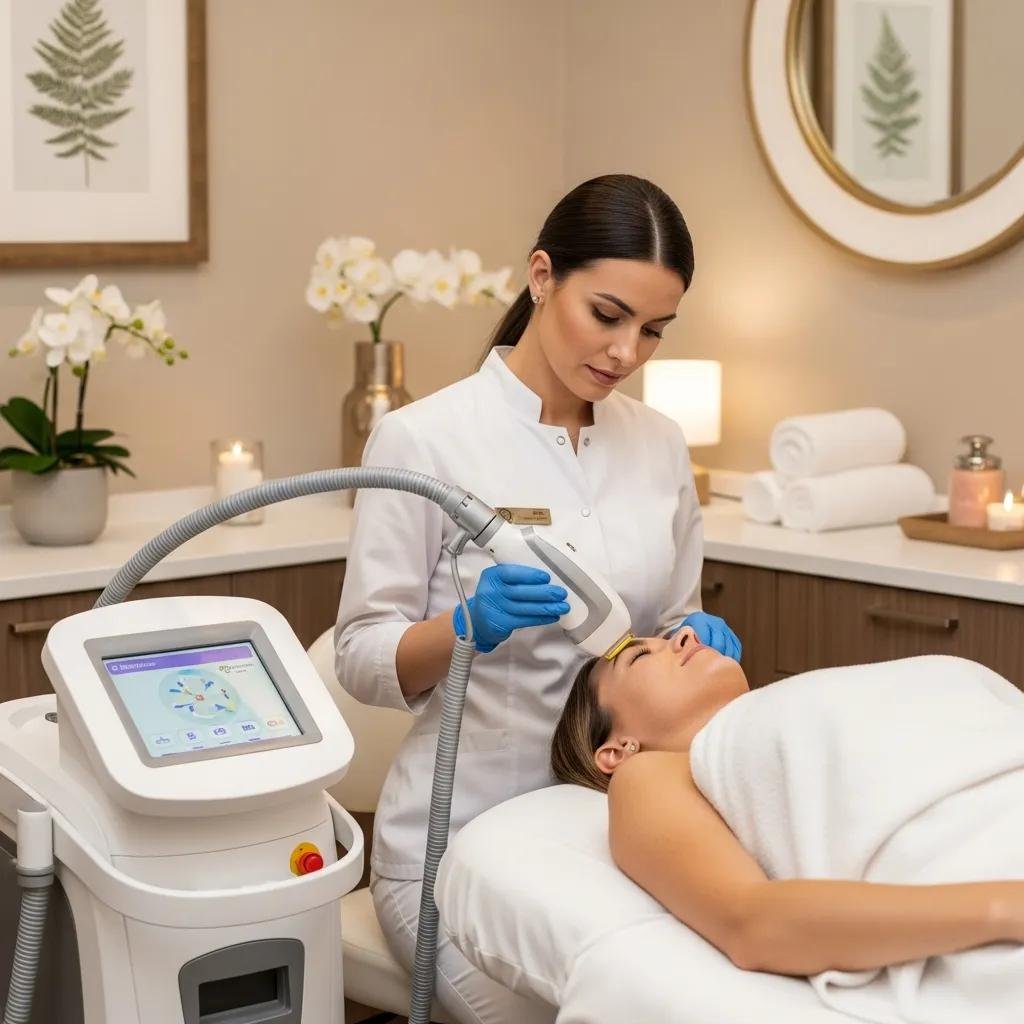
Permanent Laser Hair Removal in Rockville, MD: Achieve Lasting Smooth Skin with Expert Care
Laser hair removal is a clinically proven procedure that delivers long-term reduction of unwanted hair by targeting hair follicles with controlled laser energy, producing smoother skin and fewer maintenance routines. This guide explains how laser hair removal works, what to expect over a typical course of treatment, and the practical benefits—including reduced ingrown hairs, time savings, and improved confidence—that matter for people considering treatment in Rockville, MD. You will learn the science behind selective photothermolysis, how many sessions are commonly required, and which technologies and safety measures make treatment appropriate for a wide range of skin tones. The article also covers real-world considerations: pre- and post-care, how providers customize settings for darker skin, and what to ask during a consultation to assess candidacy. Finally, we outline why medical oversight matters when choosing a clinic and how to take the next step toward personalized, lasting hair reduction.
Why Choose Shore MedSpa for Laser Hair Removal in Rockville?
Laser hair removal is most effective when delivered under medical oversight, using advanced devices and individualized treatment plans to balance efficacy and safety. Choosing a provider who prioritizes patient assessment, wavelength selection, and parameter adjustment reduces risk and improves long-term results. Below are practical factors to weigh when evaluating clinics and technologies before committing to treatment.
Shore MedSpa & Bio Aesthetics (also referred to as Shore Dermatology) offers board-certified dermatologist leadership and a focus on advanced laser hair removal with personalized treatment planning. Their approach emphasizes safety for all skin tones, device selection appropriate to individual pigmentation and hair characteristics, and clinician-led consultations that set realistic outcomes. To learn about scheduling a consultation, contact Dr. Ronald Shore at the practice phone number provided.
This provider-centered oversight sets the stage for the clinical mechanics of laser hair removal, which is described next and helps explain why multiple sessions and tailored settings are necessary.
What Expertise Does Dr. Ronald Shore Bring as a Board-Certified Dermatologist?
Board certification signals formal dermatologic training and clinical experience in skin anatomy, pathology, and cosmetic procedures, which are essential for safe laser treatments. Dr. Ronald Shore’s role includes medical assessment of skin type, hair characteristics, and any underlying conditions that might affect treatment tolerance or outcomes. Clinical oversight allows for prompt adjustment of laser parameters, preventive measures for pigmentary changes, and evidence-informed aftercare recommendations. This physician-led model reduces the likelihood of complications and helps patients pursue permanent hair reduction with clearer expectations and documented safety protocols.
How Does Advanced Laser Technology Ensure Safe and Effective Treatment?

Modern laser systems improve precision by offering selectable wavelengths, adjustable pulse durations, and integrated cooling to protect the epidermis while heating hair follicles. Cooling mechanisms—contact, cryogen spray, or air cooling—reduce discomfort and lower superficial thermal risks, allowing practitioners to treat effectively with fewer side effects. Wavelength choice and energy settings are adjusted based on melanin levels and hair thickness, expanding safe options for a broader range of skin tones. These technological features, combined with test spots and staged parameter increases, create a safer pathway to effective hair reduction for many patients.
How Does Laser Hair Removal Work for Permanent Hair Reduction?
Laser hair removal achieves permanent hair reduction by delivering light energy that is absorbed by melanin in the hair shaft and follicle, converting to heat that disables the follicle’s capacity to produce new hair. Treatments target follicles in the anagen (active growth) phase, which is why multiple sessions spaced over weeks are necessary to affect successive growth cycles. The immediate effect is follicle injury and reduced regrowth; over months, treated areas typically show progressively finer, lighter, or absent regrowth.
Laser action summarized in three steps:
- Targeting: Laser light is absorbed by melanin in the hair.
- Heating: Absorbed energy heats the follicle selectively.
- Inhibition: Thermal damage reduces or stops future hair growth.
Different factors influence treatment response, including hair color and thickness, treated area, hormonal factors, and individual biology, which leads to variability in the number of sessions required.
Different elements of the mechanism-action-outcome relationship are shown below to clarify how lasers produce lasting reduction.
| Mechanism | Target | Outcome |
|---|---|---|
| Melanin absorption | Hair shaft and follicle pigment | Converts light to heat for follicle damage |
| Selective photothermolysis | Anagen-phase follicles | Focused thermal injury with epidermal sparing |
| Repeated sessions | Multiple hair cycles | Progressive decrease in hair density and thickness |
| Cooling systems | Epidermal protection | Reduced discomfort and lower pigment risk |
This table shows that laser systems work through precise targeting and controlled thermal effects that, when repeated at appropriate intervals, yield measurable long-term hair reduction.
What Is the Science Behind Targeting Hair Follicles with Laser Energy?
Selective photothermolysis is the central principle: laser parameters are chosen so melanin-rich structures absorb light preferentially, creating localized heat that injures the follicle while minimizing epidermal damage. Hair color and thickness influence absorption—the more pigment in the hair shaft, the greater the energy uptake and follicle heating. Conversely, light-colored or fine hair absorbs less energy and may respond less robustly. Clinical practice uses pulse duration and fluence adjustments to maximize follicular heating while protecting the surrounding skin, with test spots and staged adjustments to confirm safety.
How Many Sessions Are Typically Needed for Optimal Results?
Most patients require a series of treatments delivered every 4–8 weeks depending on the treatment area to catch hairs in successive anagen phases; typical ranges fall between 6 and 8 sessions for many body zones. Factors that may increase or decrease the number include hair density, hair color (darker hair responds better), the treated area’s growth cycle, and underlying hormonal influences that can stimulate new hair. Maintenance touch-ups are sometimes recommended annually or as needed to manage sporadic regrowth, particularly in hormonally sensitive areas.
What Are the Benefits of Laser Hair Removal in Rockville, MD?
Laser hair removal offers tangible practical and emotional benefits compared with repeated shaving or waxing, including a sustained reduction in hair density, fewer ingrown hairs, less daily maintenance, and improved skin texture in treated zones. These benefits translate to time savings and a predictable long-term grooming profile for many patients. Below are key advantages and what they mean in everyday terms.
Laser hair removal delivers several benefits that affect lifestyle and skin health:
- Reduced Ingrown Hairs: Targeted follicle damage decreases hair curvature and trapping beneath the skin.
- Time Savings: Fewer routine removals reduce weekly grooming work and associated costs over time.
- Smoother Skin and Confidence: Reduced stubble and irritation improve appearance and personal comfort.
These benefits often encourage patients to choose a medically supervised clinic for optimal outcomes and safety.
| Benefit | Practical Impact | Example Outcome |
|---|---|---|
| Ingrown hair reduction | Fewer bumps and irritation | Less post-shave inflammation |
| Time savings | Reduced grooming frequency | Hours saved monthly vs. shaving/waxing |
| Long-term cost efficiency | Less recurring expense | Fewer product purchases and salon visits |
The table emphasizes practical impacts that help patients evaluate the return on investing in laser hair removal versus ongoing temporary methods.
How Does Laser Hair Removal Reduce Ingrown Hairs and Save Time?
Ingrown hairs commonly result from hair that curls back into the skin or from blunt regrowth after shaving; laser treatment reduces hair thickness and alters growth direction, thereby lowering the incidence of trapped hairs. Because treatments progressively diminish hair density, patients typically spend less time on shaving, waxing, or plucking, and experience fewer flares of irritation. Over months, many report both convenience and reduced dermatologic issues associated with frequent hair removal routines.
What Confidence and Cost Advantages Does Permanent Hair Reduction Offer?
Permanent hair reduction can enhance confidence by providing smoother, more consistent skin appearance without frequent maintenance, which can be especially important for visible areas like the face, bikini line, or lower legs.
Financially, the upfront investment in a treatment series is often offset over time by avoiding recurring costs for razors, waxing appointments, and time spent on grooming. Patients should request a personalized consultation to receive an accurate estimate tailored to treatment area and individual needs.
How Is Laser Hair Removal Customized for All Skin Types, Including Dark Skin?
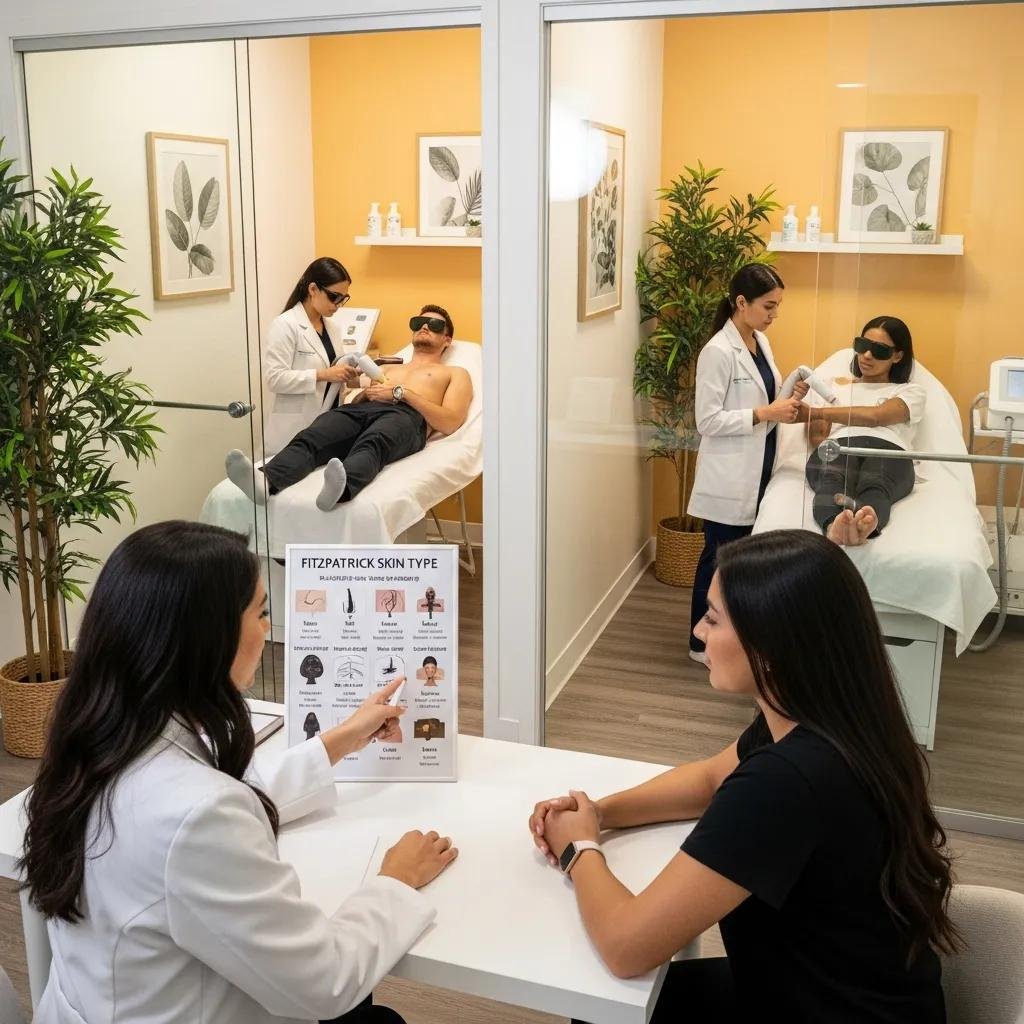
Customization begins with a thorough assessment of skin tone, hair color, and medical history, followed by device selection and parameter tuning. Providers prioritize test spots and conservative initial settings for darker skin tones to minimize pigmentary changes, while using lasers and pulse durations that preferentially heat the follicle rather than the epidermis. Individualized cooling and staged energy increases are standard precautions that reduce risks while still aiming for effective hair reduction.
| Laser Type | Skin Type Suitability | Key Benefit / Risk Mitigation |
|---|---|---|
| Nd:YAG | Darker skin tones | Deeper wavelength reduces epidermal absorption; safer for higher melanin |
| Diode | Light to medium darker tones | Effective energy delivery with parameter control; use caution and cooling |
| Alexandrite | Lighter skin tones | High melanin absorption in hair; less suited for dark skin without risk |
This comparison clarifies why specific wavelengths and cooling strategies are chosen to accommodate diverse skin phototypes while preserving safety.
Which Laser Technologies Are Safe and Effective for Darker Skin Tones?
Nd:YAG lasers are commonly recommended for darker skin because their longer wavelength penetrates deeper and is less absorbed by epidermal melanin, reducing the risk of superficial pigment injury. Diode systems can be effective when used with conservative fluence, longer pulse durations, and robust cooling; they require experienced parameter adjustment. Alexandrite wavelengths are typically better suited to lighter skin because they are absorbed more strongly by epidermal pigment, which increases the risk for hyper- or hypopigmentation in darker skins.
What Precautions and Aftercare Are Recommended for Sensitive Skin?
Pre-treatment precautions include avoiding tanning and recent waxing or plucking for several weeks, and shaving the area as instructed before appointments to allow the laser to target the follicle without surface hair. Post-treatment care emphasizes cooling, gentle moisturizing, and strict sun avoidance with high-SPF sunscreen to reduce pigmentary changes and promote healing. Patients with sensitive skin are advised to monitor treated areas and contact their provider for any prolonged redness, blistering, or unexpected pigment changes.
For patients ready to explore options in Rockville, Shore MedSpa & Bio Aesthetics provides evaluation and personalized planning under the supervision of Dr. Ronald Shore. To schedule a consultation or inquire about treatment planning and expected outcomes, call the practice phone number listed for direct assistance and next steps.