Med Spa Certifications: What They Mean for Your Safety
Med spa certifications define who is qualified to perform aesthetic and medical procedures and explain the safeguards that protect patients. This article explains what med spa certifications and licenses are, how they differ from accreditation, and why they matter for infection control, complication management, and overall patient safety. You will learn which certifications are common in med spas, which licensed professionals typically provide treatments, how regulations and standards reduce risk, and practical steps to choose a safe, certified provider. Understanding these distinctions helps you verify credentials, evaluate facility protocols, and ask informed questions before treatment. The sections below cover certification types and an easy reference table, the roles of licensed staff including medical director oversight, regulatory frameworks and compliance examples, and a concise checklist of what to verify before booking aesthetic procedures.
What Are Med Spa Certifications and Why Do They Matter?
Med spa certifications include medical licenses, specialty board certifications, procedure-specific training, and facility-level accreditations; each verifies competency, training, or safe practice standards. Certifications work by validating that a practitioner has completed formal education, passed examinations or competency assessments, and follows standardized protocols, which reduces procedural risks and improves outcomes. For patients, certifications translate to predictable training, recognized emergency preparedness, and clearer accountability when complications occur. The next subsection lists common certification types and explains what each verifies and why that matters for safety.
What Types of Certifications Do Med Spa Professionals Hold?
Med spa teams commonly hold a mixture of medical licenses and procedure-specific certifications to ensure safe delivery of services. Typical credentials include board certification in a medical specialty, state RN/PA/NP licenses, laser safety officer or technician certifications, injector training certificates for Botox and fillers, and ACLS/CPR for emergency readiness. These certifications confirm formal education, supervised clinical experience, and procedural competency rather than just attendance at a short course. Understanding which certifications apply to a given procedure helps patients match risk level to provider qualifications.
Med spa certifications compared for safety:
| Certification Type | What it Verifies | Why it Matters |
|---|---|---|
| Board Certification (specialty) | Specialty training and exam-based competence | Indicates deeper expertise and ability to manage complications |
| State Medical/Nursing License | Legal authority to practice medicine or nursing | Ensures baseline education, licensing, and regulatory oversight |
| Laser Safety / Device Training | Hands-on device operation and safety protocols | Reduces burns, scarring, and improper device use |
| Injector/Fillers Training | Injection technique and anatomy knowledge | Lowers risks like vascular occlusion and poor aesthetic outcomes |
| ACLS/CPR Certification | Emergency response competence | Improves management of acute adverse events |
This comparison clarifies which credentials matter most for higher-risk procedures and why patients should check them.
Who Are the Licensed Professionals in a Med Spa?
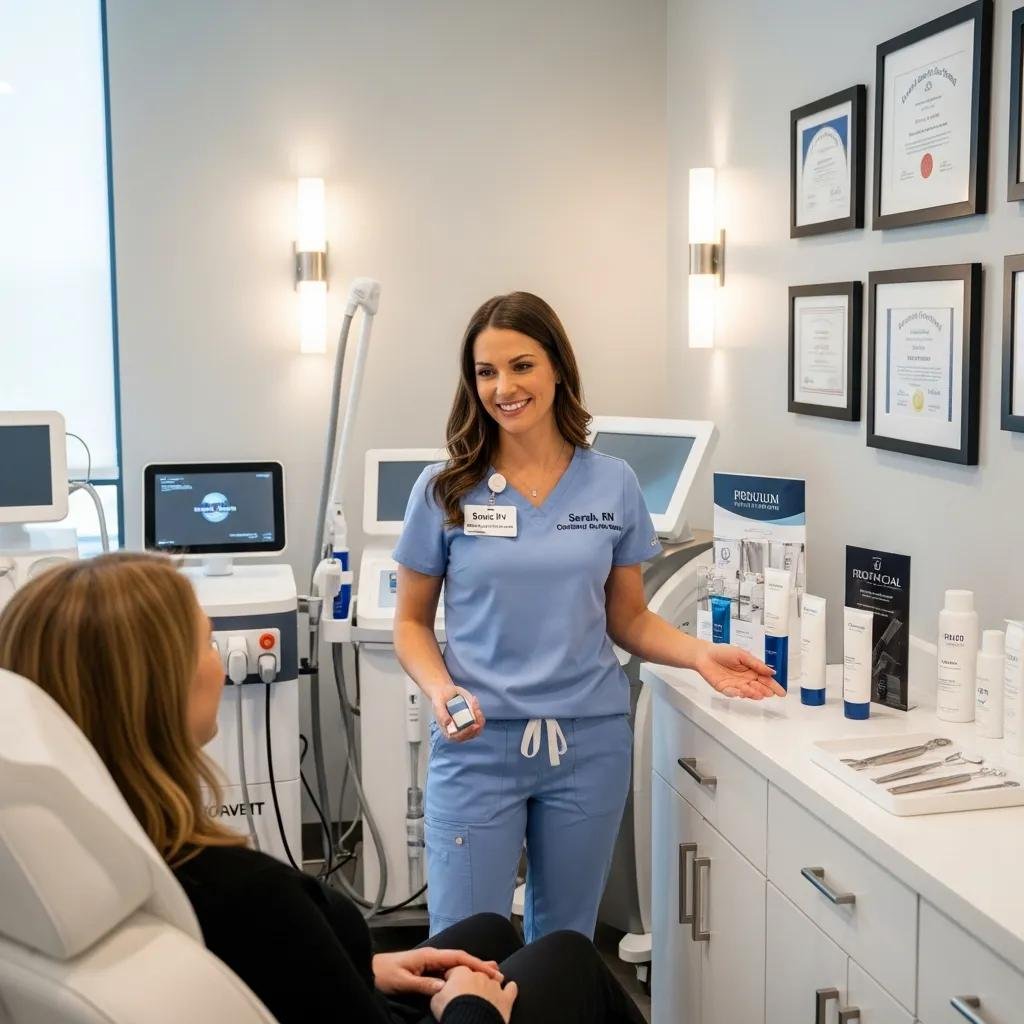
Licensed med spa teams typically include a medical director or supervising physician, registered nurses, physician assistants or nurse practitioners, aestheticians, and certified laser technicians, each with defined scopes. Medical directors set clinical protocols, review complications, and ensure overall medical oversight; nurses and advanced practice providers perform many injectables and treatments under protocol while aestheticians focus on noninvasive skin therapies. Proper supervision means higher-risk procedures are reserved for clinicians with appropriate medical credentials and training. The following mini-table maps roles to common authorizations to make verification easier for patients.
What Roles Do Physicians, Nurses, and Aestheticians Play?
Physicians generally evaluate complex medical histories, prescribe medications, and assume responsibility for clinical protocols and complication management. Registered nurses and advanced practice providers (PAs/NPs) commonly administer injections, laser treatments, and monitor recovery under established medical oversight. Aestheticians perform noninvasive procedures such as chemical peels, facials, and pre/post procedural skin care while following infection-control policies. Knowing who performs each step clarifies accountability and helps patients ask the right verification questions.
Role reference for typical procedures:
| Role | Typical Certifications/Training | Typical Procedures Authorized |
|---|---|---|
| Medical Director (MD/DO) | Medical license, often board certification | Medical oversight, complex procedures, prescribing |
| Registered Nurse (RN) / PA / NP | State license, injector training, ACLS/CPR | Injections, lasers, patient monitoring |
| Aesthetician | State aesthetician license, peel/laser safety courses | Facials, superficial peels, skin prep |
| Laser Technician | Laser safety certification, device training | Laser hair removal, resurfacing under supervision |
Why Is Board Certification Important for Medical Directors?
Board certification indicates that a physician completed specialty training and passed rigorous, peer-reviewed examinations in their field, demonstrating higher-level expertise beyond a basic medical license. For a med spa, a board-certified medical director provides credibility, clinical protocol development, and a capability to manage complications that surpass standard oversight. Board-certified leadership contributes to stronger risk-management systems, evidence-based protocols, and more reliable escalation pathways when adverse events occur. As an illustration of this oversight model, Shore MedSpa & Bio Aesthetics is led by board-certified dermatologist Dr. Ronald Shore, which exemplifies how specialty certification informs clinical leadership and patient safety.
How Do Med Spa Regulations Protect Your Safety?
Regulations from state medical boards, federal agencies, and workplace safety standards set minimum requirements that protect patients through licensing, device oversight, and infection-control rules. These regulatory bodies require practitioners to maintain licenses, follow scope-of-practice rules, and ensure that devices and consumables meet safety standards; together they create layered protection against unsafe practices. Compliance topics that matter most for patient safety include infection control procedures, staff training and continuing education, proper device maintenance, and documented emergency protocols. The next subsection summarizes the principal regulatory organizations and the protections they provide.
What Are the Key Regulatory Bodies and Standards?
Several authorities govern med spa safety: state medical and nursing boards oversee licensing and scope of practice, OSHA enforces workplace safety and infection control practices, and the FDA regulates devices and certain injectable products. Professional associations provide guidance and best-practice standards, and local health departments may inspect facilities depending on services offered. These entities create requirements for sterilization, sharps handling, documentation, and staff qualifications that translate directly into reduced infection risk and clearer incident reporting. Knowing which bodies apply in your state helps you verify that a facility meets expected standards.
Important regulatory protections include:
- State licensing and scope enforcement that constrain who can perform medical procedures.
- OSHA-mandated infection control and hazard communication to protect patients and staff.
- FDA oversight of devices and certain products to ensure safety and labeling accuracy.
How Does Shore MedSpa Comply with Safety Protocols?
Shore MedSpa & Bio Aesthetics emphasizes medically supervised aesthetic treatments under board-certified dermatologic leadership, uses modern treatment technologies, and provides individualized treatment plans that prioritize safety and efficacy. These organizational features align with regulatory aims by ensuring clinical oversight, appropriate device selection, and patient-specific risk assessment before procedures. For verification, patients can review staff bios and the med spa’s service safety information to confirm medical oversight and training credentials. This alignment between clinical leadership and operational practices illustrates how certifications and protocols work together to protect patient safety.
How Can You Choose a Safe and Certified Med Spa?
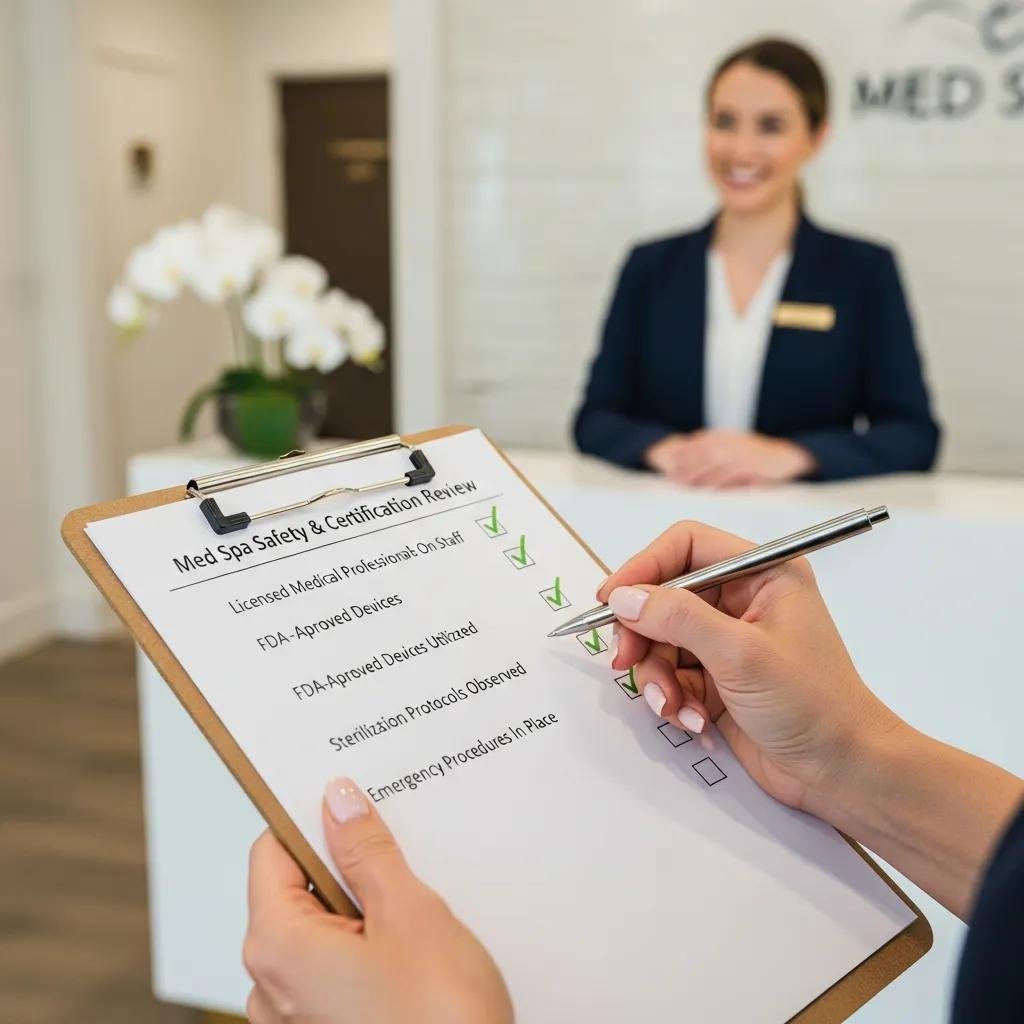
Choosing a safe med spa involves verifying credentials, confirming facility protocols, and asking targeted questions about training, emergency preparedness, and complication management. Focus your assessment on the medical director’s qualifications, the credentials of the practitioner who will perform your procedure, the facility’s infection-control practices, and evidence of device and product safety oversight. A straightforward checklist below helps you verify the most important elements before booking any aesthetic treatment. After verification, ask follow-up questions that probe experience, complication rates, and post-procedure care.
What Credentials Should You Verify Before Treatment?
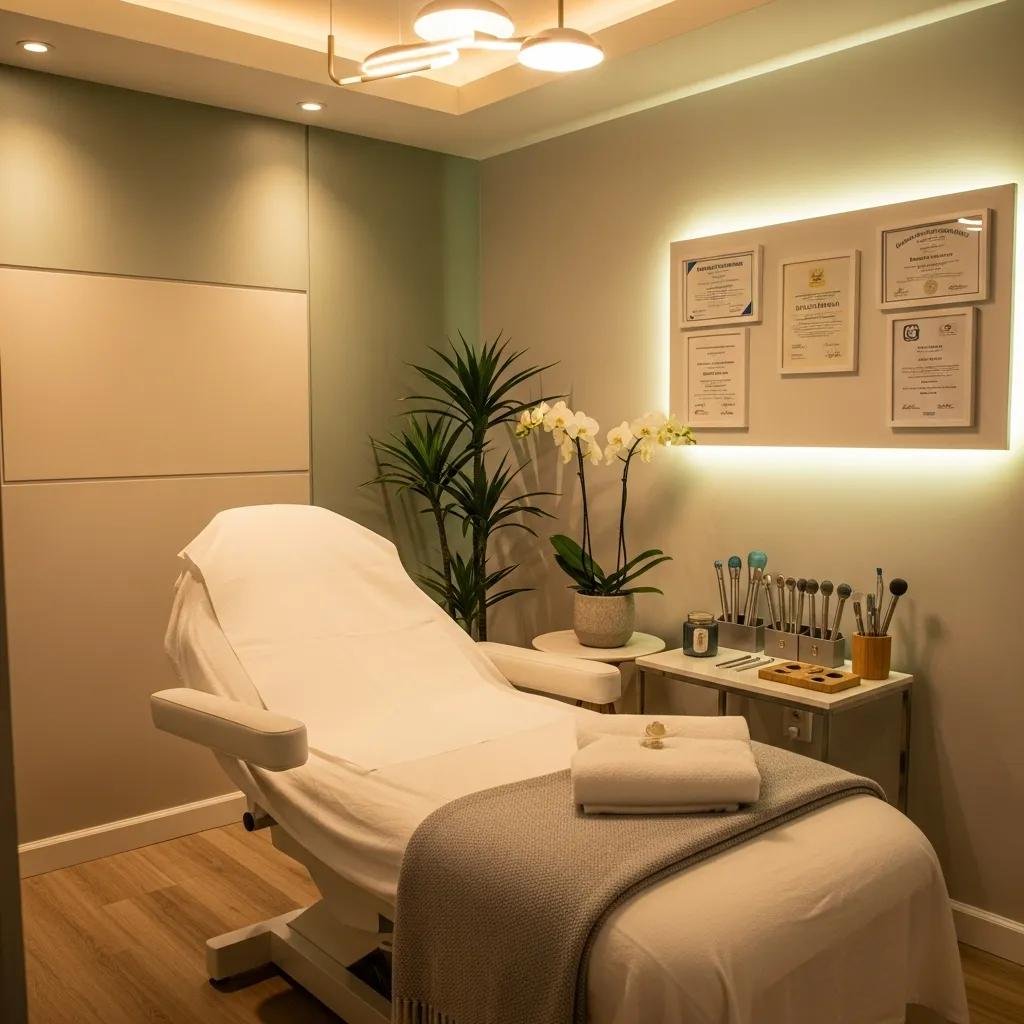
Before treatment, confirm the medical director’s specialty credentials, the performing practitioner’s license and procedure-specific training, and that staff hold current ACLS/CPR and device certifications when relevant. Ask to see certificates or staff bios that list board certification, state license numbers, and evidence of hands-on injector or laser training. Also verify that the facility documents infection-control policies, maintains device service records, and follows written emergency protocols. These checks reduce the likelihood of complications and improve accountability if adverse events occur.
Checklist table for patient verification:
| Check | What to Verify | How to Verify (evidence) |
|---|---|---|
| Medical leadership | Board certification and medical oversight | Staff bios, credential copies |
| Provider qualifications | State license and procedure training | License numbers, certificates |
| Infection control | Sterilization and sharps policies | Written policies, inspection records |
| Device/product safety | Proper device training and approvals | Device maintenance logs, FDA info |
| Emergency preparedness | ACLS/CPR and escalation procedures | Certification cards, written protocols |
What Questions Should You Ask Your Med Spa Provider?
- Who will perform my procedure, and what are their exact credentials?
- Is the medical director board-certified and involved in protocol oversight?
- What device and injector training does staff have, and can I see certificates?
- What infection-control measures and sterilization protocols do you follow?
- How do you manage complications such as adverse reactions or vascular events?
- What post-procedure follow-up and emergency protocols are in place?