Essential Questions to Ask Before Choosing a Med Spa: How to Find a Safe and Reputable Provider
A medical spa (med spa) blends medical oversight with aesthetic treatments to improve appearance and treat cosmetic concerns safely and predictably. Asking the right questions before booking protects your health, clarifies realistic outcomes, and helps you select a reputable provider that aligns with your goals. This guide shows what credentials to verify, how to confirm safety and device standards, how personalized treatment plans should be created, and what transparency around pricing and patient experience looks like. You will learn specific verification steps, red flags to watch for, and practical checklists to use during consultations so you can make an informed decision when finding the best med spa. Throughout, we integrate actionable evaluation criteria and sample questions you can bring to a consultation while highlighting examples of common service categories such as injectables, skin resurfacing, and body contouring to illustrate points about scope and oversight.
What Credentials and Qualifications Should Med Spa Staff Have?
Med spa credentials matter because qualified staff and clear medical oversight reduce complication risk and improve treatment consistency. A safe med spa will have a defined medical director—typically a licensed physician—who establishes protocols, approves advanced procedures, and manages complications. Verify that injectables and invasive treatments are performed by licensed clinicians (physicians, physician assistants, nurse practitioners, or registered nurses) with documented training, while licensed aestheticians handle non-invasive skin therapies under supervision. Knowing who does what affects both safety and outcomes, so request provider bios and ask directly who supervises your planned procedure.
Who Oversees Treatments at a Board-Certified Dermatologist-Led Med Spa?
A medical director provides clinical oversight, defines treatment protocols, and reviews complex cases to ensure standards of care are met. Board certification in dermatology indicates specialized training in skin anatomy, pathology, and cosmetic procedures; this expertise guides safe selection of resurfacing and injectable approaches. Examples of director responsibilities include approving combination treatment plans and authorizing protocols for managing complications like infection or adverse reactions. To verify oversight, ask for the director’s specialty, whether they are board-certified, and how frequently they review on-site procedures.
Intro to staff-role comparison table: the table below helps you compare typical roles, required licensing, and what patients should confirm during consultation.
| Role | Typical Licensing/Training | What to Verify at Consultation |
|---|---|---|
| Medical Director (Physician) | Medical license; specialty training (e.g., dermatology) | Confirm board certification and oversight responsibilities |
| Registered Nurse (RN) | Nursing license; injectable training | Ask about injectable certification and years supervised |
| Licensed Aesthetician | State esthetician license; skin treatment training | Confirm allowable treatments and supervision level |
| Physician Assistant / Nurse Practitioner | PA/NP license; procedural training | Verify scope for injectables and procedure autonomy |
This comparison clarifies which staff members perform which tasks and why confirming licenses and protocols is essential before treatment.
Med spa staff credentials checklist (quick reference):
- Board-certified medical director in relevant specialty listed and available for consultation.
- Licensed injectors (MD, RN, PA/NP) with documented injectable or device training.
- Licensed aestheticians for non-invasive procedures with clear escalation pathways to clinicians.
How Can I Verify Med Spa Safety and Technology Standards?
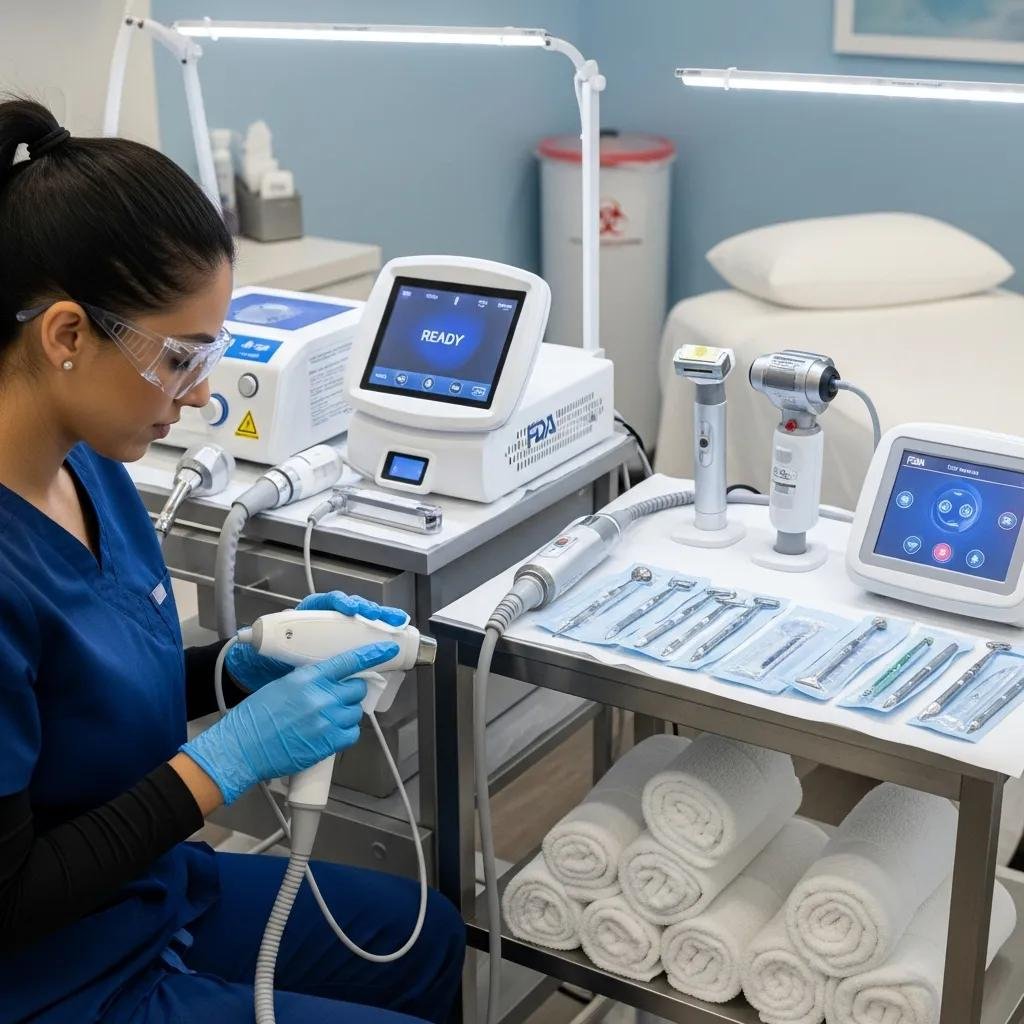
Confirming device approval status and hygiene protocols ensures procedures use appropriate technology and follow accepted medical safeguards. Ask whether devices are FDA-cleared or FDA-approved for the intended indication and request the device make and model so you can verify regulatory status independently. Inquire about written sterilization protocols, single-use item policies, emergency equipment availability, and documented staff training to manage complications. Real-world verification builds confidence that treatments are performed under medical standards rather than commercial shortcuts.
Are Treatments Performed Using FDA-Approved Devices and Protocols?
“FDA-cleared” or “FDA-approved” indicates a device has undergone regulatory review for safety and intended use; clearance is a meaningful marker but varies by indication and technology. To verify a device, request the exact device name and model, then ask the clinic how it is used for your specific treatment; you can confirm clearance through official device listings or ask the provider to document the regulatory status. Examples of technologies commonly used in med spas include body-contouring lasers and resurfacing systems; when a provider names a device, follow up with direct questions about intended indication and expected efficacy for your condition.
Intro to device verification table: this quick-reference table shows what to ask about common device categories and how to verify their regulatory status.
| Device Category | FDA Status to Ask About | What to Request from Clinic |
|---|---|---|
| Body contouring lasers (e.g., SculpSure) | FDA-cleared for fat reduction | Ask for device name/model and clearance indication |
| Skin resurfacing lasers (e.g., Er:YAG Laser) | Clearance for ablation/resurfacing | Request treatment protocol and post-op care steps |
| RF microneedling (e.g., Lutronic Genius RF) | Clearance for collagen remodeling | Verify training of operator and downtime expectations |
What Safety Measures and Hygiene Practices Are in Place?
Hygiene and emergency preparedness are non-negotiable elements of safe med spa care; these practices directly impact infection control and complication response. Expect visible measures such as single-use needles, sealed product vials, clean procedure rooms, and staff wearing appropriate PPE during invasive treatments. Confirm written sterilization protocols, patient screening for contraindications, and documented emergency procedures including oxygen and basic resuscitation equipment. Red flags include inconsistent cleanup between patients, lack of written policies, or an environment more like a retail spa than a medical facility.
Checklist for immediate red flags and positive indicators:
- Positive indicator: Written sterilization and single-use item policies with staff training logs.
- Positive indicator: Clear emergency protocols and accessible emergency equipment on-site.
- Red flag: No documentation of device maintenance or provider training.
- Red flag: Procedures performed in non-medical settings without medical oversight.
Essential Med Spa Questions to Ensure Safety and Reputation

Personalized treatment planning aligns clinical assessment with patient goals to produce realistic outcomes while minimizing risk. A thorough consultation includes medical history, skin/body analysis, discussion of goals, and an explanation of alternative options and risks. Good providers document the agreed plan, expected timelines for results, and follow-up steps, so patients have measurable milestones and know when to seek care. Understanding how plans are customized helps you compare practitioners based on diagnostic rigor, not just marketing claims.
How Are Treatments Customized to Individual Skin and Body Goals?
Customization starts with a medical-grade assessment of skin type, anatomical considerations, previous treatments, and lifestyle factors that affect healing. For injectables, personalization involves selecting product type and dosing based on facial anatomy and aesthetic goals; for resurfacing, depth and modality are chosen based on skin tone and concern; for body contouring, candidacy is assessed by fat distribution and expectations. Providers should document alternatives, explain combined treatment sequencing, and set realistic timelines, which ensures your plan is tailored and evidence-based.
Examples of treatment personalization include:
- Selecting different filler viscosities for cheek projection versus lip definition.
- Adjusting laser pass depth for melanin-rich skin to reduce pigmentation risk.
- Combining non-invasive fat reduction with skin-tightening modalities for improved contour.
What Are Realistic Outcomes and Potential Risks to Expect?
Realistic outcomes depend on the procedure, starting condition, and adherence to aftercare; most non-surgical aesthetic treatments show gradual improvement over weeks to months. Typical timelines include immediate but temporary improvement with injectables and progressive collagen remodeling over 6–12 weeks for resurfacing or RF treatments. Common, generally transient risks include bruising, swelling, pigment changes, and infection; more serious but rare complications require prompt clinical follow-up. A clear risk checklist and a documented plan for managing complications are essential components of informed consent.
Risk checklist patients should confirm before consenting:
- Expected side effects and their usual duration.
- Signs that require urgent clinician review and contact instructions.
- Planned follow-up schedule and revision policy if results are suboptimal.
How Transparent Is the Med Spa Regarding Pricing and Patient Experience?
Transparent pricing and a predictable patient experience help avoid surprises and align expectations with value. Transparency includes a full cost breakdown—procedure fee, provider fee, consumables, and follow-up visits—plus disclosure of financing options if available. During consultation, a reputable med spa explains each fee component, potential additional costs (touch-ups, revisions), and the standard aftercare plan so you can compare true cost across providers. Clear communication about experience elements—pre-treatment instructions, consent, and post-care support—signals professional practice.
What Are the Full Costs and Available Financing Options?
Cost transparency requires an itemized estimate showing procedure fees, provider fees, product or device surcharges, and any required follow-up visits. Ask whether pricing includes necessary post-treatment materials such as topical prescriptions or dressings and whether revisions or touch-ups are covered or billed separately. Common financing avenues include payment plans or third-party financing; be sure to ask about interest, timelines, and refund policies. Knowing cost components ahead of time prevents unexpected charges and lets you evaluate value relative to credentials and outcomes.
Intro to pricing components table: use this to guide questions during consultation so you can uncover hidden costs.
| Service Category | Typical Cost Components | What to Confirm at Consultation |
|---|---|---|
| Injectables | Provider fee, product units, follow-up | Ask which provider administers injectables and whether unit pricing is included |
| Skin resurfacing | Procedure fee, post-op care, numbing | Confirm if photography, topical meds, or dressings are included |
| Body contouring | Device fee, treatment sessions, maintenance | Verify number of sessions and whether results require multiple visits |
What Happens During Consultation and Post-Treatment Care?
A comprehensive consultation follows a predictable flow: medical history, focused examination, discussion of goals, recommended plan with alternatives, risks and benefits, and documented consent. The provider should explain pre-treatment preparations (medication holds, sun avoidance) and immediate post-care steps (wound care, activity restrictions) as part of a written aftercare plan. Scheduled follow-up appointments and emergency contact instructions should be provided so patients know when to seek help. Clear documentation and accessible aftercare support are markers of a med spa that prioritizes patient safety and satisfaction.
Post-treatment checklist patients should receive:
- Written aftercare instructions with expected symptom timeline and warning signs.
- Follow-up appointment schedule and who to contact for urgent concerns.
- Details about revision policies and when additional treatments may be recommended.
These steps complete the informed-consent pathway and ensure continuity of care; if you want professional assistance in evaluating options locally, consider contacting a trusted provider for a consultation.
For patients in the Rockville area seeking a med spa with board-certified dermatology leadership and a comprehensive service menu, Shore MedSpa & Bio Aesthetics offers advanced cosmetic dermatology services overseen by Dr. Ronald Shore. To inquire or schedule a consultation, call +1 (301) 901-7661 or visit the practice’s website for more information about services and scheduling.