
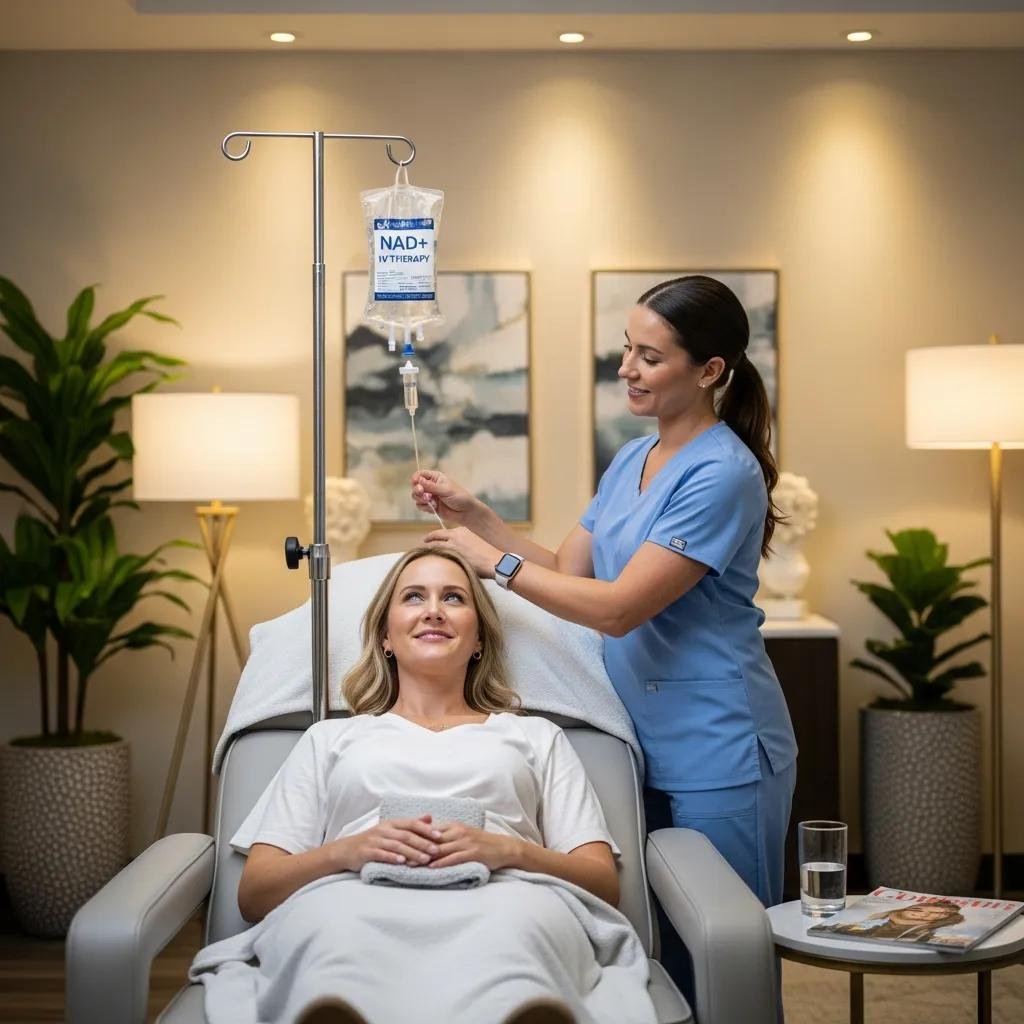
NAD+ IV Therapy in Rockville, MD: Rejuvenate Your Cells and Combat Aging
NAD+ IV therapy delivers nicotinamide adenine dinucleotide directly into the bloodstream to support cellular energy production and promote cellular rejuvenation, offering a targeted approach to counter age-related decline. This article explains what NAD+ IV therapy is, how it works at the mitochondrial and molecular levels, who may benefit, and what to expect during a professionally supervised session in Rockville, MD. Many people experience persistent fatigue, slowed recovery after exertion, or concerns about cognitive clarity as they age; NAD+ aims to address these concerns by supporting ATP production, DNA repair, and regulatory enzymes that influence cellular homeostasis. You will learn the core mechanisms behind NAD+, evidence-based benefits, typical clinical procedures, and practical safety considerations for intravenous NAD+ administered under medical oversight. Where appropriate, the local context of Shore MedSpa & Bio Aesthetics in Rockville is noted as a supervised provider option, while the emphasis remains on the scientific rationale and patient-focused outcomes. Read on for concise explanations, quick-reference tables, and clear steps to prepare for a consultation or infusion.
What Is NAD+ IV Therapy and How Does It Support Cellular Health?
NAD+ IV therapy is the intravenous administration of nicotinamide adenine dinucleotide to raise systemic availability of a key cellular cofactor that supports energy metabolism and repair processes. The infusion bypasses digestive breakdown and delivers NAD+ to circulation where it participates in redox reactions, supports mitochondrial ATP generation, and serves as a substrate for enzymes involved in DNA repair and cellular signaling. Current research indicates that boosting NAD+ can transiently enhance metabolic resilience and activate repair pathways, although clinical evidence is evolving and benefits vary by individual. Below is a concise list of primary mechanisms by which NAD+ supports cellular health and why those mechanisms matter for aging and wellness.
NAD+ supports cellular health through several core mechanisms:
- ATP production: NAD+ shuttles electrons in mitochondrial respiration, supporting cellular energy output.
- DNA repair: NAD+ is consumed by repair enzymes that maintain genomic integrity after damage.
- Enzyme activation: NAD+ enables sirtuins and other regulatory enzymes that influence inflammation and longevity pathways.
These mechanisms collectively explain why enhancing NAD+ availability is proposed to improve energy, resilience, and cellular maintenance; understanding the details of each mechanism clarifies realistic expectations and guides safe clinical use.
How Does NAD+ Function in Energy Production and DNA Repair?
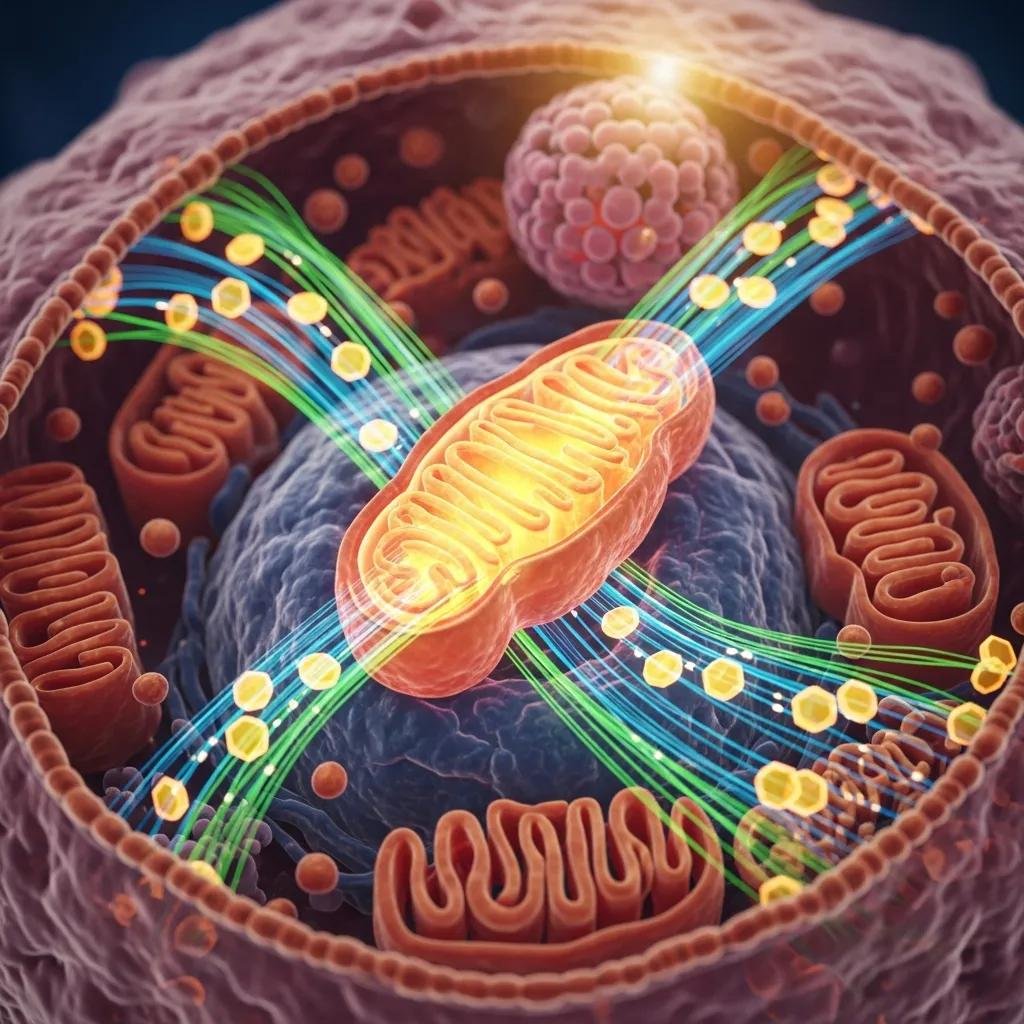
NAD+ acts as an electron carrier in metabolic redox reactions, cycling between oxidized (NAD+) and reduced (NADH) forms to enable mitochondrial oxidative phosphorylation and ATP generation. By facilitating electron transfer from fuel substrates to the electron transport chain, NAD+ availability directly influences the efficiency of cellular energy production and muscular and neural stamina. In parallel, NAD+ serves as a required substrate for poly(ADP-ribose) polymerases and other repair enzymes that detect and repair DNA strand breaks, linking metabolic state to genomic maintenance. Recent studies in human and preclinical models suggest that restoring NAD+ pools can support these pathways, though the magnitude and duration of clinical benefits depend on individual baseline levels and health status.
What Is the Role of Sirtuins in Anti-Aging and How Does NAD+ Activate Them?
Sirtuins are NAD+-dependent deacetylase enzymes that regulate metabolic pathways, stress responses, and chromatin structure; their activity is tightly coupled to cellular NAD+ levels. When NAD+ is abundant, sirtuins deacetylate target proteins to promote mitochondrial biogenesis, improve metabolic efficiency, and modulate inflammatory signaling, which together contribute to cellular maintenance and resilience. Increasing NAD+ through IV infusion transiently increases substrate availability for sirtuins, potentially enhancing these protective processes, though long-term effects remain under investigation. Understanding the NAD+–sirtuin relationship provides a biochemical rationale for why NAD+ therapies are proposed as part of anti-aging and metabolic-support strategies.
What Are the Key Benefits of NAD+ IV Therapy in Rockville?
NAD+ IV therapy is reported to provide several potential benefits tied to its effects on energy metabolism, cognitive function, and cellular repair; patients most commonly seek improved energy, clearer thinking, and support for recovery. Recent research and clinical reports indicate measurable improvements in subjective fatigue, mental clarity, and recovery timelines in some individuals following NAD+ supplementation, while acknowledging variability and the need for ongoing study. The table below summarizes primary benefit areas, the underlying mechanism, and the expected practical outcome to help readers quickly scan how NAD+ might address specific concerns.
The following table compares benefit areas, mechanisms, and expected outcomes:
| Benefit Area | Mechanism | Expected Outcome |
|---|---|---|
| Energy & Fatigue | Enhanced mitochondrial electron transfer and ATP production | Improved stamina and reduced perceived fatigue |
| Cognitive Function | Increased neuronal energy availability and mitochondrial support | Greater mental clarity and focus in some patients |
| Cellular Repair & Anti-aging | Substrate for DNA repair enzymes and sirtuin activation | Support for genomic maintenance and cellular resilience |
This compact comparison highlights how NAD+ targets metabolic and repair pathways that translate into practical improvements for energy, cognitive clarity, and cellular maintenance, while reinforcing that individual responses vary.
For many patients, those biochemical benefits align with realistic health goals and day-to-day improvements such as sustained energy during work or faster recovery after exertion. Individuals in Rockville often pair NAD+ sessions with broader wellness plans focused on sleep, nutrition, and exercise to magnify results and improve long-term outcomes.
How Does NAD+ IV Therapy Enhance Energy and Reduce Fatigue?
NAD+ enhances cellular energy by replenishing a key cofactor that facilitates oxidative phosphorylation, improving ATP availability in tissues with high metabolic demand such as muscle and brain. Patients frequently describe increases in baseline energy, quicker recovery after physical activity, and reduced afternoon slumps after a series of treatments, although responses are individualized and dependent on underlying conditions. Typical symptom improvements reported include decreased daytime fatigue, faster post-exertion recovery, and improved tolerance for cognitive tasks. It is important to interpret these outcomes in the context of current research, which supports mechanistic plausibility but calls for larger controlled trials to quantify effect sizes across populations.
Can NAD+ IV Therapy Improve Cognitive Function and Mental Clarity?
NAD+ may influence cognitive function by improving neuronal energy metabolism and supporting processes that maintain synaptic function and cellular homeostasis, which can translate into clearer thinking and better focus for some individuals. Clinical reports and preliminary studies note subjective improvements in concentration, processing speed, and mental sharpness following NAD+ interventions, though the evidence base remains emergent and not definitive for all cognitive domains. Patients seeking cognitive benefits should consider NAD+ as one component of a comprehensive plan that includes sleep optimization, metabolic health, and targeted cognitive training for best outcomes. Recent studies indicate potential but recommend measured expectations and personalized monitoring.
Why Choose Shore MedSpa & Bio Aesthetics for NAD+ IV Therapy in Rockville?
Shore MedSpa & Bio Aesthetics offers NAD+ IV therapy in Rockville under clinical supervision, combining wellness services with cosmetic dermatology expertise to provide integrated care for patients seeking metabolic and aesthetic support. The practice is led by Dr. Ronald Shore, a board-certified dermatologist, who provides clinical oversight of treatments and ensures protocols are administered within a medical setting. Shore MedSpa’s local presence serves Montgomery County residents, offering a convenient option for Rockville, Bethesda, North Bethesda, Silver Spring, and Potomac patients who prefer medically supervised infusions. The emphasis on medical supervision and integration with dermatology services helps ensure that NAD+ therapy is considered alongside patients’ overall health goals.
The following points summarize key practice attributes relevant to choosing a provider:
- Clinical oversight by a board-certified dermatologist ensures medical supervision.
- Integration with dermatology and wellness services allows coordinated care decisions.
- Local Rockville access provides convenience for Montgomery County residents.
These attributes can give patients confidence that NAD+ infusions are delivered in a medically supervised environment where safety and individualized planning are prioritized.
What Expertise Does Dr. Ronald Shore Bring to NAD+ Treatments?
Dr. Ronald Shore is identified as the clinical leader at Shore MedSpa & Bio Aesthetics and is a board-certified dermatologist who provides oversight for NAD+ IV therapy delivered at the practice. His role emphasizes medical supervision, ensuring that patients receive appropriate screening and ongoing monitoring during intravenous treatments, consistent with standards for medical spas that offer wellness infusions. Presenting a board-certified clinician as the supervising practitioner helps connect the therapy’s clinical rationale with professional oversight and patient safety considerations. This clinical leadership aligns the administration of NAD+ with established medical governance rather than purely retail wellness delivery.
How Does Shore MedSpa Customize NAD+ IV Therapy for Optimal Results?
Shore MedSpa approaches NAD+ therapy through individualized consultation and health screening to tailor treatment plans to each patient’s medical background and wellness objectives. Customization typically involves evaluating baseline symptoms, medical history, and concurrent therapies in order to recommend an appropriate infusion plan and monitoring strategy while integrating NAD+ with other offered wellness or dermatology services when indicated. This individualized approach supports patient-centered goals such as improving energy, cognitive clarity, or recovery, and ensures that treatment decisions account for safety and expected outcomes. Patients are encouraged to discuss their symptoms and health history during the initial consultation so plans can be aligned with realistic objectives.
What Should You Expect During NAD+ IV Therapy Sessions at Shore MedSpa?
A typical NAD+ IV therapy experience includes an initial medical consultation and screening, the infusion procedure itself, and a monitored observation period; these steps prioritize safety and clear communication about expected effects. The sequence ensures suitability for therapy, allows healthcare staff to tailor infusion parameters based on medical history, and provides immediate monitoring for any infusion reactions or side effects. Below is a stepwise summary of the patient journey designed to set expectations for timing and clinical interactions during a supervised NAD+ infusion.
Follow these steps during a standard NAD+ therapy visit:
- Consultation and screening: medical history review and suitability assessment.
- Infusion administration: IV placement and controlled NAD+ delivery by clinical staff.
- Monitoring and observation: short post-infusion observation to confirm tolerance and initial response.
This stepwise process helps patients understand the flow of care, reinforces that administration occurs under clinical oversight, and clarifies the timing and interactions they can expect during a visit.
The table below provides quick-reference protocol attributes commonly observed in supervised infusion settings:
| Protocol Step | Attribute | Typical Value |
|---|---|---|
| Consultation | Purpose | Medical screening and goals discussion |
| Infusion | Duration | Variable; conservative time range discussed during consult |
| Monitoring | Observation | Short post-infusion observation for tolerance |
This protocol summary clarifies how supervised NAD+ therapy is structured to balance efficacy and patient safety while allowing customization based on individual needs.
What Is the Typical NAD+ IV Therapy Procedure and Duration?
The typical NAD+ IV procedure begins with a brief medical consultation and screening, followed by IV catheter placement and controlled infusion of NAD+ under clinical supervision; sessions vary in duration depending on dose and protocol but are conservatively described during the initial consultation. Many patients experience the procedure as well-tolerated, with staff monitoring vital signs and comfort throughout the infusion and a short observation period afterward to assess immediate response. Duration ranges are individualized, and Shore MedSpa staff review timing expectations during scheduling to align with each patient’s medical profile and goals. Clear pre-visit instructions and post-infusion guidance help patients prepare for and maximize the potential benefits of therapy.
Is NAD+ IV Therapy Safe and What Are the Precautions?
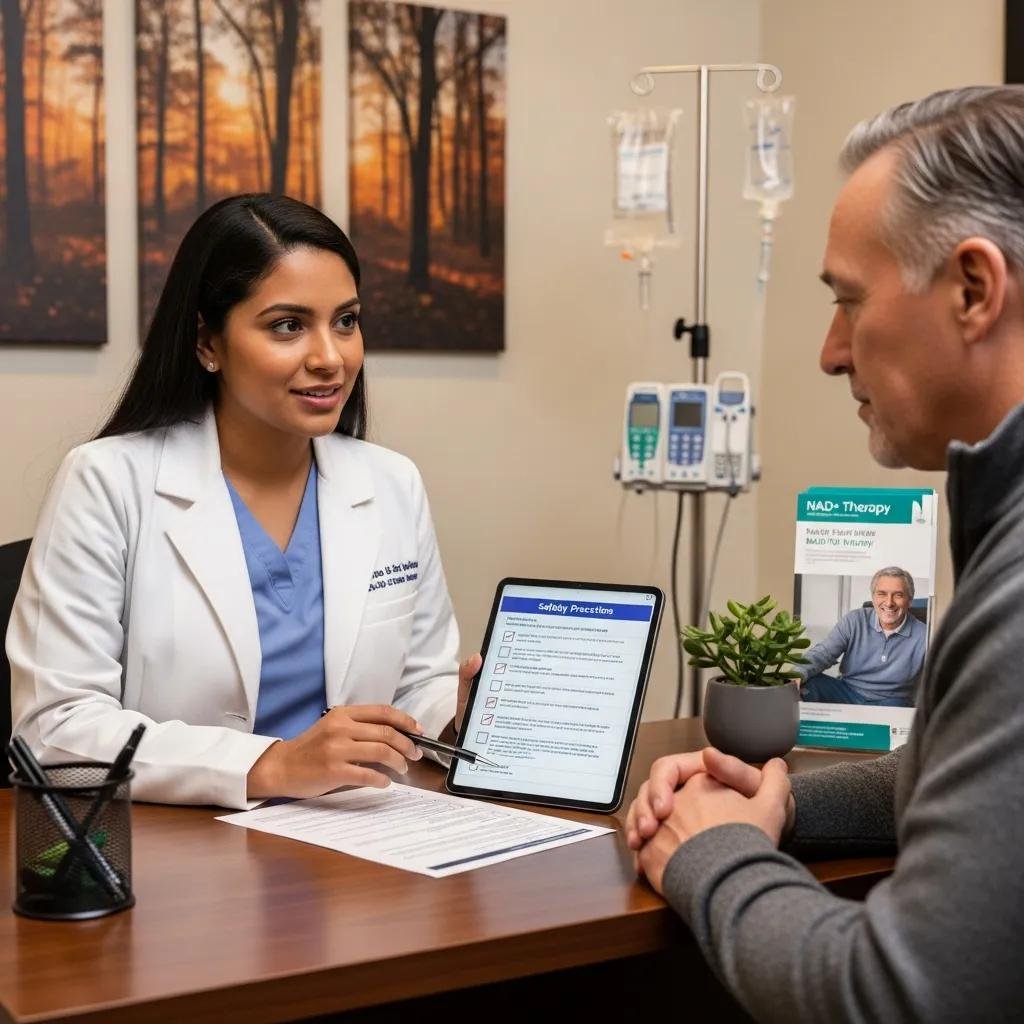
When administered by licensed medical professionals in a supervised setting, NAD+ IV therapy has an acceptable safety profile for appropriately screened patients, but precautions are necessary to minimize risks and identify contraindications. Common precautions include allergy screening, review of underlying medical conditions, and consideration of potential interactions with concurrent medications, with staff prepared to manage infusion-site reactions or other acute effects. Patients with certain health conditions should disclose full medical histories during consultation so clinicians can determine suitability, and follow-up monitoring ensures any adverse responses are promptly addressed. Supervised administration, medical oversight, and transparent communication about risks help maintain a favorable safety margin for those pursuing NAD+ therapy.
- Common precautions include: allergy screening, medication review, and disclosure of chronic conditions.
- When to consult a physician: histories of cardiac, renal, or severe metabolic disorders should prompt additional medical review.
- Monitoring importance: clinical observation during and after infusion reduces the likelihood of unmanaged adverse events.
These precautions underscore the value of clinical oversight and individualized screening to ensure that NAD+ therapy is delivered safely and effectively.