

Exosomes in Aesthetics: Regenerative Skin and Hair Solutions Explained
Exosomes are nanoscale extracellular vesicles that shuttle proteins, lipids and regulatory RNAs between cells, and they act as concentrated messengers to stimulate tissue repair, reduce inflammation and promote collagen and follicular activation. This article explains how exosome therapy works in aesthetic dermatology and non-surgical hair restoration, and it summarizes current clinical rationale, procedural approaches, expected timelines, and safety considerations based on recent research through 2024. Many patients seek alternatives to cell-based or platelet-rich approaches for wrinkles, texture, scarring and thinning hair; exosomes offer an acellular regenerative option that enhances cellular signaling without transplanting living cells. You will learn what exosomes are, the biological mechanisms that drive skin and hair regeneration, how exosome treatments are delivered alone or with adjuncts like microneedling, realistic outcomes and common patient questions about cost and safety. Where relevant, brief notes explain how Shore MedSpa & Bio Aesthetics, led by Dr. Ronald Shore in Rockville, MD, positions advanced regenerative options within individualized treatment plans. The next sections define exosomes, review skin and hair applications, and address practical FAQs to help patients evaluate this emerging therapy.
What Are Exosomes and How Do They Promote Skin and Hair Regeneration?
Exosomes are membrane-bound extracellular vesicles that carry exosomal proteins, growth factors and microRNA cargo from one cell to another, and they promote regeneration by altering recipient cell behavior to increase collagen synthesis and modulate inflammation. In essence, exosomes deliver signaling molecules that activate fibroblasts, endothelial repair and stem-like cells, producing measurable tissue remodeling and improved repair capacity. Recent studies indicate exosome preparations can accelerate wound-healing pathways and stimulate extracellular matrix production, supporting clinical interest in aesthetic applications. Understanding this signaling role clarifies why exosomes are used for both skin rejuvenation and hair restoration, and it leads into a closer look at their cellular functions.
What biological role do exosomes play in cellular communication and healing?
Exosomes shuttle diverse bioactive cargo—growth factors, exosomal proteins and microRNAs—that reprogram recipient cells to change phenotype, promote angiogenesis and reduce pro-inflammatory signaling. For example, exosomal miRNA populations can upregulate collagen gene expression in dermal fibroblasts while downregulating cytokines that prolong inflammation, which accelerates normal repair processes. This intercellular communication supports wound-healing phases: hemostasis, inflammation resolution, proliferation and remodeling. Recognizing these mechanisms helps clinicians target exosomes where regenerative signaling and matrix rebuilding are desired, which naturally leads into how exosomes compare to other regenerative options.
How do exosomes differ from other regenerative therapies like PRP?
Exosomes are acellular vesicles derived from donor cell cultures or concentrated secretomes and act primarily as signaling packages, whereas PRP is a patient-derived concentrate of platelets that releases growth factors locally. Exosomes contain specific miRNAs and proteins that can modulate gene expression across many cell types, while PRP’s mechanism is largely growth-factor release from platelets; thus, exosomes may offer broader paracrine signaling. Preparation, sourcing and storage differ—exosomes are often produced as standardized biologic products under controlled conditions while PRP is autologous and clinic-prepared—affecting consistency and clinical workflow. These mechanistic and practical contrasts clarify clinical decision-making and point to combination strategies that harness both approaches.
How Does Exosome Skin Rejuvenation Improve Aging and Skin Health?

Exosome skin rejuvenation improves aging by stimulating dermal fibroblast activity, increasing collagen and elastin synthesis, and modulating local inflammation to restore texture, tone and elasticity. Delivered topically after barrier disruption or via microinjection, exosomes promote extracellular matrix remodeling and epidermal renewal, producing visible smoothing and improved scarring over months. Recent clinical observations suggest early changes in radiance and texture within weeks and more substantive collagen remodeling by three months, which frames realistic patient expectations. The next subsection lists common skin concerns treated and links each to an exosomal mechanism.
What skin concerns can exosome therapy address effectively?
Exosome therapy targets common aging and repair-related skin concerns by addressing underlying cellular dysfunction and promoting repair pathways.
- Fine lines and wrinkles: stimulates collagen remodeling to reduce shallow lines.
- Texture and enlarged pores: enhances cell turnover and matrix reorganization for smoother skin.
- Scars and skin tone: modulates inflammation and promotes organized collagen deposition to soften scars and even pigmentation.
How is exosome therapy combined with microneedling for enhanced skin results?
Microneedling creates controlled microchannels that increase exosome delivery into the dermis, enabling greater bioactive penetration and distribution for enhanced remodeling. Typical workflow includes topical antisepsis, microneedling passes tailored to indication, immediate application of concentrated exosome solution, and standardized post-care to support barrier repair. The synergy arises because microneedling’s mechanical stimulus activates repair cascades while exosomes amplify signaling to fibroblasts and endothelial cells. Patients usually experience mild redness and expedite regenerative signaling, which informs expectations about downtime and follow-up.
| Approach | Primary Attribute | Clinical Implication |
|---|---|---|
| Exosomes (acellular) | Paracrine signaling via proteins/miRNA | Broad modulation of repair, standardized dosing |
| PRP (autologous platelets) | Growth-factor release from platelets | Autologous, immediate growth-factor delivery |
| Topical retinoids | Keratinocyte turnover and collagen stimulation | Good for maintenance, less potent remodeling |
What Are the Benefits and Process of Exosome Hair Restoration Treatments?
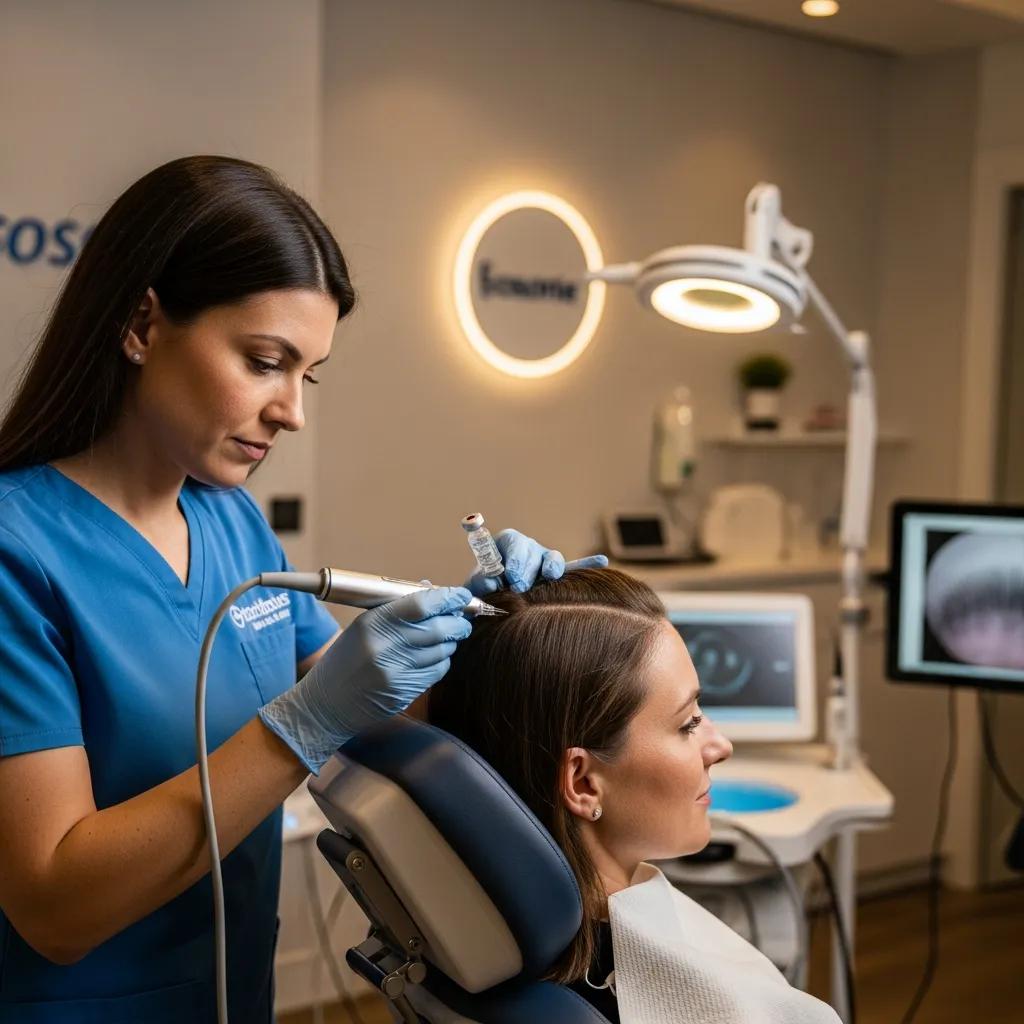
Exosome hair restoration benefits include activation of dermal papilla cells, reduction of perifollicular inflammation and promotion of the anagen growth phase to increase shaft thickness and density. Treatment protocols typically use intradermal injections across thinning areas or topical delivery after microneedling, with sessions spaced several weeks apart and visible improvement often beginning at three to six months. Ideal candidates are those with pattern thinning and viable follicles rather than complete scarring alopecia, and combining exosomes with medical therapies or PRP is common to maximize outcomes. Next, examine the cellular mechanisms that support follicle regeneration.
How do exosomes stimulate hair follicle regeneration and combat thinning hair?
Exosomes supply growth factors and regulatory RNAs that activate dermal papilla and follicular stem cells, shifting follicles from telogen into anagen and increasing hair shaft caliber. They also downregulate inflammatory mediators that contribute to follicle miniaturization, supporting a healthier microenvironment. Preclinical and early clinical data show increased follicle activity and improved hair density metrics over several months. Understanding these targets helps set expectations for procedure frequency and realistic endpoints.
What should patients expect during and after exosome hair loss treatment?
Patients begin with a consultation to assess hair density and identify suitable targets, then receive localized injections or topical-microneedling application in 20–45 minute sessions with minimal downtime. Short-term effects commonly include transient redness or mild swelling; measurable hair regrowth typically appears after three to six months with peak improvement later. Maintenance sessions may be recommended to sustain results depending on individual response. Clinics that integrate exosome protocols, including Shore MedSpa & Bio Aesthetics under Dr. Ronald Shore’s dermatologic oversight, tailor plans to each patient’s pattern and goals.
| Treatment | Mechanism | Downtime / Timeline |
|---|---|---|
| Exosomes | Paracrine activation of follicles | Minimal downtime; results 3–6 months |
| PRP | Platelet growth-factor stimulation | Minimal downtime; results 3–6 months |
| Hair transplant | Surgical follicle relocation | Days to weeks downtime; gradual long-term density |
What Are the Common Questions About Exosome Therapy Costs, Safety, and Results?
Exosome therapy is generally described as low-risk relative to cell-based approaches because it is acellular, yet safety depends on sourcing, processing standards and aseptic technique; common short-term reactions include redness and tenderness while systemic risks are infrequently reported in current literature. Cost drivers include the exosome product type, practitioner expertise and number of sessions required, and patients should weigh expected longevity of improvement against alternative treatments when evaluating value. For clinics offering advanced regenerative options, transparent discussion about sourcing, expected timelines and combination strategies helps patients make informed choices. The following list explains practical factors to consider when comparing treatment options.
- Product source and quality: influences consistency and safety.
- Practitioner experience: affects technique and outcomes.
- Session count and combination therapies: determines total investment.
Is exosome therapy safe and what are the potential side effects?
Yes—current research and clinical experience indicate exosome therapy has a favorable safety profile when performed by trained providers using validated products, with most side effects limited to local, transient reactions. Rare adverse events have been reported but long-term surveillance is ongoing, so patient screening and discussion of risks is essential. Sourcing standards and sterile delivery techniques lower infection risk and optimize outcomes, which is why provider expertise matters. This safety context leads naturally to cost and value considerations.
How much does exosome treatment typically cost and is it worth the investment?
Costs vary with product formulation, treatment area, and number of sessions, and value depends on expected durability, combined therapies and patient goals rather than a single-session price comparison. Patients should evaluate practitioner credentials, documented outcomes and realistic timelines for improvement when judging ROI. Clinics offering customized plans—such as those emphasizing board-certified dermatology oversight—can help tailor a cost-effective protocol that balances upfront investment with maintenance strategies. For many patients seeking non-surgical regenerative improvement in skin or hair, exosomes represent a promising option when selected and delivered appropriately.