

Acne Scar Treatment Rockville MD: Effective Solutions for Scar Revision and Skin Renewal
Acne scars are structural changes in the skin that follow inflammation and tissue damage, and they can affect texture, tone, and self-confidence. This article explains how modern scar revision techniques — including RF microneedling, laser resurfacing, chemical peels, and dermal fillers — work at a biological level to stimulate collagen production, smooth surface irregularities, and correct volume loss. Readers will learn to identify common scar types, compare treatment mechanisms, and match scar morphology to the approaches most likely to improve appearance. The guide also covers procedural expectations, downtime trade-offs, and combination strategies that maximize long-term remodeling while minimizing risk. Finally, the article highlights device- and modality-specific advantages and shows how a tailored plan can integrate microneedling, Er:YAG resurfacing, VI Peels, and fillers for multi-factorial scars. Throughout, keywords like scar revision, microneedling for scars, RF microneedling Rockville, Lutronic Genius RF, and Er:YAG laser resurfacing are used to map clinical concepts to practical options available in Rockville, MD.
What Are the Different Types of Acne Scars and How Do They Affect Treatment?
Acne scars fall into broad categories that determine which revision methods are appropriate: atrophic scars result from tissue loss, hypertrophic and keloid scars reflect excess tissue, and post-inflammatory pigment alters color without changing contour. Understanding whether a scar is deep or shallow, narrow or broad, mobile or tethered guides selection between collagen-stimulating procedures, resurfacing, subtractive techniques, or volume replacement. For example, treatments that induce neo-collagenesis are chosen for depressed atrophic scars, while ablative approaches remove irregular scar peaks and address texture. Accurate classification reduces unnecessary procedures and improves predictable outcomes by matching mechanism to structural problem. This diagnostic step also frames when combination therapy is needed to treat texture, tone, and volume together.
How Do Ice Pick, Boxcar, and Rolling Scars Differ?
Ice pick, boxcar, and rolling scars are subtypes of atrophic scars with distinct shapes and treatment responses. Ice pick scars are narrow and deep, penetrating the dermis, and often respond best to focal therapies that chemically or surgically close the defect; punch excision or TCA CROSS-style focal treatment is typically favored. Boxcar scars have wider, well-defined edges that benefit from resurfacing modalities or volumizing techniques when shallow, with fractional lasers and fillers used depending on depth. Rolling scars are broad with soft edges caused by dermal tethering; subcision combined with collagen-induction therapies like RF microneedling can release tethers and smooth contour. Choosing the right modality often means combining targeted resurfacing, mechanical release, and collagen stimulation to achieve balanced improvement.
For patients seeking expert assessment and individualized plans, Shore MedSpa & Bio Aesthetics in Rockville, MD offers scar evaluation and tailored treatment matching. Board-Certified Dermatologist Dr. Ronald Shore leads personalized protocols that weigh scar type, skin tone, and downtime to select options such as microneedling, laser resurfacing, chemical peels, or fillers. This local expertise helps translate scar classification into a staged revision plan that prioritizes safety and measurable texture improvement.
How Does RF Microneedling Improve Acne Scars in Rockville?
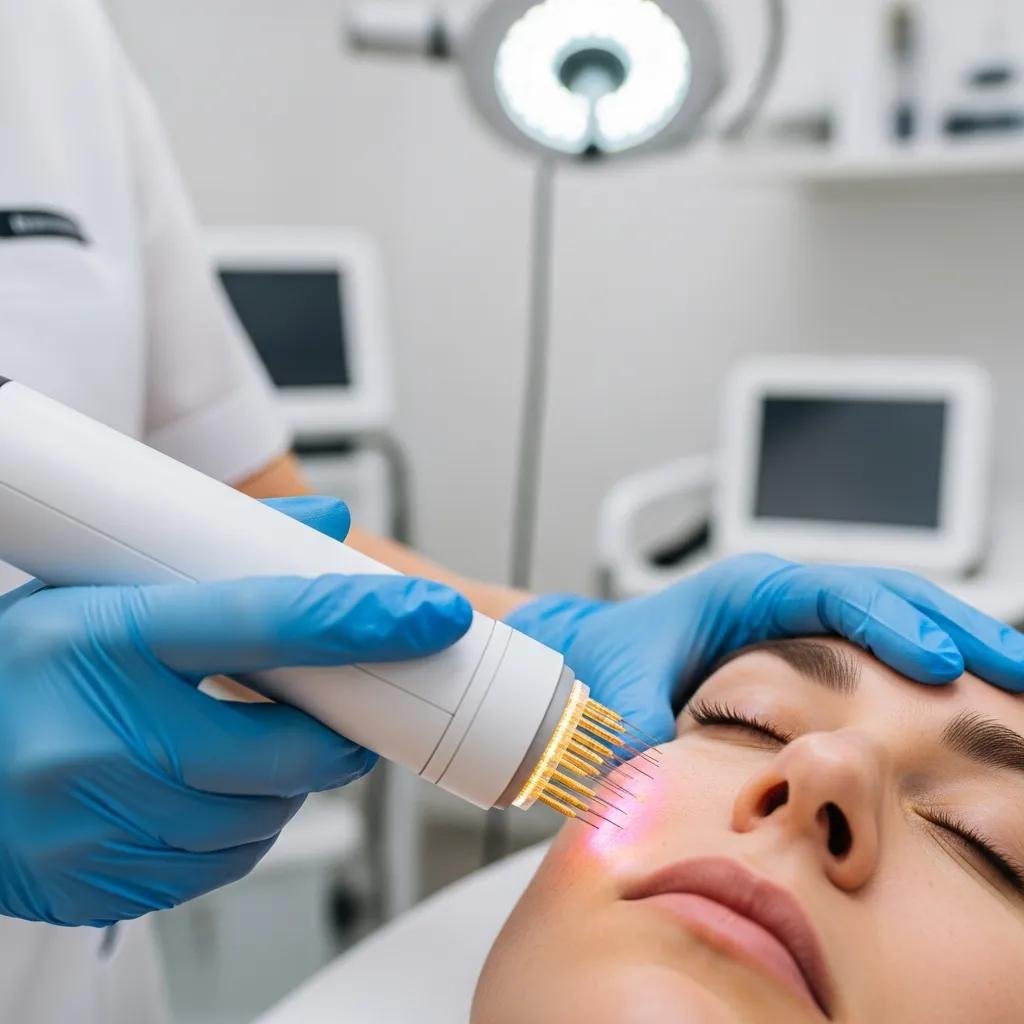
RF microneedling combines controlled microinjury with localized radiofrequency heating to stimulate collagen production and remodel scar tissue, producing smoother texture and improved skin firmness. The mechanical needle array creates microchannels while RF energy heats the dermis, which triggers neo-collagenesis and elastin reorganization; the result is gradual improvement in atrophic scars and pore-related texture. Benefits include skin tightening, decreased scar depth, and generally shorter downtime than fully ablative resurfacing, making RF microneedling a strong option for rolling and shallow boxcar scars. Treatment planning considers scar depth, skin type, and desired recovery timeline to customize needle depth and energy settings, and multiple sessions spaced weeks apart are typical for cumulative results. The procedure’s mechanism—microinjury → RF heat → collagen induction—provides predictable remodeling when combined with proper post-procedure care.
What Are the Benefits of Lutronic Genius RF for Scar Reduction?
The Lutronic Genius RF device pairs a precisely controlled needle array with adjustable RF energy to target different scar depths and tissue zones. Its dual mechanism allows practitioners to vary depth and energy per pass, which supports tailored remodeling across ice pick, boxcar, and rolling scars while minimizing surface disruption. Practical benefits include customizable treatment maps, progressive tightening with serial sessions, and the ability to treat both texture and laxity in the same visit. Patients typically experience redness and mild swelling that resolves within days, with collagen remodeling continuing for months; device selection like this emphasizes precision and adjustable parameters over one-size-fits-all approaches.
Introductory comparison of RF microneedling device attributes follows to clarify device selection for common scar types.
| Device / Attribute | Mechanism | Typical Downtime |
|---|---|---|
| Lutronic Genius RF | Mechanical needles + RF heating for collagen induction | 2–5 days mild erythema |
| Generic microneedling | Mechanical microinjury only | 1–3 days redness |
| Ablative-radiofrequency | Ablation + RF thermal remodeling | 5–10+ days depending on depth |
This comparison highlights how combining mechanical and RF elements increases remodeling potential while often reducing surface downtime compared with ablative options. Understanding device attributes guides optimal scar-type matching.
What to Expect During and After RF Microneedling Sessions?
A typical RF microneedling visit begins with a consultation, topical numbing, and mapping of treatment zones; the in-office procedure usually lasts 30–60 minutes depending on area. Patients feel controlled pressure and warmth during passes; immediate effects include pinpoint bleeding and redness that evolve into mild swelling and transient crusting. Post-care emphasizes gentle cleansing, sun avoidance, and barrier repair to support healing and collagen formation; significant improvement often appears after several weeks and improves over multiple sessions. Recommended treatment courses are individualized, with spacing commonly at 4–8 week intervals to allow tissue remodeling between sessions and to layer improvements safely.
What Are the Advantages of Laser Scar Revision for Acne Scars?
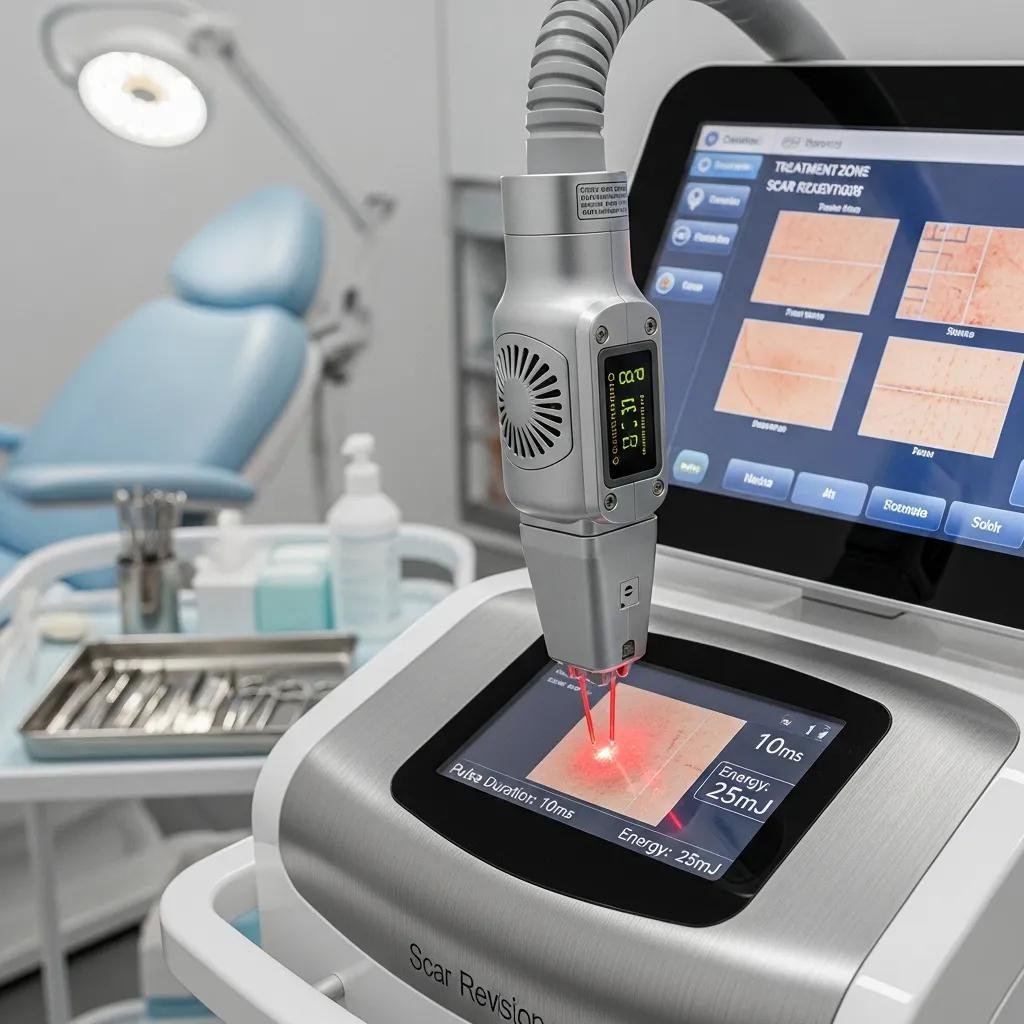
Laser scar revision uses focused light energy to ablate or thermally remodel scar tissue, offering precision in depth and area to remove irregular epidermal and dermal scar bands while stimulating collagen reorganization. Ablative lasers physically remove damaged tissue to level texture and reduce deep irregularities, whereas fractional lasers create microthermal zones that balance efficacy and downtime through partial resurfacing. Advantages include targeted pigment correction for post-inflammatory hyperpigmentation, controlled depth for moderate-to-severe textural problems, and the ability to pair with other modalities for comprehensive revision. Trade-offs include longer downtime for ablative approaches and a need for careful candidacy selection to minimize risks in darker skin types. Patients should weigh desired improvement against recovery time and plan for staged resurfacing when treating extensive scarring.
How Does Er:YAG Laser Resurfacing Target Acne Scars?
Er:YAG laser resurfacing is an ablative approach that removes precise layers of epidermis and superficial dermis to eliminate scarred tissue and expose a regenerative wound bed that remodels with new collagen. The ablation mechanism provides high precision and controllable depth, which is advantageous for moderate-to-severe textural irregularities and well-defined boxcar scars. By vaporizing targeted scar tissue, Er:YAG promotes smoother contour and can be combined with subsequent collagen-stimulating treatments to enhance durability of results. Because Er:YAG is an ablative modality, expected downtime and aftercare are greater than non-ablative options, requiring staged planning for safety and optimal healing.
Which Scar Types Respond Best to Fractional Laser Therapy?
Fractional lasers, whether non-ablative or fractional-ablative, treat a spectrum of atrophic scars by creating microscopic columns of thermal injury that stimulate collagen while leaving surrounding tissue intact to accelerate healing. Boxcar and rolling scars typically show strong responses to fractional treatment, especially when combined with subcision or fillers for mixed-depth problems. Fractional therapy offers a balance between efficacy and downtime, allowing practitioners to adjust density and energy to patient goals; deep ice pick scars may need focal or surgical adjuncts alongside fractional passes. Combining fractional lasers with other modalities often yields better overall correction for complex or mixed-pattern scarring.
After discussing laser approaches broadly, it’s relevant to note that Er:YAG laser resurfacing is among the advanced options offered locally by Shore MedSpa & Bio Aesthetics in Rockville, reflecting availability of ablative resurfacing choices for appropriate candidates under board-certified dermatologic oversight. This local offering supports staged plans that pair resurfacing with adjunctive collagen-stimulating approaches.
Below is a concise comparison of laser modalities to clarify selection.
| Laser Type | Precision / Ablation | Typical Depth Control |
|---|---|---|
| Er:YAG (ablative) | High precision ablation of superficial dermis | Fine, controllable depth |
| Fractional-ablative | Punctate ablation with surrounding intact tissue | Moderate to deep depending on settings |
| Non-ablative fractional | Thermal remodeling without surface ablation | Superficial to mid-dermis control |
How Can Chemical Peels and Dermal Fillers Complement Acne Scar Treatment?
Chemical peels and dermal fillers serve complementary roles: peels address surface irregularities and pigment, while fillers correct volume deficits in depressed scars, and together they can be sequenced to maximize overall improvement. Peels like VI Peels or AHA-based treatments accelerate epidermal turnover and can reduce post-inflammatory hyperpigmentation and superficial texture problems, making skin more uniform before or between deeper procedures. Dermal fillers — typically hyaluronic acid — lift depressed areas immediately, improving contour while collagen-inducing modalities create longer-term structural change. A staged plan often sequences peels for tone, microneedling or lasers for remodeling, and fillers for volume correction when needed.
What Role Do VI Peels and AHA Peels Play in Scar and Pigmentation Reduction?
VI Peels and AHA peels differ in strength and indication: VI Peel protocols target pigmentation and moderate textural concerns with a formulated chemical blend that promotes even tone, while AHA peels (glycolic/lactic acids) provide surface exfoliation and gradual smoothing. Peels are useful between deeper sessions to maintain epidermal clarity and reduce pigment that can obscure textural gains, and they can shorten the interval to next procedure by improving superficial barriers. Downtime is generally light to moderate depending on peel strength, and sequencing should consider recent ablative procedures to avoid excessive irritation. Used judiciously, peels form part of a multi-modal maintenance strategy for scar-prone skin.
Introductory table below summarizes how peels and fillers address distinct scar attributes.
| Approach | Target | Typical Benefit |
|---|---|---|
| VI Peel | Pigmentation & moderate texture | Even tone, reduced hyperpigmentation |
| AHA Peels | Surface renewal | Gentle smoothing and exfoliation |
| Hyaluronic Fillers | Volume loss in atrophic scars | Immediate contour restoration |
How Do Dermal Fillers Restore Volume in Depressed Acne Scars?
Dermal fillers restore contour by replacing lost volume beneath depressed scars, elevating the scar base to match surrounding skin and producing immediate visual improvement. Hyaluronic acid fillers are commonly used because they are moldable, reversible, and well-understood, providing temporary correction that can last months to a year depending on product and host factors. Fillers are often an ideal first-line for shallow boxcar scars or for temporizing deep depressions while collagen-inducing therapies take effect; they also combine well with microneedling or lasers to address both volume and tissue quality. Maintenance treatments and staged combination approaches optimize both immediate and long-term outcomes.
For patients in Rockville seeking integrated options, Shore MedSpa & Bio Aesthetics — led by Dr. Ronald Shore — provides advanced cosmetic dermatology services including Scar Treatment & Stretch Mark Reduction, Er:YAG Laser Resurfacing, Lutronic Genius RF (RF microneedling), and VI Peels. Their approach emphasizes personalized treatment sequencing to treat texture, tone, and volume while balancing downtime and safety for each patient’s skin type.
- Key takeaways for scar revisionMatch modality to scar morphology: depth, width, and tethering guide selection.Use combination therapy when scars have multiple contributing factors.Prioritize staged plans that allow healing and progressive remodeling.
- Patient preparation and recovery tipsProtect skin from sun and follow provider aftercare to reduce pigment risk.Plan treatments seasonally when downtime can be accommodated.Expect incremental improvement over months as collagen remodels.
- When to consult a specialistIf scars are deep, mixed-type, or associated with pigment issues.When previous treatments produced limited improvement or irregular results.To design a safe, evidence-informed staged revision program.