Dermal Fillers for Hand Rejuvenation in Rockville, MD: Restore Youthful Hands with Expert Care
Hand rejuvenation using dermal fillers restores lost volume in the dorsal hands, softening visible veins and tendons and improving overall contour. This article explains why hands age, how different filler types work, what to expect during and after treatment, and how pricing is determined for hand filler treatment in Rockville. Readers will learn the biological drivers of volume loss, the differences between hyaluronic acid fillers and collagen stimulators, and a clear procedural timeline from consultation to recovery. Practical lists and comparison tables help you weigh options like hyaluronic acid products versus stimulators such as Radiesse and Sculptra, and step-by-step guidance clarifies common recovery milestones. Finally, transparent cost factors and booking guidance are provided so you can pursue a personalized plan to reduce hand wrinkles and restore hand volume in Rockville, MD.
What Causes Hand Aging and Volume Loss?
Hand aging results from progressive loss of subcutaneous fat and dermal collagen, which thins skin and reveals underlying tendons and veins. Collagen and elastin decline with age reduces structural support, while fat pad depletion leads to visible bony contours; together these mechanisms produce an aged hand appearance and increased prominence of vascular and tendinous structures. Environmental factors such as cumulative sun damage accelerate dermal thinning and pigment changes, compounding volume loss. Understanding these causes is the first step toward choosing appropriate hand rejuvenation fillers and adjunctive treatments.
How Does Collagen Loss Affect Hand Appearance?
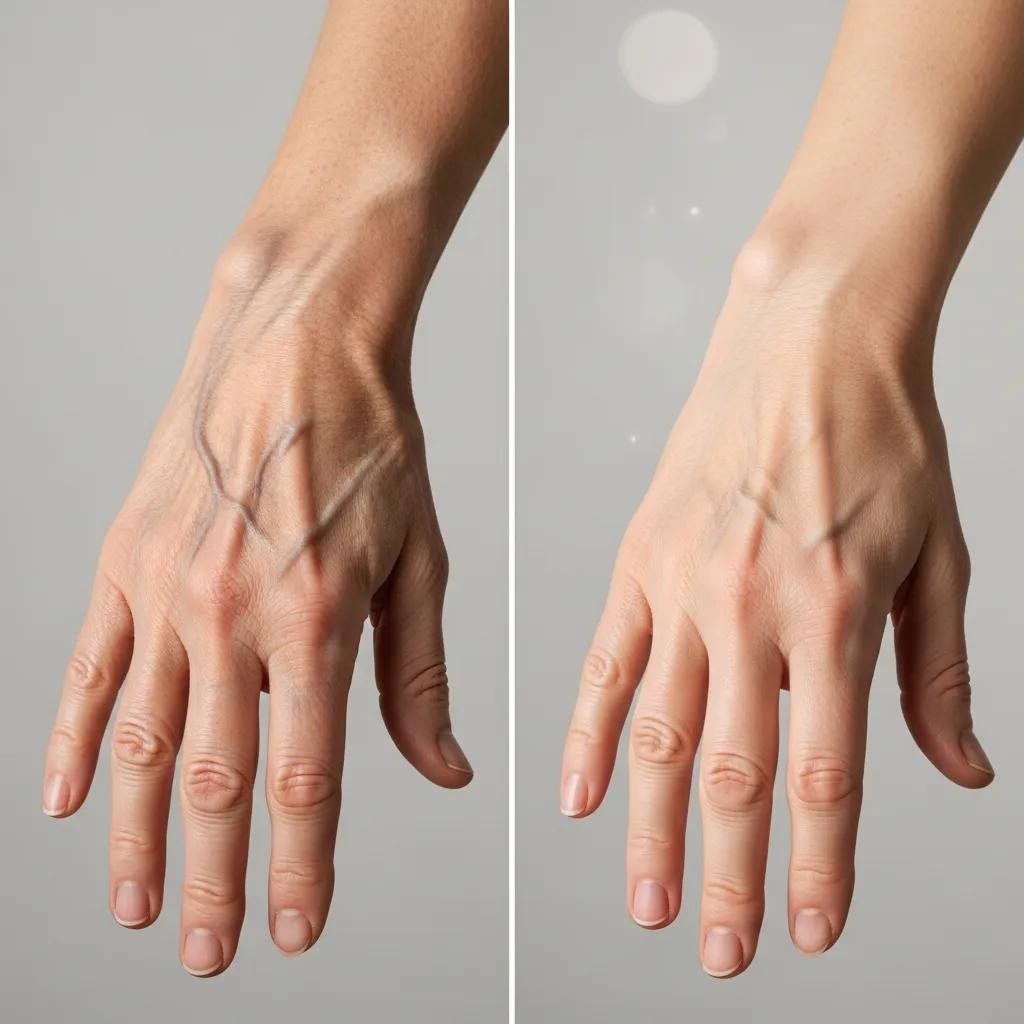
Collagen provides structural scaffolding to dermal tissue, so reduced collagen weakens skin thickness and elasticity over time. As collagen production slows, the skin becomes crepey and less able to mask veins and tendons, which then appear more prominent and aged. Clinically, this means volume restoration strategies should address both superficial skin quality and deeper soft-tissue support to achieve a natural-looking result. Recognizing collagen decline highlights why collagen-stimulating fillers are often chosen for longer-term remodeling of the dorsal hand.
What Are the Visible Signs of Aging Hands?
Visible signs of aging hands include volume loss, crepey skin texture, prominent veins and tendons, and uneven pigmentation such as age spots. These signs often coexist and respond differently to treatments: pigment and texture may need laser or topical approaches while volume loss is best treated with injectable fillers. Below is a concise enumeration of the primary visual features to help identify treatment priorities.
- Volume loss produces a hollowed appearance and accentuates knuckles.
- Crepey skin shows fine wrinkles and reduced elasticity on the dorsum.
- Prominent veins and tendons become more visible as soft tissue thins.
- Age spots and uneven pigmentation create surface irregularity and discoloration.
These signs guide the choice between immediate volumizing fillers and longer-term collagen stimulators for durable hand rejuvenation.
Which Dermal Fillers Are Best for Hand Rejuvenation in Rockville?
Choosing the best dermal filler for hand rejuvenation depends on desired immediacy of volume, durability, and whether collagen stimulation is a priority. Hyaluronic acid (HA) fillers provide immediate gel-based volume and are reversible, making them suitable for moderate volume loss and for patients wanting predictable, adjustable results. Collagen-stimulating agents such as calcium hydroxylapatite (Radiesse) and poly-L-lactic acid (Sculptra) provide initial correction and promote new collagen formation over months for longer-lasting remodeling. The table below compares these filler classes by mechanism, longevity, and ideal candidate to clarify selection.
| Filler Type | Mechanism | Typical Longevity |
|---|---|---|
| Hyaluronic acid (e.g., Restylane Lyft, Juvederm) | Gel implantation replaces volume immediately and binds water | ~6–12 months |
| Calcium hydroxylapatite (Radiesse) | Provides scaffold and stimulates collagen production | ~12–15 months |
| Poly-L-lactic acid (Sculptra) | Biostimulator that encourages gradual collagen synthesis | Up to 2 years with series |
This comparison shows HA fillers suit immediate, adjustable correction, while Radiesse and Sculptra favor patients seeking longer intervals between treatments and progressive tissue remodeling.
After reviewing filler mechanics and candidacy, Shore MedSpa & Bio Aesthetics in Rockville offers both hyaluronic acid options and collagen-stimulating products and personalizes selection during consultation. Their clinical approach pairs product choice with injection technique to optimize safety and aesthetic outcome.
What Are Hyaluronic Acid Fillers Like Restylane Lyft and Juvederm?
Hyaluronic acid fillers restore volume by depositing a gel that immediately replenishes soft tissue and smooths dorsal contours. These products hydrate and provide lift while offering the option for enzymatic reversal with hyaluronidase if adjustment is needed, which enhances their safety profile for many patients. Typical durability ranges from about six to twelve months depending on product, injection depth, and patient metabolism, making HA fillers suitable for moderate, reversible improvements. Patients who prefer predictable, quickly visible change often select HA fillers as a first-line hand rejuvenation option.
How Do Collagen Stimulators Radiesse and Sculptra Work for Hands?
Collagen stimulators work by creating a scaffold and triggering the body’s wound-healing response to lay down new collagen around injected particles. Radiesse provides immediate volume with calcium hydroxylapatite microspheres that also promote collagen over months, while Sculptra gradually stimulates collagen formation through poly-L-lactic acid, producing progressive thickening and contour improvement. These stimulators typically last longer than HA fillers and are favored by patients seeking durable remodeling rather than only immediate gel-based correction. Choosing between them depends on desired timeline, tolerance for staged treatments, and the clinician’s assessment.
What to Expect During and After Your Hand Rejuvenation Procedure?

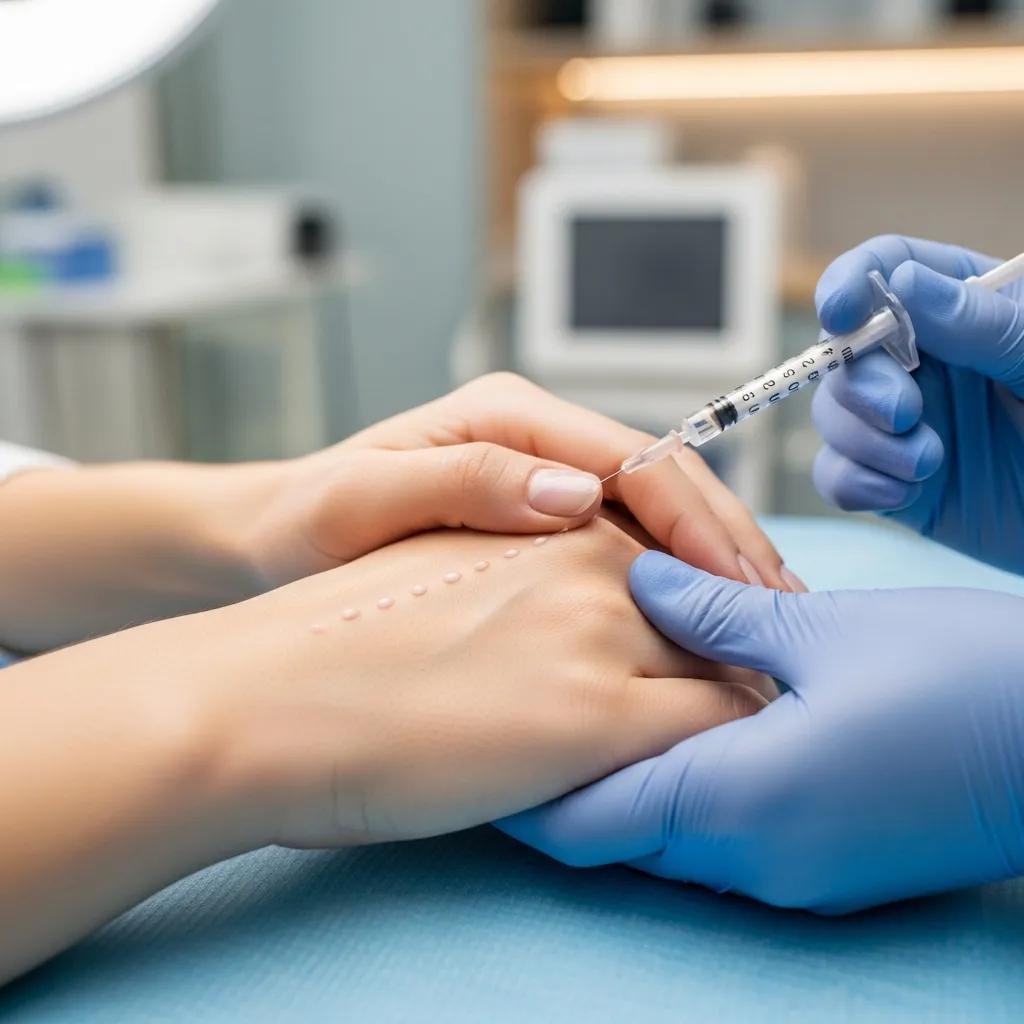
A typical hand rejuvenation pathway begins with a focused consultation, followed by a mapped injection plan, local anesthesia, and careful filler placement; immediate effects are visible with predictable short-term swelling and bruising. The injection technique emphasizes even, layered placement to recreate soft-tissue fullness while avoiding intravascular injection; topical or local anesthetic improves comfort during the procedure. Post-procedure care focuses on brief icing, limited heavy use of hands for 24–48 hours, and monitoring for common side effects that generally resolve within one to two weeks. Understanding this sequence helps patients set realistic expectations for recovery and results.
| Phase | Typical Experience | Timeframe / Tips |
|---|---|---|
| Consultation | Medical history, photos, treatment plan | Day 0; bring prior treatment records |
| Injection | Numbing, mapped injections, immediate correction | Procedure 15–45 minutes; expect swelling |
| Early recovery | Bruising, tenderness, mild swelling | 0–7 days; ice and avoid heavy use |
| Remodeling | Gradual collagen formation (if stimulator used) | Weeks–months; progressive improvement |
This timeline clarifies immediate versus progressive changes and prepares patients for the expected course after hand filler treatments.
For patients who choose Shore MedSpa & Bio Aesthetics, the consultation process includes a clinical assessment and personalized treatment plan, with safety measures and patient education emphasized before any injections. This patient-first approach helps align product selection—whether hyaluronic acid or a collagen stimulator—with individual anatomy and aesthetic goals, and staff provide clear post-care instructions to support smooth recovery.
How Is the Consultation and Injection Process Conducted?
The consultation documents medical history, photographs baseline appearance, and discusses goals to determine whether HA fillers or collagen stimulators are most appropriate. During the injection visit, providers apply topical anesthesia and use a mapped technique to place product precisely, minimizing discomfort and optimizing symmetry. Providers explain immediate aftercare—ice, elevation, avoidance of strenuous hand activity—and schedule follow-up to assess settling and address any concerns. This structured process ensures safety and allows adjustments in staged treatments when remodeling agents are selected.
What Are Typical Results, Recovery Time, and Side Effects?
Results often show immediate volumization with HA fillers, while collagen stimulators produce progressive improvement over weeks to months as new collagen forms. Common short-term effects include swelling, bruising, and tenderness that tend to subside within one to two weeks, with most patients returning to normal activity within a few days. Red flags such as increasing pain, severe swelling, or signs of infection warrant prompt provider contact. Understanding typical recovery and expected side effects helps patients plan downtime and postoperative care.
How Much Does Hand Rejuvenation Cost in Rockville, MD?
Pricing for hand rejuvenation varies based on product type, volume needed, and provider expertise, so a personalized consultation is the best way to get an accurate quote. Hyaluronic acid treatments generally involve per-syringe pricing and may be more economical up-front, while collagen stimulators often have higher initial cost but longer-lasting benefit, affecting overall value. Facility, technique complexity, and whether complementary treatments (like lasers for spots) are included also influence the final price. The table below breaks down common cost drivers to illuminate how different choices impact expense.
| Cost Factor | Description | Impact on Price |
|---|---|---|
| Product type | HA vs CaHA vs PLLA | Higher for stimulators, lower for single HA syringes |
| Volume required | Number of syringes or vials needed | Direct proportional increase |
| Provider expertise | Injector skill and experience | Higher cost for specialist injectors |
| Additional treatments | Laser, topical agents, staged sessions | Adds to overall package cost |
This breakdown helps prospective patients understand why estimates vary and why an in-person assessment is necessary for personalized pricing.
What Factors Influence the Price of Hand Fillers?
Several variables determine cost: the chosen filler product, the total volume required to achieve the desired correction, the injector’s qualifications and technique, and any adjunct therapies to treat skin texture or pigment. Geographic market rates and facility standards also affect pricing. Patients should view cost in the context of expected longevity and safety—longer-lasting stimulators may cost more initially but reduce treatment frequency over time.
How Can You Schedule a Consultation at Shore MedSpa?
To pursue hand rejuvenation with Shore MedSpa & Bio Aesthetics and Dr. Ronald Shore, request a consultation to review your anatomy, goals, and pricing options; the initial visit covers assessment, product selection, and an individualized estimate.
Bring a list of medications and prior cosmetic procedures to the appointment to facilitate safe planning. A consultation ensures that treatment recommendations—whether hyaluronic acid fillers for immediate volume or collagen stimulators for long-term remodeling—match your aesthetic priorities and medical profile.
- Prepare: Gather medication history and photos of your hands.
- Assess: Expect a clinical evaluation and discussion of goals.
- Plan: Receive personalized recommendations and pricing.
This process supports transparent decision-making and helps patients choose the most appropriate hand filler treatment for lasting, natural-looking results.