Photoaging Treatment and Sun Damage Repair in Rockville, MD: Effective Solutions for Skin Rejuvenation
Photoaging is premature skin aging caused primarily by cumulative ultraviolet (UV) exposure, and it produces visible changes such as wrinkles, sunspots, and textural loss that respond to targeted medical-aesthetic therapies. This article explains how UV radiation drives structural and pigmentary changes in the skin, outlines advanced options for sun damage repair, and maps practical next steps for residents of Rockville, MD seeking correction. Readers will learn the biological mechanisms behind photoaging, how to match signs (pigmentation, texture, vascular changes) to evidence-based treatments, and what to expect during a consultation and follow-up. The guide covers lasers, intense pulsed light, chemical peels, RF microneedling, and LED therapy with concise comparisons and treatment-focused tables to aid decision-making. Finally, the piece describes what Shore MedSpa & Bio Aesthetics offers locally, who oversees care, and how personalized plans optimize long-term skin health — helping you move from understanding to action with confidence.
What is Photoaging and How Does Sun Damage Affect Your Skin?
Photoaging is the cumulative structural and pigmentary alteration of skin caused by repeated exposure to UVA and UVB radiation, which accelerates collagen breakdown, elastin degeneration, and uneven melanin distribution. UV radiation → induces → oxidative stress, and oxidative stress → degrades → extracellular matrix proteins, producing clinical signs that differ from chronological aging. The immediate clinical relevance is that reversing visible damage requires both surface renewal and deeper collagen regeneration to restore tone and texture.
Below is a concise breakdown of how key skin components respond to UV injury to clarify treatment targets and set up modality selection.
The following table shows how UV targets discrete skin components and the observable outcomes clinicians assess during treatment planning.
| Skin Component | Damage Type | Clinical Sign |
|---|---|---|
| Collagen (dermis) | Degradation and fragmentation | Wrinkles, reduced firmness |
| Elastin (dermis) | Loss of elastic recoil | Sagging, coarse lines |
| Melanin (epidermis) | Irregular production and clustering | Sunspots, hyperpigmentation |
| Superficial vasculature | Telangiectasia and vascular fragility | Redness, visible capillaries |
This mapping clarifies why combined approaches—addressing pigment, vascular changes, and collagen—are often required to meaningfully improve photoaged skin. Understanding damage patterns leads naturally to asking which treatments best address each sign.
What Causes Photoaging and What Are Its Visible Signs?
Photoaging results from repeated exposure to UVA and UVB wavelengths that penetrate the skin and generate reactive oxygen species, leading to DNA damage, inflammation, and breakdown of the extracellular matrix. UVA penetrates deeper to affect dermal collagen and elastin, producing fine lines and laxity, while UVB primarily induces epidermal damage and pigmentary changes like sunspots. Clinically, practitioners look for a combination of indicators: lentigines (age spots), mottled pigmentation, rough or leathery texture, fine and coarse wrinkles, and telangiectasias. Recognizing the dominant signs guides modality choice—for instance, pigment-focused therapies for sunspots and resurfacing or collagen-stimulating options for texture and wrinkles.
How Does UV Exposure Lead to Wrinkles, Spots, and Texture Changes?
UV exposure initiates a cascade: photons → damage keratinocytes and fibroblasts → trigger matrix metalloproteinase release → degrade collagen and elastin, which manifests as wrinkles and loss of elasticity. Concurrently, UV-driven melanocyte activation causes melanin clustering and uneven pigmentation, producing sunspots and blotchiness that sit atop changes in surface cell turnover. Slower epidermal renewal after chronic sun stress also contributes to rough texture and impaired barrier function, increasing visible coarseness. Prevention and adjunctive care—regular broad-spectrum sunscreen, topical antioxidants, and retinoids—reduce ongoing damage and complement corrective therapies by stabilizing cellular turnover.
Which Advanced Treatments Are Available for Sun Damage Removal in Rockville?
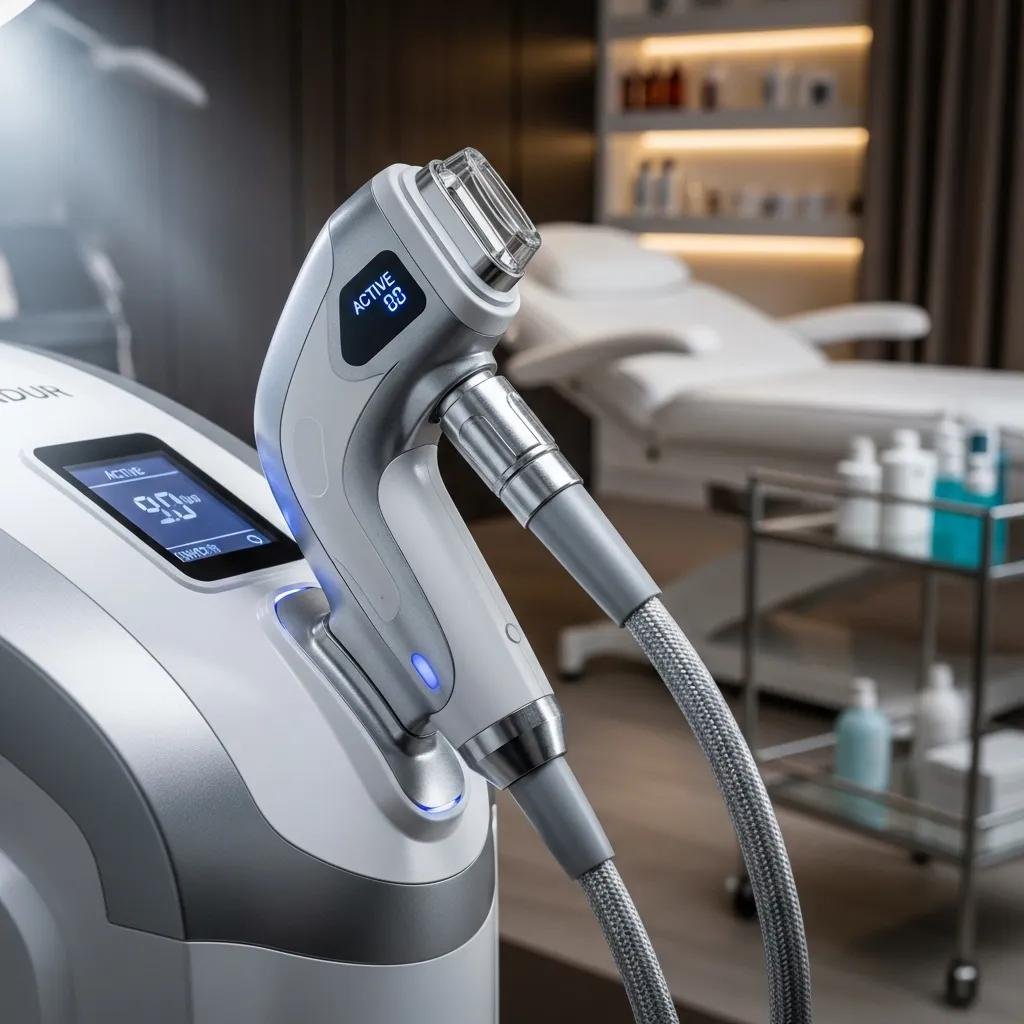
Advanced medical-aesthetic options for sun damage focus on selectively removing pigment, resurfacing the epidermis, and stimulating dermal collagen remodeling to restore tone, texture, and clarity. Different modalities target distinct chromophores or layers: ablative and non-ablative lasers remodel collagen and improve texture, IPL addresses pigment and vessels through photothermolysis, chemical peels remove damaged epidermis, RF microneedling provokes collagen regeneration, and LED supports healing and cellular repair. Below is a quick comparative table to help match treatment goals to likely options, and the numbered list that follows summarizes best choices by symptom.
| Treatment | Mechanism | Primary benefit / Downtime / Typical sessions |
|---|---|---|
| Er:YAG laser resurfacing | Precise ablation of epidermis and superficial dermis | Texture/lines improvement / moderate downtime / 1–3 sessions |
| IPL photofacial | Broad-spectrum light targeting melanin and hemoglobin | Pigment and vascular reduction / minimal downtime / 3–6 sessions |
| VI Peel (chemical peel) | Controlled chemical exfoliation of epidermis | Accelerated skin renewal / short downtime / 1–3 sessions |
| RF microneedling (Genius®) | Microneedles + radiofrequency stimulate collagen | Deep remodeling for texture/scars / brief swelling / 3 sessions |
| LED Skin Therapy (Healite II) | Low-level light therapy enhances repair | Healing and inflammation reduction / no downtime / multiple sessions |
For targeted guidance, consider these matchups:
- For sunspots and uneven tone — best option: IPL photofacial, because it selectively reduces melanin and superficial vascularity — downtime: minimal.
- For fine lines and superficial texture — best option: Er:YAG laser resurfacing, because it ablates damaged epidermis and induces remodeling — downtime: moderate.
- For combined texture and collagen loss — best option: RF microneedling (Genius®), because it stimulates deep collagen synthesis with controlled injury — downtime: short.
After reviewing options and mechanisms, many patients ask which providers offer these modalities locally; Shore MedSpa & Bio Aesthetics in Rockville offers the relevant suite of treatments under clinical oversight (see the next section for clinic details).
How Does Laser Therapy, Including Er:YAG and IPL, Improve Sun Spots and Skin Tone?
Laser therapy improves pigmentation and tone through targeted energy absorption by melanin or hemoglobin, which fragments pigment and coagulates superficial vessels while sparing surrounding tissue. Er:YAG is an ablative wavelength ideal for removing damaged epidermal layers and smoothing texture, producing predictable resurfacing with controlled downtime. IPL is non-ablative, treating multiple chromophores to lighten sunspots and reduce redness with less recovery time and staged sessions. Safety considerations include skin type assessment to minimize post-inflammatory hyperpigmentation and appropriate pre- and post-care to support uniform healing.
What Are the Benefits of Chemical Peels and Microneedling for Photoaging?
Chemical peels, such as medium-depth VI Peels, accelerate the shedding of damaged epidermal cells to reveal fresher skin and can improve superficial hyperpigmentation and fine lines after a series of treatments. Microneedling, with or without radiofrequency, creates microinjury that stimulates fibroblasts and promotes collagen and elastin remodeling, improving texture, minimizing scars, and tightening skin over months. Combined approaches—peels for epidermal renewal plus RF microneedling for dermal stimulation—often yield synergistic results while tailoring downtime to patient needs. Proper aftercare, including sun avoidance and barrier repair, is essential to maintain gains and reduce complications.
Why Choose Shore MedSpa & Bio Aesthetics for Skin Rejuvenation in Rockville, MD?
Shore MedSpa & Bio Aesthetics presents local access to advanced photoaging treatments in Rockville, MD with clinical oversight focused on safety, customized protocols, and modern devices. Led by Dr. Ronald Shore, the practice emphasizes evidence-based selection of technologies—Er:YAG resurfacing, IPL photofacials, VI Peels, RF microneedling (Lutronic Genius® RF), and LED Skin Therapy (Healite II)—to match each patient’s morphology and goals. The clinic highlights a combination of board-certified dermatologist leadership and state-of-the-art technology, serving Montgomery County communities including Bethesda, North Bethesda, Silver Spring, and Potomac. Below are the distinct value points patients can expect when choosing a medically supervised medspa model.
- Board-certified dermatologist leadership ensures clinical oversight and safety-focused protocols.
- State-of-the-art technology provides access to Er:YAG, IPL, Genius® RF microneedling, VI Peels, and Healite II LED therapy.
- Customized treatment plans align modalities to skin type, extent of damage, and patient goals.
These trust signals underscore why personalized planning and device selection matter; the next subsection explains Dr. Ronald Shore’s role in that process.
What Expertise Does Dr. Ronald Shore Bring to Photoaging Treatments?
Dr. Ronald Shore provides named clinical oversight within the practice and guides evidence-based treatment selection to optimize safety and outcomes for photoaging patients. His role includes assessing skin type and damage extent, recommending appropriate modalities, and supervising protocols that combine resurfacing, pigmentation control, and collagen stimulation when indicated. This oversight aims to reduce complications, tailor downtime expectations, and integrate maintenance strategies. Expertise at the provider level facilitates predictable results and supports informed consent and realistic expectations.
How Do Customized Treatment Plans Enhance Natural Skin Repair?

Customized treatment plans align modality choice, treatment sequence, and aftercare to individual factors—skin type, damage depth, and patient goals—thereby increasing efficacy and minimizing risk. For example, combining IPL for pigment reduction with scheduled VI Peels for epidermal renewal and periodic RF microneedling for collagen stimulation creates a phased approach that addresses superficial and deep damage while balancing recovery. Plans also incorporate topical maintenance (retinoids, antioxidants) and sunscreen to preserve gains. This individualized approach improves outcomes compared with one-size-fits-all protocols and clarifies timelines for visible improvement.
How Can You Start Your Sun Damage Repair Journey in Rockville?
Beginning sun damage repair starts with a structured consultation, targeted assessment, and a clear staged plan that balances efficacy and recovery. The process typically follows a predictable sequence to ensure safety and measurable progress. The numbered steps below outline the patient pathway so you know what to expect from first contact through follow-up.
- Consultation and history: Discuss skin concerns, medical history, and cosmetic goals with photographic documentation.
- Evaluation and plan: Provider assesses skin type and damage depth, then recommends a combination of modalities and timelines.
- Treatment scheduling and pre-care: Arrange sessions with pre-treatment instructions, such as sun avoidance and topical preparation.
- Follow-up and maintenance: Post-procedure visits monitor healing, measure outcomes, and set maintenance intervals.
These steps emphasize predictability and informed decision-making, and they naturally lead to practical expectations for the initial consult content described below.
What Should You Expect During a Consultation for Photoaging Treatment?
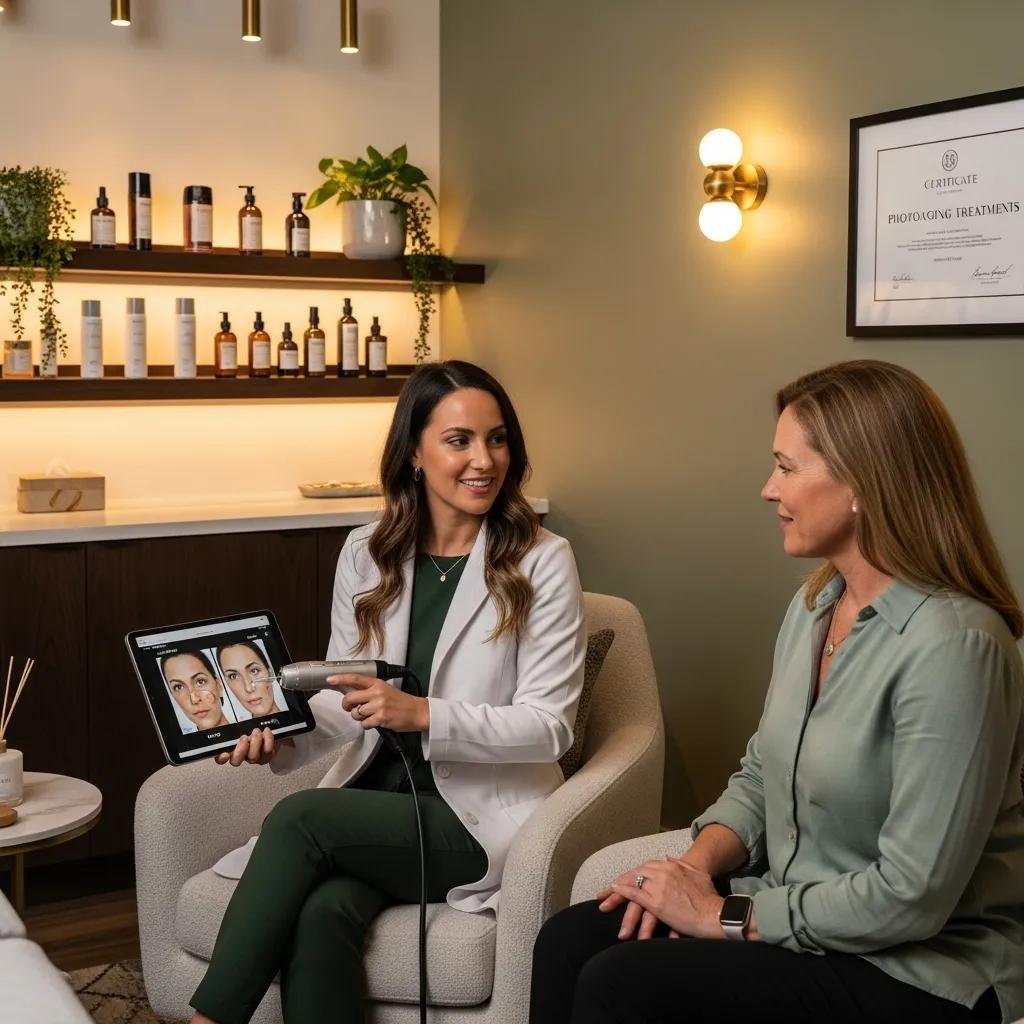
During a consultation you can expect a focused medical history review, a full skin examination, standardized photographs, and a discussion of realistic outcomes and risks for recommended therapies. The provider will evaluate phototype, existing pigmentation, textural irregularities, and any contraindications that influence modality selection. After assessment, a written or verbal plan outlines recommended treatments, expected number of sessions, downtime estimates, and maintenance strategies. This transparent planning stage sets expectations and enables shared decision-making before scheduling procedures.
How Do Patient Testimonials Reflect Treatment Success?
Patient testimonials and before-and-after galleries function as illustrative tools to show typical progress and recovery timelines without guaranteeing identical results for every individual. Anonymized case examples help prospective patients understand the degree of improvement, session counts, and post-procedure course they might anticipate. During consultation, providers commonly offer relevant case examples that match a patient’s skin type and treatment plan to align expectations. Requesting these illustrative outcomes supports an informed choice and clarifies achievable goals.