Balancing Combination Skin: Essential Care Tips and Product Guide for a Healthy Routine
Combination skin combines zones with differing needs—typically an oily T-zone and drier cheeks—so a balanced routine must control oil where pores are congested while restoring hydration where the barrier is thin. This article explains how to identify combination skin, outlines morning and evening routine steps tailored to mixed skin type, summarizes the most effective ingredients, and maps professional options that complement home care. Readers will learn practical, evidence-aligned strategies—cleanser selection, spot-treatment ordering, gentle exfoliation, and targeted hydration—that reduce shine without provoking cheek dryness or sensitivity. The guide also includes quick diagnostic checks, ingredient comparison tables to choose serums and moisturizers, and a concise look at in-office treatments that address texture, pore clarity, and inflammation. Throughout, you’ll find actionable lists and EAV-style tables to make product choices easier and to help you assemble a consistent routine that supports barrier repair and t-zone balance.
What Defines Combination Skin and How Can You Identify It?
Combination skin is defined by coexisting oily and dry zones on the same face, driven by regional differences in sebaceous gland activity and barrier integrity. Mechanistically, excess sebum in the T-zone produces shine and enlarged pores, while reduced lipid content on the cheeks causes tightness and flaking; recognizing both patterns is key to targeting products correctly. Early identification prevents over-treatment of dry zones or undertreatment of oily areas, improving overall texture and reducing reactive flares. The next section breaks down the defining symptoms for each zone so you can run a quick self-check.
What Are the Characteristics of Oily T-Zone and Dry Cheeks?
The oily T-zone typically shows visible shine by mid-day, enlarged pores, and occasional comedones or acneiform breakouts; these signs indicate elevated sebum production and follicular occlusion. In contrast, dry cheeks feel tight after cleansing, may display microscopic flaking, and can be prone to sensitivity or redness when over-exfoliated. Visual and tactile checks—pressing a blotting paper to the forehead and feeling the cheeks after a gentle cleanse—help confirm a mixed skin type. Identifying these contrasting features directs you toward oil-control actives in the T-zone and humectant-plus-occlusive strategies for the cheeks.
What Common Causes Lead to Combination Skin?
Combination skin arises from genetics, hormonal fluctuations, environmental stressors, and localized barrier disruption from harsh products or seasonal changes. Sebaceous gland distribution creates a natural hyperactive zone while aging or topical irritants reduce lipids on the cheeks, producing a mixed presentation. Over-cleansing or frequent high-strength exfoliation can exacerbate cheek dryness while leaving the T-zone reactive and oilier as compensation. Understanding triggers helps prioritize barrier-supportive interventions while selectively applying oil-regulating ingredients to the T-zone.
How to Build an Effective Skincare Routine for Combination Skin?
An effective routine for combination skin balances cleansing, targeted treatment, hydration, and sun protection while allowing zone-specific adjustments. Start with a gentle, pH-friendly cleanser that removes excess sebum without stripping cheek lipids, then layer lightweight actives on oily zones and humectants on dry areas. Consistency and sequencing—cleanse, treat, hydrate, protect—minimize irritation and improve t-zone balance over weeks. Below are practical routine steps for morning and evening use, followed by a concise product guide table to match formulation cues to each product type.
What Are the Key Steps in a Morning Routine for Combination Skin?
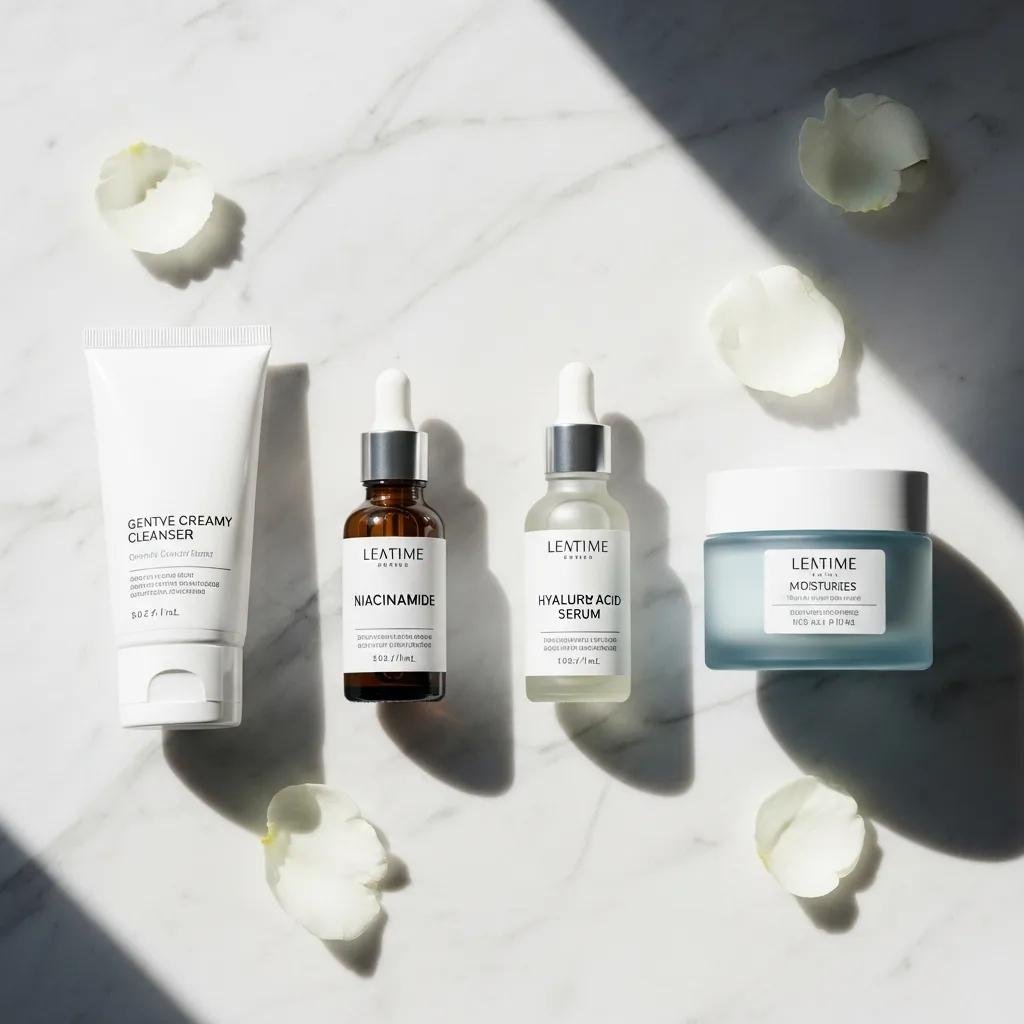
The morning routine focuses on light cleansing, targeted control for the T-zone, and reliable hydration plus sunscreen for the whole face. Use a gentle foaming or gel cleanser on the T-zone and a cream or milky cleanser on cheeks if you prefer double-masking; apply a niacinamide serum to oily areas to regulate sebum and a low-weight hyaluronic acid serum on cheeks to attract moisture. Finish with a non-comedogenic, broad-spectrum sunscreen and a lightweight, gel-cream moisturizer where needed. Consistent morning protection preserves barrier recovery and prevents compensatory oiliness later in the day.
- Gentle Cleanse: Removes overnight sebum without stripping protective lipids.
- Targeted Serum: Niacinamide for t-zone control; hyaluronic acid for cheek hydration.
- Moisturize + Sunscreen: Lightweight, non-comedogenic products that protect and hydrate.
These steps reduce midday shine while keeping cheeks plumped and protected, setting up effective evening treatments.
| Product Type | Key Formulation Cue | Recommended Use / Example Ingredient |
|---|---|---|
| Cleanser | pH-balanced, gentle surfactants | Use on full face; consider oil-control cleanser for T-zone |
| Serum | Lightweight humectant vs sebum-modulator | Hyaluronic acid for cheeks, niacinamide for T-zone |
| Moisturizer | Non-comedogenic gel-cream or lightweight cream | Ceramide-rich formula for barrier support |
This product guide maps formulation cues to practical use so you can choose items that serve each facial zone.
How Should You Adjust Your Evening Skincare Routine?
Evening routines prioritize makeup/sunscreen removal, targeted actives for texture, and restorative moisturization for cheeks. If you wear sunscreen or makeup, begin with an oil-based or balm cleanser followed by a gentle second cleanse to avoid over-stripping while ensuring pore clarity. Night is the time for periodic BHA spot treatments on the T-zone to clear follicles and for lower-strength AHA exfoliation if texture concerns persist; apply richer, ceramide-containing creams on cheeks to support overnight barrier repair. Scheduling exfoliants 1–3 times weekly and alternating retinoids or acids prevents irritation and sustains balance.
- Double Cleanse When Needed: Removes sunscreen/makeup while protecting skin lipids.
- Targeted Actives: Salicylic acid for pore clarity in t-zone; gentle AHA for uneven texture.
- Repair-Focused Moisture: Ceramides and occlusives on cheeks to restore barrier overnight.
These measures maintain clarity in oil-prone areas while allowing dehydrated zones to recover and strengthen.
| Product Type | Key Property | Recommended Use / Example Ingredient |
|---|---|---|
| Exfoliant | BHA or gentle AHA | Salicylic acid for t-zone, lactic acid for mild resurfacing |
| Night Cream | Barrier-repairing, ceramide-rich | Apply to cheeks; avoid heavy occlusives on active acne zones |
| Spot Treatment | Antimicrobial/exfoliating | Use sparingly on comedones or active lesions |
This table links product types to targeted application, helping you coordinate nightly care with daytime protection.
Which Ingredients Are Best for Balancing Combination Skin?
Key ingredients address specific regional needs: humectants hydrate, sebum modulators reduce oiliness, and gentle acids clarify pores. Hyaluronic acid attracts and holds water in the stratum corneum to plump dry cheeks, while niacinamide improves barrier function and modulates sebum production in the t-zone. Salicylic acid (a BHA) penetrates lipid-rich follicles to exfoliate inside pores and reduce congestion. Use these ingredients selectively and in appropriate concentrations to avoid cross-zone irritation; the table below summarizes mechanism and best-use zones.
How Does Hyaluronic Acid Hydrate Dry Cheeks?
Hyaluronic acid is a humectant that binds water to the outer skin layers, improving feel and elasticity on dry cheeks without adding oil. Lower-molecular-weight formulations penetrate more superficially to hydrate the stratum corneum, while higher-molecular-weight variants sit on the surface to provide immediate plumping. Layering a hyaluronic acid serum under an occlusive or ceramide-containing cream enhances water retention and prevents trans-epidermal water loss in drier zones. Use targeted application on cheeks and avoid heavy layering on already oily t-zones to maintain balance.
What Role Do Niacinamide and Salicylic Acid Play in Oil Control?
Niacinamide strengthens the skin barrier by supporting ceramide synthesis and can reduce transepidermal water loss while indirectly modulating sebum output, making it useful for both cheeks and t-zone. Salicylic acid is a lipophilic BHA that penetrates sebum-filled follicles to exfoliate inside the pore and reduce comedonal build-up in oily areas. Recommended concentrations are typically 2–5% for topical salicylic preparations and 2–10% for niacinamide serums; always patch-test and layer niacinamide before pH-dependent acids. Combining these actives in a zone-specific manner maximizes oil control while preserving hydration.
| Ingredient | Mechanism | Best-use Zone |
|---|---|---|
| Hyaluronic Acid | Humectant, water-binding | Dry cheeks (apply as serum) |
| Niacinamide | Barrier support, sebum modulation | T-zone and overall balance |
| Salicylic Acid (BHA) | Follicular exfoliation | Oily T-zone and clogged pores |
This ingredient table clarifies which actives to apply where, simplifying targeted layering choices.
What Professional Treatments Support Combination Skin Balance?

Professional treatments can accelerate texture improvement, reduce pore size, and calm inflammation when home care plateaus, and they work best when coordinated with a tailored at-home regimen. Chemical peels resurface and regulate oil production in superficial layers, microneedling stimulates collagen to refine pore appearance, and LED therapy soothes inflammation and supports barrier recovery. At Shore MedSpa & Bio Aesthetics in Rockville, MD, board-certified dermatologist Dr. Ronald Shore offers these advanced options as part of personalized plans that complement your daily routine and address combination-skin concerns directly.
How Do Chemical Peels Improve Skin Texture and Balance?
Superficial AHAs or BHA peels remove dead surface cells to smooth texture and can modestly reduce excess oil by normalizing keratinization, while medium-depth peels provide stronger resurfacing for persistent unevenness. Pre- and post-peel care emphasizes gentle cleansers, hydration, and sun protection to avoid excessive dryness on the cheeks; providers typically recommend spacing peels to allow barrier recovery. When combined with targeted at-home niacinamide and humectant layering, peels enhance both pore clarity and overall skin balance with predictable downtime and outcomes.
| Treatment | Mechanism | Primary Benefit / Target Concern |
|---|---|---|
| Chemical Peels (AHA/BHA) | Controlled exfoliation | Texture smoothing, oil regulation |
| Microneedling (incl. RF) | Collagen stimulation | Pore refinement, improved texture |
| LED Skin Therapy | Photobiomodulation | Reduces inflammation, supports healing |
This comparison helps decide which in-office option best complements your home routine for combination skin.
What Benefits Do Microneedling and LED Skin Therapy Offer?
Microneedling creates microchannels that stimulate collagen remodeling and can reduce the visual size of pores while improving skin texture; radiofrequency-assisted microneedling adds tightening effects for enhanced results. LED therapy uses specific light wavelengths to decrease inflammatory signaling and accelerate repair, which is useful after resurfacing or during periods of barrier rebuilding. When combined with evidence-based topical regimens—salicylic acid for t-zone maintenance, hyaluronic and ceramide repair for cheeks—these professional treatments produce more durable balance and improved skin health. For personalized evaluation and treatment sequencing, consult Dr. Ronald Shore at Shore MedSpa & Bio Aesthetics, where advanced technology is paired with customized plans to restore balanced skin.