
Med Spa Glossary: Aesthetic Terms Every Patient Should Know
This glossary explains common med spa and aesthetic medicine terms so patients can make informed, safe treatment choices. You will learn concise definitions, how procedures work, who performs them, and why the vocabulary matters for outcomes and safety. Many people feel uncertain when providers use clinical terms like neuromodulator, hyaluronic acid, or RF microneedling; this guide removes that barrier by defining terms, comparing mechanisms, and clarifying typical benefits and recovery. The article maps four practical sections: common terms and a quick-reference table, how non-surgical procedures work, the roles of med spa professionals, and why understanding terminology changes treatment selection and safety. Throughout, expect plain-language explanations, comparison lists designed for featured-snippet capture, and tables that summarize indications and mechanisms for quick scanning. Recent research and clinical practice trends through 12/2024 inform the explanations so you can ask better questions and set realistic expectations before any appointment.
What Are the Most Common Med Spa Terms You Should Know?
Most med spa terms name a treatment category, its mechanism, and the primary benefit; knowing these three aspects helps patients choose appropriate services.
Below are compact micro-definitions of the top terms patients encounter, each with a one-sentence purpose to aid quick decisions and conversations with providers.
- Botox: A neuromodulator that relaxes muscle activity to soften dynamic wrinkles and prevent repetitive creasing.
- Dermal fillers (Restylane, Juvederm): Gel implants that restore volume and smooth static lines by replacing lost tissue support.
- Microneedling (RF microneedling): Tiny controlled injuries stimulate collagen production for texture and firmness improvement.
- Chemical peel (VI Peel): A topical acid treatment that exfoliates layers of skin to improve tone, acne scarring, and pigmentation.
- Laser hair removal: Laser energy targets pigment in hair follicles to reduce unwanted hair over multiple sessions.
- SculpSure: Non-surgical body contouring that heats and destroys fat cells to reduce localized bulges.
This quick list helps identify which service matches your concern; the table below summarizes purpose and common benefits for fast reference.
Below is a concise reference summarizing common med spa entities and their primary purpose.
| Treatment Category | Common Name/Brand | Primary Purpose/Benefit |
|---|---|---|
| Neuromodulator | Botox / Dysport | Soften dynamic wrinkles by reducing muscle activity |
| Dermal Filler | Restylane / Juvederm | Restore volume and contour to face and lips |
| Microneedling | RF Microneedling (e.g., Genius) | Stimulate collagen for texture and firmness |
| Chemical Peel | VI Peel | Exfoliate and improve tone, acne scars, pigmentation |
| Laser Therapy | Laser hair removal / IPL | Reduce unwanted hair and treat pigmentation |
| Body Contouring | SculpSure | Non-surgical fat reduction of stubborn pockets |
The table condenses each entity into an at-a-glance benefit so patients can scan for relevance before deeper research or consultation. For example, if dynamic lines are the concern, neuromodulators like Botox are the targeted option to discuss.
Which Injectable Treatments Are Frequently Used in Med Spas?
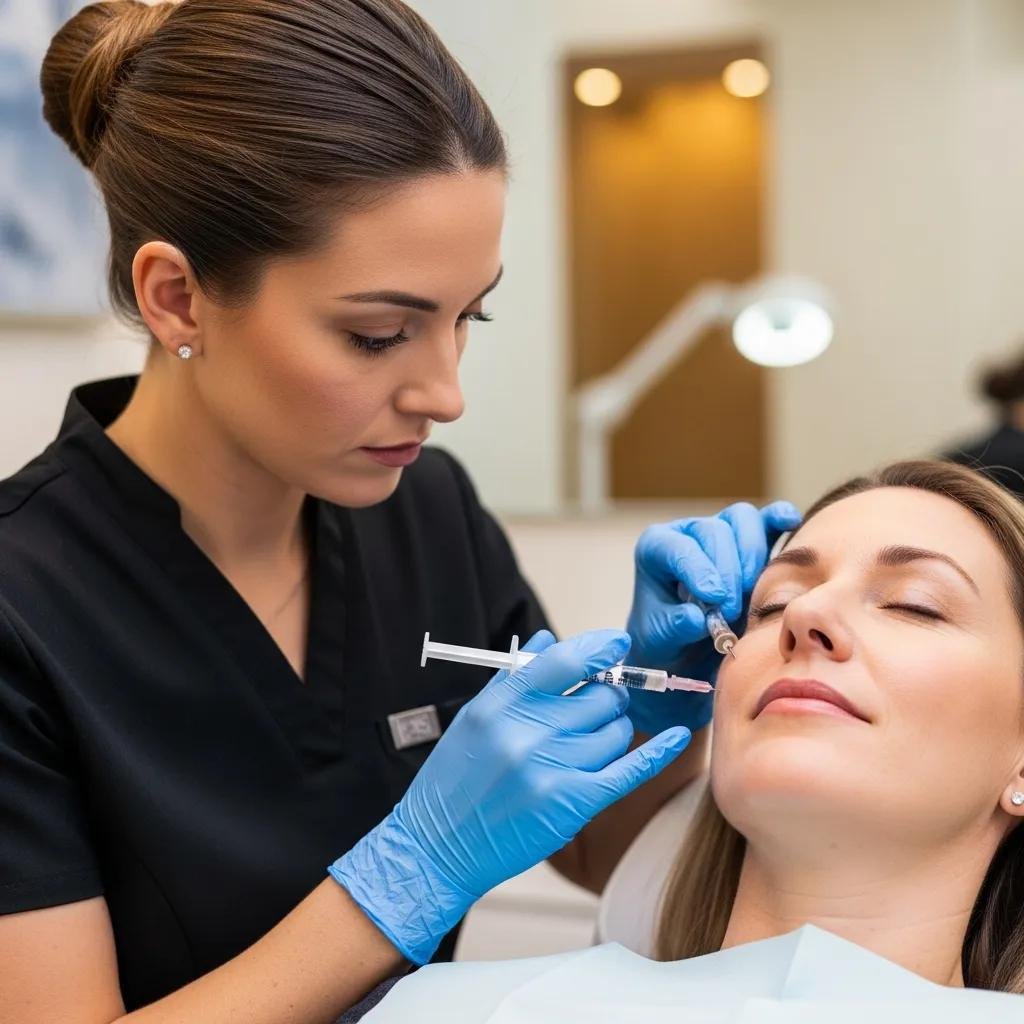
Injectables fall into two main types: neuromodulators that relax muscles and fillers that restore volume.
Neuromodulators such as Botox and Dysport act at the neuromuscular junction to reduce excessive movement, delivering smoother expression lines within days and lasting three to four months on average. Dermal fillers—commonly hyaluronic acid products like Restylane and Juvederm—add immediate volume, lift, and contour while attracting water to support tissue structure; results are visible instantly and last from six months to over a year depending on product and placement.
Patients should ask about product type, expected onset, and duration when considering injectables to match goals and downtime.
What Skin Rejuvenation Procedures Are Popular?
Skin rejuvenation techniques focus on stimulating repair or removing damaged layers to improve texture, tone, and brightness. Microneedling creates micro-injuries to trigger collagen and elastin remodeling, while RF microneedling adds radiofrequency heat to intensify tightening effects. Chemical peels use controlled chemical exfoliation—varying depths for acne, pigmentation, or textural concerns—whereas laser resurfacing and IPL target chromophores to correct pigmentation and vascular issues. Choosing among these depends on severity of concern, recovery tolerance, and desired timeline for visible improvement.
How Do Non-Surgical Cosmetic Procedures Work?
Non-surgical procedures use targeted biological or physical mechanisms—neuromodulation, volume replacement, selective photothermolysis, or adipocyte heating—to change appearance with minimal downtime. Understanding mechanism clarifies expected onset, duration, and recovery and helps patients compare options based on how quickly and how long results appear.
The short comparison table below contrasts the basic mechanism and typical use-case for major non-surgical categories to aid decision-making.
| Procedure | Mechanism | Typical Outcome / Use-case |
|---|---|---|
| Neuromodulators | Block neurotransmitter release to relax muscles | Reduce dynamic wrinkles (forehead, crow’s feet) |
| Dermal Fillers | Add volume via hyaluronic acid gels | Restore cheeks, lips, tear troughs, and contour |
| Lasers / IPL | Deliver light energy to chromophores | Reduce hair, pigmentation, redness, and texture |
| Body Contouring (SculpSure) | Apply controlled heat to adipocytes | Non-surgical reduction of localized fat deposits |
This table clarifies how each approach achieves results so you can match mechanism to goal. For example, if rapid volume replacement is required, fillers offer immediate contouring; if reducing facial movement is desired, neuromodulators are appropriate.
What Is the Mechanism Behind Botox and Dermal Fillers?
Botox (a Botulinum toxin Type A neuromodulator) reduces muscle contraction by interrupting acetylcholine release at the neuromuscular junction, which softens expression lines over several days and lasts three to four months. Dermal fillers—often composed of hyaluronic acid—act as space-occupying gels that replace lost subcutaneous volume, attract water, and provide structural support; results are immediate and can be adjusted with reversible hyaluronidase if needed. Knowing these mechanisms helps patients choose whether to prioritize movement reduction or volume restoration for their aesthetic goals.
How Do Laser Treatments and Body Contouring Procedures Function?
Lasers rely on selective photothermolysis: specific wavelengths target pigment or blood in tissue, converting light to heat that destroys the unwanted target while sparing surrounding skin. Multiple sessions are typical for cumulative effect and to avoid excess downtime.
Body contouring systems like SculpSure use controlled laser heat to permanently damage adipocytes, which the body gradually clears over weeks to months after treatment.
Recovery expectations vary: laser resurfacing may require days to weeks, while hair removal and body contouring often involve minimal downtime but repeated sessions.
Who Are the Key Professionals in a Med Spa and What Are Their Roles?
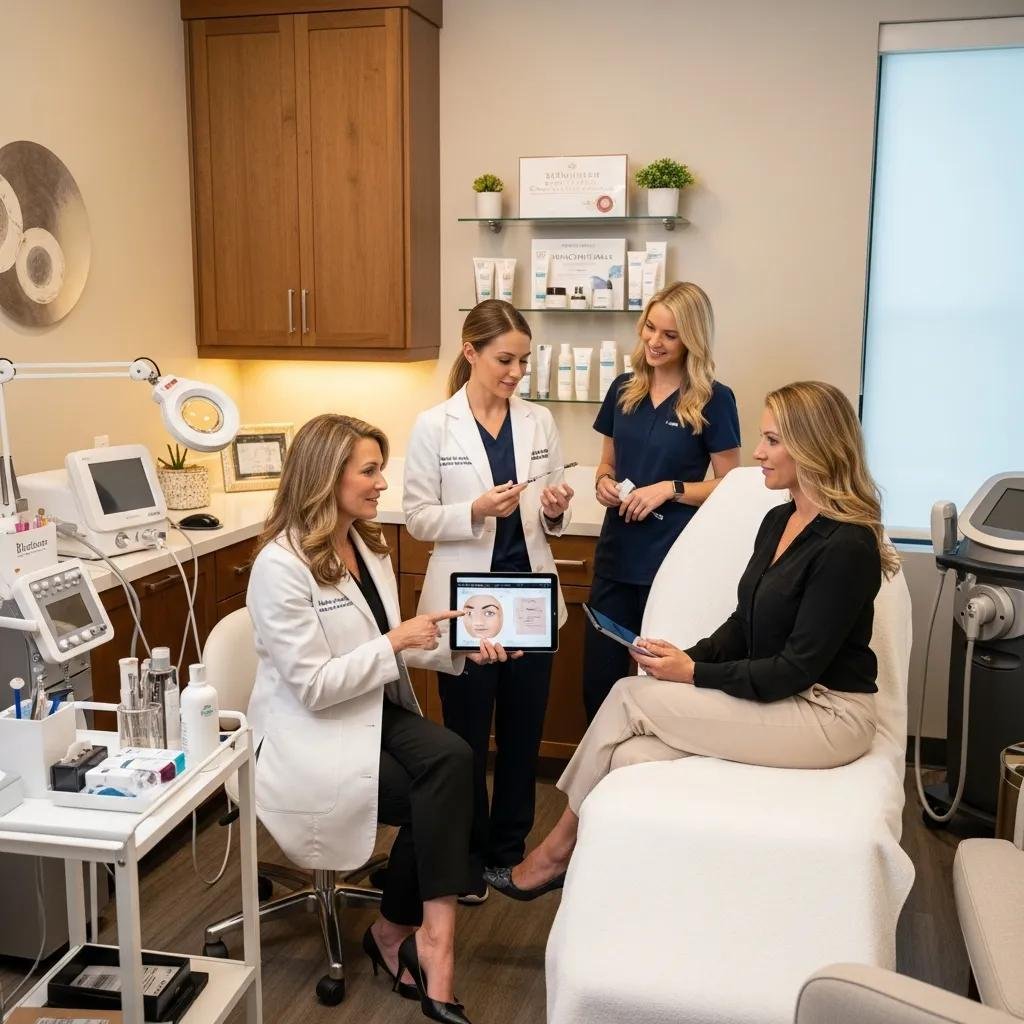
Med spas combine clinical and cosmetic expertise; key professionals include board-certified dermatologists, aesthetic injectors, and licensed aestheticians who together deliver safe, effective care. A clear grasp of each role helps patients direct questions appropriately and verify medical oversight.
- Board-certified dermatologist: Medical doctor specializing in skin diagnosis, complex procedures, and complication management.
- Aesthetic injector: Clinician (physician, nurse, or PA) trained to administer neuromodulators and fillers under medical oversight.
- Aesthetician: Licensed skincare professional providing facials, peels, and device-assisted treatments (non-injectable).
This role map supports informed consent by linking concerns to the right provider for assessment, treatment planning, and follow-up care.
What Does a Board-Certified Dermatologist Do in Aesthetic Medicine?
A board-certified dermatologist assesses skin health, diagnoses underlying conditions, and oversees advanced aesthetic procedures and safety protocols; they create treatment plans and manage complications if they arise. In practice, clinical oversight ensures device selection, treatment depth, and medical appropriateness align with patient health and goals. For example, Shore MedSpa & Bio Aesthetics is led by a board-certified dermatologist in Rockville, MD, which illustrates how dermatologist leadership can centralize clinical decision-making and safety for aesthetic services. Patients should ask about physician involvement when considering higher-risk procedures.
How Do Aestheticians and Aesthetic Injectors Differ in Their Services?
Aestheticians deliver hands-on skincare—cleanses, peels, microneedling support, and topical regimens—focusing on surface treatments and maintenance, while aesthetic injectors perform medical procedures such as Botox and dermal fillers that alter deeper tissues. Licensing, training, and scope of practice vary: aestheticians are non-medical skincare professionals, whereas injectors have medical credentials and often work under physician oversight. When in doubt, request provider qualifications and whether a medical director or dermatologist supervises injectable treatments.
Why Is Understanding Med Spa Terminology Important for Your Treatment Choices?
Familiarity with med spa terminology improves safety, sets realistic expectations, and enables targeted questions that shape better outcomes and satisfaction. Knowing what a term means—mechanism, expected timeline, and typical risks—lets patients compare options and choose treatments aligned with their goals and tolerance for downtime.
- Improved Safety: Recognize procedures that require medical oversight and when to consult a physician.
- Better Expectations: Understand onset, duration, and likely results to avoid disappointment.
- Informed Consent: Ask precise questions about mechanisms, side effects, and alternatives.
- Provider Evaluation: Use terminology to verify provider credentials and appropriate supervision.
These benefits translate into practical actions: ask for clear timelines, required aftercare, and the provider’s experience with the chosen technique to reduce risk and optimize results.
How Does Knowing Terms Like Semaglutide and Tirzepatide Help in Weight Loss Programs?
Semaglutide and Tirzepatide are medication names patients should recognize when exploring medical weight-loss options; Semaglutide is a GLP-1 receptor agonist and Tirzepatide is a dual-agonist with GLP-1 and GIP activity, and both influence appetite and metabolic regulation under medical supervision. Understanding these drug-class terms allows patients to ask about mechanism, expected timelines, monitoring, and potential side effects rather than accepting generic “weight-loss injection” descriptions. Shore MedSpa & Bio Aesthetics lists Semaglutide and Tirzepatide among medical weight-loss offerings, and patients should discuss candidacy and medical oversight with their clinician before starting such programs.
What Are the Benefits of Familiarity with Treatment Terms for Patient Safety and Results?
Knowing treatment-specific vocabulary improves the quality of consultations, consent, and follow-up by enabling precise dialogue about risks, alternatives, and recovery expectations. Patients who can name mechanisms and outcomes are better positioned to request evidence-backed options and to spot inconsistent recommendations or red flags.
As a practical tip, always request the provider’s credentials, expected timeline for visible change, aftercare instructions, and contingency plans for complications to ensure safe, satisfying results.